
Reviewed · STOCKHOLM NATURE HIKES & PARKS
2-Day Small-Group Basic Skills Survival Course in Södermanland
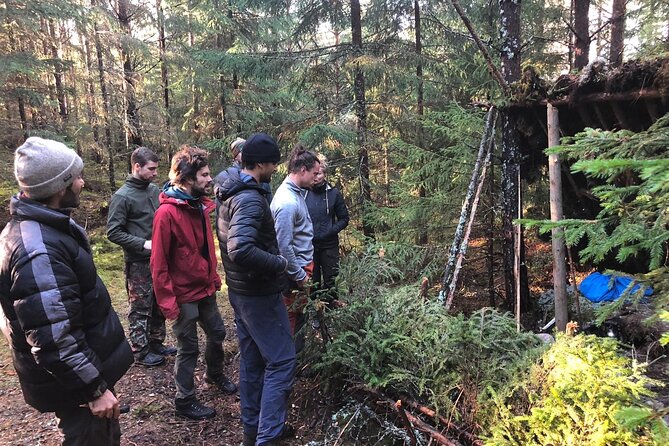
Survival skills look different in the Swedish forest. This 2-day small-group course in Södermanland (starting in Stockholm) is taught in the outdoors, with William walking you through core survival tasks and how to think when things go sideways. I like that it’s not just theory. You practice the basics in real conditions, with a small group of up to 8 so you’re not stuck watching from the back.
What I really liked most is the practical focus on the “basic needs” order—fire, shelter, food, and water—and how to prioritize when you’re stressed. You’ll also learn plant know-how: what’s edible, what’s toxic, and what’s medicinal, plus guidance on wildlife dangers and how to keep moving safely.
The main consideration is the obvious one: you’re doing this in the wilderness, and you should expect cold, wet, and rough-sleep reality. If you’re very sensitive to weather or you hate being outdoors overnight, plan carefully.
In This Review
- Key highlights worth knowing before you go
- From Stockholm morning to wilderness survival mode
- The survival fundamentals: your order of operations in the wild
- Fire making and shelter building you can actually repeat
- Foraging and plant safety: edible, toxic, medicinal
- Wildlife tracking and staying calm when danger shows up
- Water collection and fire cooking: keeping yourself going
- Trapping, fishing, and practical ways to find calories
- Orientation with compass and map reading
- Encampment and group survival leadership
- What’s provided (and what you might want to rent)
- Price and value for $480.71 in two days of real skills
- Who this course is best for
- Should you book the 2-Day Basic Skills Survival Course?
- FAQ
- What’s included in the survival course?
- Where does the course start and end?
- What topics will I learn over the two days?
- How big is the group?
- Do I need to rent camping gear or a backpack?
- What if the course is canceled or delayed due to minimum participants?
Key highlights worth knowing before you go
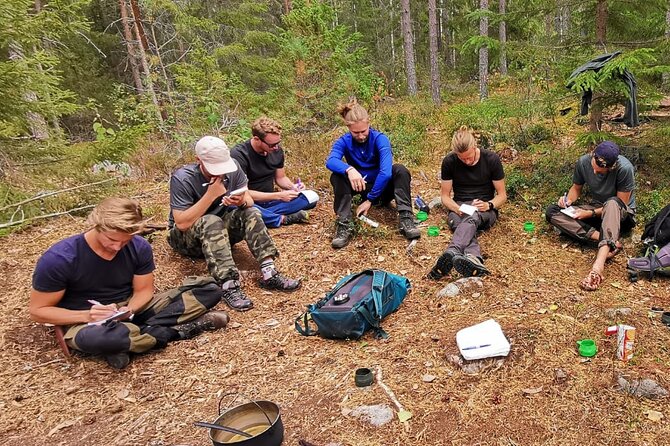
- Small group size (max 8): more hands-on time and less waiting around
- William’s guided practice: step-by-step skills in the real outdoors, not just classroom talk
- Survival priorities you can use immediately: basic needs and decision-making when stressed
- Fire, shelter, food, and water training: the core loop you rely on in any survival situation
- Plant + wildlife safety basics: edible vs toxic vs medicinal, plus danger awareness
- Navigation and camp routines: compass/map reading and practical encampment tricks
From Stockholm morning to wilderness survival mode
The course kicks off at True Nature Sweden AB in central Stockholm (Tideliusgatan 62). You start at 9:00 am, then you’re taken by private transportation to where you’ll actually learn—out in the Swedish forest around Södermanland.
This matters because survival teaching works best when you stop imagining scenarios and start doing them. Driving from the city to the woods also gives you that nice mental shift: you’re moving from phones and schedules into wind, darkness, and real terrain. By the time your training starts, you’re already in the right mindset.
And because the group is limited to 8 people, you’re less likely to get lost in the shuffle. In a survival course, that changes everything. You don’t just learn a technique; you get reps, feedback, and corrections.
More hikes through the reserves and national parks
The survival fundamentals: your order of operations in the wild
The course is built around three survival fundamentals, with a big emphasis on “basic needs” and which ones to prioritize first. That sounds simple, but in a real emergency, simplicity is the point.
Here’s what you’ll work on:
- Fire: how to build it, what you need for it to actually work, and how it affects everything else (warmth, cooking, morale).
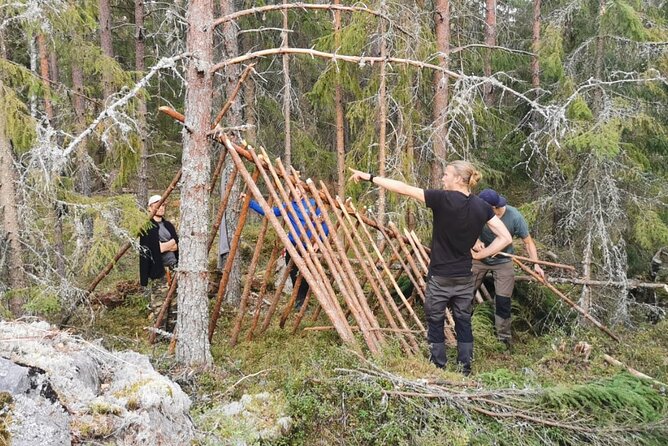
- Shelter: how to build one and with what materials, designed for the realities of forest conditions.
- Food + water: finding resources, collecting water, and figuring out what you can eat safely.
This focus is valuable because it gives you a repeatable framework. When you don’t know what will happen next, you still know what to do first. Fire and shelter reduce risk. Food and water keep you functional. Plants and wildlife knowledge support those steps.
One review story theme is how much practice is packed into only two days—people walk away not just with ideas, but with the feeling that they could act if they had to.
Fire making and shelter building you can actually repeat
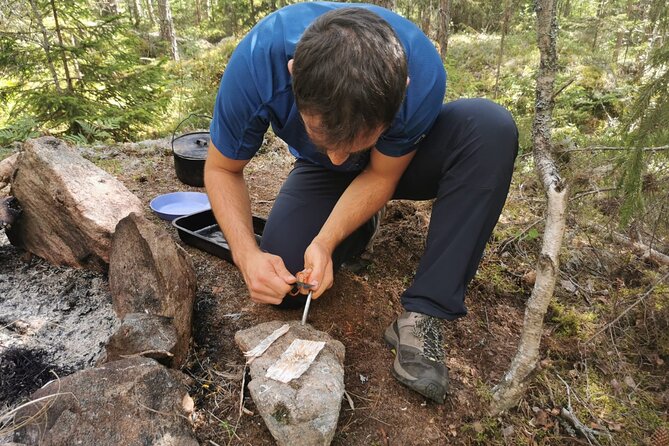
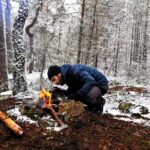
Fire training is more than striking something and hoping. You learn how to build a fire in a way that respects wind, wetness, fuel, and timing. In northern forests, a weak fire doesn’t just mean cold—it can mean you can’t cook, you can’t boil safe water, and you can’t stay comfortable enough to think clearly.
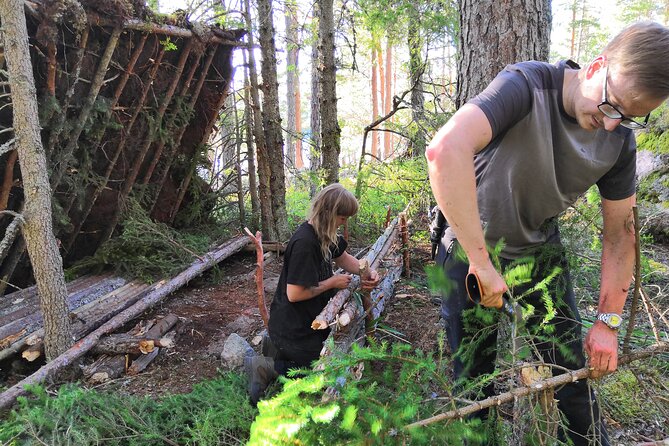
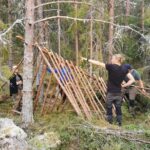
Shelter work is similarly practical. You’ll work on building a shelter that fits the environment and the materials you can realistically find. The biggest lesson here is not fancy gear—it’s using what’s around you, in a way that protects you from the elements.
In real conditions, comfort is a safety tool. Once you have shelter, you can slow down. Once you have fire, you can warm up and eat. That’s how you go from panic mode to problem-solving mode.
Foraging and plant safety: edible, toxic, medicinal
One of the most distinctive parts of this course is the plant introduction—specifically how to recognize plants and sort them into three categories: edible, toxic, and medicinal.
This is the kind of knowledge that’s easy to overestimate. Plenty of people think they’ll “just try a berry.” A good survival mindset is the opposite: be careful, verify, and understand that not every plant is safe.
I like that the course teaches plant basics as part of a bigger survival system. Plants aren’t treated as the magical solution. They’re one option among fire, shelter, food strategy, and water safety.
If you want the takeaway, it’s this: survival learning should make you more cautious, not more reckless.
Wildlife tracking and staying calm when danger shows up
You’ll also do wildlife-related training: tracking and a discussion of dangers. That doesn’t mean you’re going to hunt animals. It means you’re learning how to read signs, what kinds of encounters can happen, and what to do when a survival situation escalates.
The real win here is mindset. The course frames survival as reacting correctly when something unexpected happens—getting lost, being stuck, or facing weather chaos. Wildlife is part of that picture, because in the forest you’re sharing space with other life.
If you walk away understanding how to keep your head when you see danger cues, you’re already leveling up. Knowledge helps, but calm helps more.
More Stockholm trips we have been out on and rated
Water collection and fire cooking: keeping yourself going
Water is a survival cornerstone, and this course treats it as such. You learn where to find water and how to collect it. The forest can look dry until you know where to look. With training, your “maybe” becomes a “yes, I know where.”
Then there’s food. The course covers what to eat and where to find it, plus how to prepare dishes using what you can source and process safely.
One thing I noticed in the experience descriptions is that the food isn’t treated as an afterthought. People mention enjoying the meals and the fun of cooking over the fire. In a survival course, that matters because it reinforces consistency: if you can cook and eat on your terms, you’ll keep practicing and thinking instead of giving up.
Trapping, fishing, and practical ways to find calories
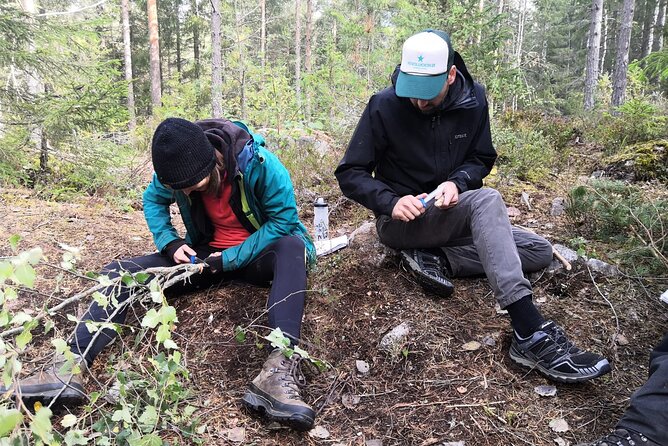
You’ll also cover trapping and fishing. The point isn’t to turn you into a pro overnight. The point is to show you realistic options for getting food, and what skills help when you need calories and you can’t rely on stores.
I recommend taking this section seriously without trying to turn it into a fishing trip. Survival techniques are about efficiency and repeatability. If you can set up a method, keep it working, and avoid wasting energy, you’ve done the hard part.
Orientation with compass and map reading

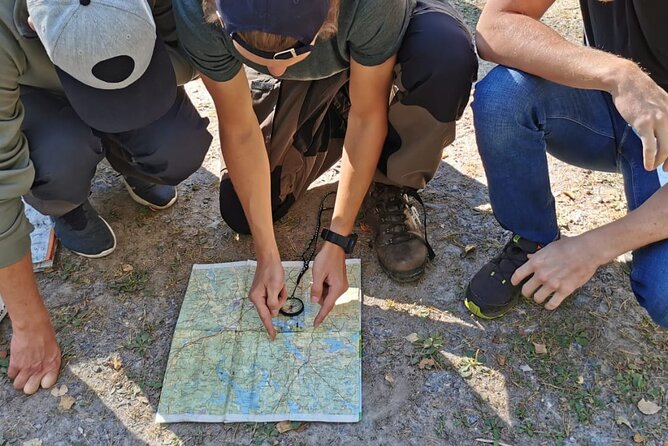
Getting your bearings is a survival skill by itself. This course includes orientation and map reading, including compass use. You’ll practice so you can find your way out of tricky situations, rather than just hoping the trail appears again.
This is also where small-group instruction pays off. Map reading can feel confusing until someone points out what to notice and how to check your logic step by step. With up to 8 people, you’re more likely to get direct help when something clicks—or when it doesn’t.
If you’ve ever tried to read a map without a real sense of direction, you know how fast confidence can collapse. Training fixes that by giving you a system.
Encampment and group survival leadership
You’ll do encampment training—simple tricks to make life easier when you’re stuck outdoors and time is limited. The course also addresses survival in a group, including leadership.
Even if you mostly think of survival as a solo event, real emergencies often involve others. Leadership doesn’t mean barking orders. It means staying organized, distributing tasks, and keeping people from freezing in indecision.
A practical survival course teaches you to lead through action: who checks what, who watches conditions, and how to keep everyone moving toward the next necessary step.
And because you’re learning in a group, you also learn how communication changes outcomes. That’s not “soft” skill. It’s survival.
What’s provided (and what you might want to rent)
The course includes lunch, breakfast, and dinner, plus private transportation and all needed gear. You’ll also have a mobile ticket, and you’ll receive confirmation after booking.
There are optional rentals listed:
- Camping gear rental: 450 kr per person
- Backpack rental: 100 kr per person
That doesn’t mean you must rent. Since gear is included, you can use the rental options if you prefer personal equipment or want to adjust what you carry. Just confirm what’s considered included for your specific date.
Price and value for $480.71 in two days of real skills
At $480.71 per person for about two days, this isn’t a budget “try it once” activity. It’s priced like a hands-on skills course.
Here’s why that price can still feel fair:
- You get meals (breakfast, lunch, dinner), which reduces extra costs.
- You get private transportation, so you’re not solving logistics on your own.
- You get all needed gear, so you’re not buying survival basics just to take the course.
- You get training in wilderness conditions, which is where survival skills stop being theoretical.
Also, the rating and recommendation rate are very strong, and a consistent theme is the amount of practical learning packed into a short time. That combination—small group + coached practice + outdoor setting—is where value shows up.
If you were planning to do your own “survival weekend” by searching online and buying random gear, this course is usually the cheaper way to get solid first skills.
Who this course is best for
This survival course is a strong match if you:
- want basic survival skills you can repeat (fire, shelter, food, water)
- are curious about plants and safe forest knowledge
- want navigation practice with compass and map reading
- like learning with others but still want personal attention in a small group
It’s also a good fit if you’re a beginner and want confidence-building guidance. People in the course descriptions talk about being new and still feeling like they learned a lot—especially when the instructor explains each step clearly and keeps things practical.
Should you book the 2-Day Basic Skills Survival Course?
Book it if you want a short, structured way to learn the core survival loop: priorities, fire, shelter, food, water, navigation, and enough plant and wildlife basics to make safer decisions. The small group size and hands-on coaching by William are exactly what you want for building real confidence fast.
Skip it or think twice if you know you won’t handle cold, wet conditions or overnight outdoor training. This is wilderness survival practice, not a light nature walk. You’ll benefit most if you’re comfortable getting dirty and learning by doing.
If you want an introduction that gives you usable skills rather than just stories, this is one of the better ways to start.
FAQ
What’s included in the survival course?
The course includes lunch, breakfast, and dinner, private transportation, and all needed gear.
Where does the course start and end?
It starts at True Nature Sweden AB, Tideliusgatan 62, 118 69 Stockholm, Sweden. It ends back at the same meeting point.
What topics will I learn over the two days?
You’ll cover fire building, shelter building, finding and preparing food, finding and collecting water, an introduction to edible/toxic/medicinal plants, wildlife tracking and dangers, trapping, fishing, orientation with map reading, encampment tricks, and survival in a group including leadership.
How big is the group?
The maximum group size is 8 travelers.
Do I need to rent camping gear or a backpack?
Camping gear rental (450 kr per person) and backpack rental (100 kr per person) are listed as optional. Since all needed gear is included, you may not need to rent anything.
What if the course is canceled or delayed due to minimum participants?
Cancellation is free, with full refund if you cancel at least 24 hours in advance. The experience also requires a minimum number of travelers; if it’s canceled due to not meeting that minimum, you’ll be offered a different date/experience or a full refund.
More 2-Day Experiences in Stockholm
More Tour Reviews in Stockholm





More Nature Hikes & Parks Near Stockholm
Just Added: The Latest Stockholm Reviews












Stockholm Nature Hikes & Parks, compared.
 ★ 4.8Sunset Hike in Tyresta National Park with MealFrom $144126 reviews
★ 5.0Sunset Hike in Tyresta National Park with MealFrom $14979 reviews
★ 4.8Sunset Hike in Tyresta National Park with MealFrom $144126 reviews
★ 5.0Sunset Hike in Tyresta National Park with MealFrom $14979 reviews
 ★ 5.0Nature Reserve Hiking Tour with Campfire LunchFrom $14257 reviews
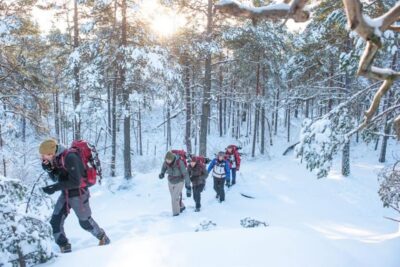 ★ 4.8Winter Snowshoe Full-Day HikeFrom $17657 reviews
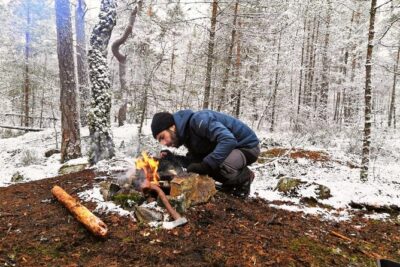 ★ 4.51-Day Small-Group Stockholm Nature HikingFrom $15349 reviews
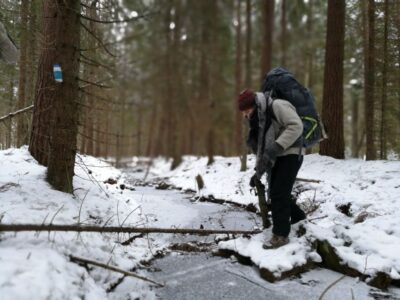 ★ 4.7Nature Hike with Campfire LunchFrom $14933 reviews
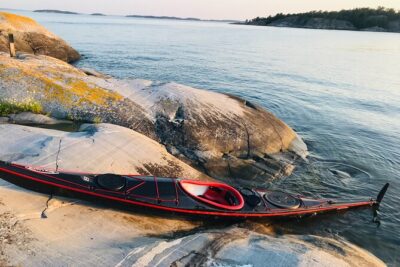 ★ 5.0PRIVATE Sunset Kayaking in Stockholm Archipelago Nature ReserveFrom $26428 reviews
 ★ 5.0Snowshoe Winter Hike from StockholmFrom $19127 reviews
Browse the lists this tour appears in