
Reviewed · GAMLA STAN OLD TOWN WALKS
Beautiful Stockholm Small Group Walking Tour
Stockholm’s royal streets are a shortcut to understanding Sweden. This 1 hour 45 minute walk moves you through the places tied to power, art, and everyday civic life, with an English-speaking guide and a max group of 10. I like that it’s paced for people who don’t want to sprint, yet still packs in big-picture context you can actually remember.
One thing to plan for: it’s still a walking route through central areas, so moderate fitness helps—especially on windy days near the water and open squares. The good news is most stops are quick exterior looks and storytelling points, so you’re not stuck waiting in long lines or paying for entries.
In This Review
- Key highlights you’ll feel right away
- Royal Swedish Opera to Kungsträdgården: the walk’s pace and point
- Royal Swedish Opera: why Gustav III and Verdi show up
- Riksdagshuset (Parliament Building): Sweden’s political timeline in plain terms
- Riksbron: one bridge view that connects power, nobility, and Nobel traditions
- Lejonbacken: the classic Palace photo spot and what you can learn from it
- Slottsbacken and the Royal Palace chapel: Bernadotte dynasty context you’ll actually use
- Stortorget: Bloodbath of Stockholm and why the Nobel Prize Museum belongs there
- Stockholm Old Town lanes: Köpmangatan, Österlånggatan, and Skeppsbron
- How the guide experience usually feels: friendly, clear, and visual
- Price and value: what $106.42 buys you in real terms
- Who should book this small-group Stockholm walk
- Should you book Beautiful Stockholm Small Group Walking Tour?
- FAQ
- How long is the Beautiful Stockholm Small Group Walking Tour?
- Where does the tour start and end?
- Is the tour offered in English?
- How large is the group?
- Do I need to buy tickets for the stops?
- Do I get a mobile ticket?
- Is it near public transportation?
- What fitness level is needed?
- What is the cancellation policy?
Key highlights you’ll feel right away
- Small group size (max 10) makes it easier to ask questions and hear the guide clearly.
- Royal Swedish Opera stories connect architecture to Swedish history and even a Verdi opera link.
- Riksdagshuset timeline explains how Sweden’s parliament evolved toward general suffrage and one-chamber governance.
- Riksbron viewpoints layer government, City Hall, and Nobel Prize traditions into one compact skyline view.
- Lejonbacken and Slottsbacken photo angles give you the classic Palace exterior views plus palace-culture context.
- Gamla stan lanes after Stortorget lets you shift from monuments to medieval street textures—Köpmangatan to Skeppsbron.
Royal Swedish Opera to Kungsträdgården: the walk’s pace and point
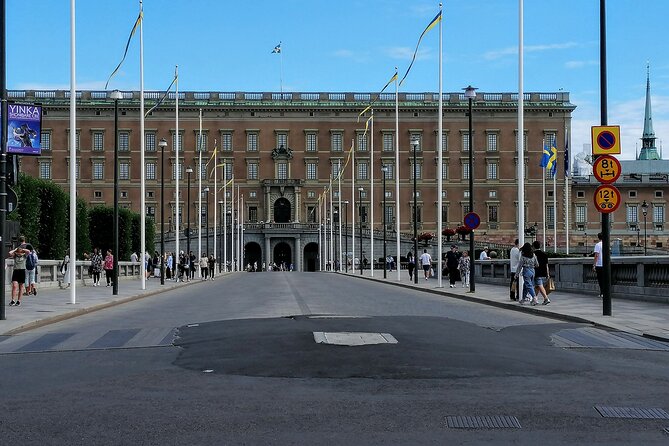
This tour is built like a guided “spine” through central Stockholm: you start at Gustav Adolfs torg and finish near Karl XII’s statue, then the route ends at the southern end of Kungsträdgården. You’re typically looking at a series of short stops—some are viewpoints, some are quick palace-area moments, and the last stretch leans into Old Town lanes.
The duration—about 1 hour 45 minutes—is long enough to learn names and timelines without feeling like you’re rushing. And because it’s a small group, the guide can keep the story going without turning the walk into a loud stampede.
More laps of Gamla Stan and the old town lanes
Royal Swedish Opera: why Gustav III and Verdi show up
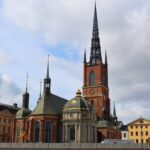
Your first real “wow” is the Royal Swedish Opera area. You’ll get a quick intro to Stockholm and Sweden, with a special focus on the royal connections behind the buildings you’re seeing. That matters because Sweden’s story here isn’t just about kings—it’s about how state power showed up in architecture.
What I like is the way the guide ties the Opera house to a cultural reference: the opera The Masked Ball by Giuseppe Verdi, which is connected to Swedish King Gustav III. It’s a small detail, but it helps you look at the building and think beyond bricks and dates.
You’ll also notice the storytelling around nearby buildings across the square—especially the royal-linked structures that set up what’s coming next. Most importantly, this start helps you get your bearings fast: it explains the “royal map” of central Stockholm while you’re still close enough to landmarks to orient yourself.
Practical note: this first stop is about 15 minutes, so it’s not a sit-down lesson. Wear comfortable shoes; you’ll be standing and looking as much as listening.
Riksdagshuset (Parliament Building): Sweden’s political timeline in plain terms
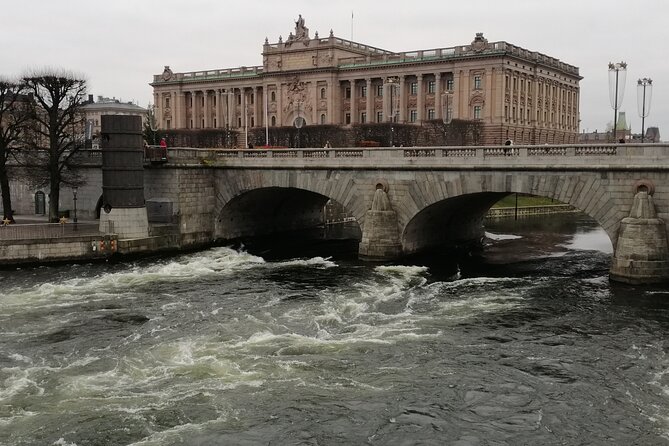
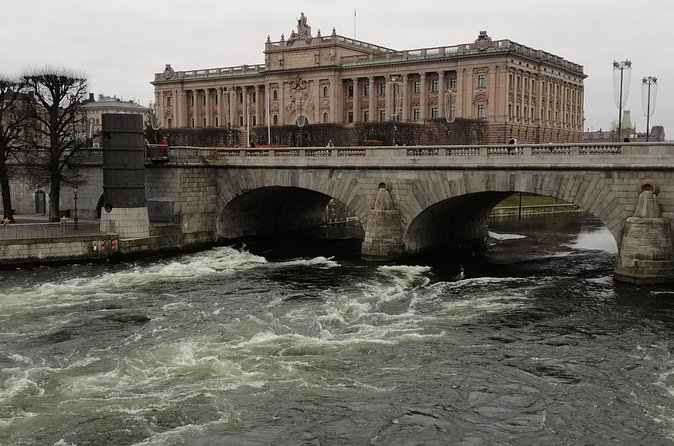
Next you head to the Parliament Building (Riksdagshuset). The building itself is a clue: it’s designed in Neo-Renaissance style with a facade section featuring Neo-Baroque elements. Even if you don’t know architecture, that mix often reads as “major state authority,” and the guide uses that feel to drive the story.
The real value here is the timeline. You’ll hear how Sweden’s earlier system wasn’t one unified parliament at all. Before modern parliament, there was the Riksdag of the Estates (Ståndsriksdagen), where nobility, clergy, burghers, and peasants met separately before meeting the king. Then you move forward through changes—like the introduction of a parliament with two chambers in 1866, the first elections with general suffrage in 1921 after political struggle, and the constitutional shift in 1975 when the two chambers were merged into one.
Even the point about the king’s role comes up: the constitution confirms the king has only a representative role and no real power. That’s the kind of sentence that clicks later when you’re walking around Stockholm and noticing what’s ceremonial versus what’s governing.
This stop is short—about 10 minutes—so don’t expect a full lecture. Expect a crisp narrative that helps you understand why Sweden’s government buildings look the way they do.
Riksbron: one bridge view that connects power, nobility, and Nobel traditions
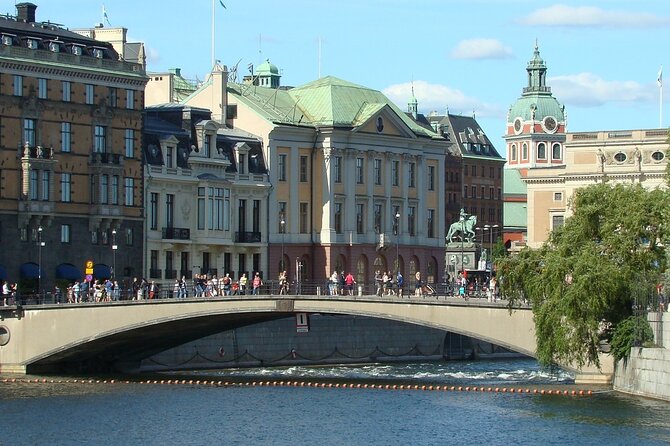
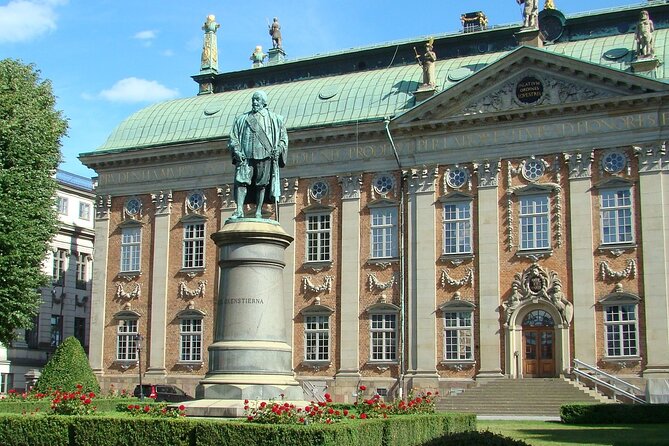
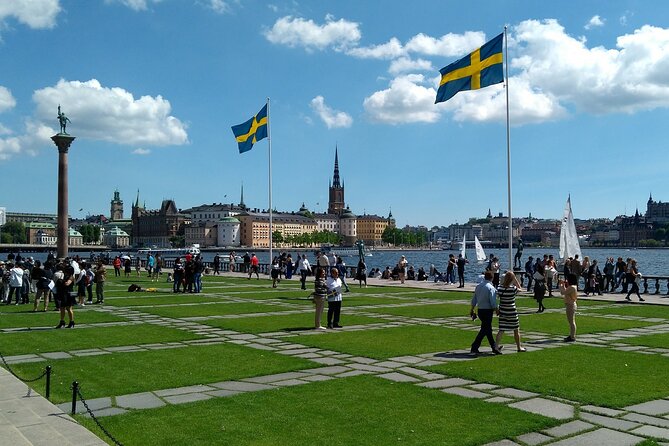
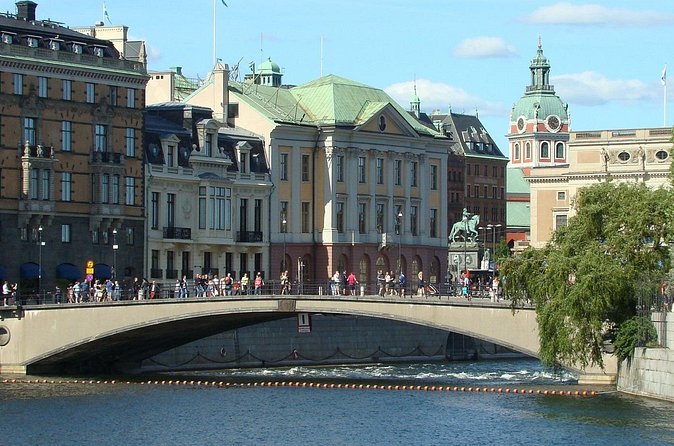
At Riksbron, the guide turns the skyline into a map. From the bridge you get views toward Knights Island, the Prime Minister’s residence, government buildings, and the House of Nobility. It’s a lot to take in, but it’s also a smart way to learn: you’re seeing the layout while you’re hearing what each place represents.
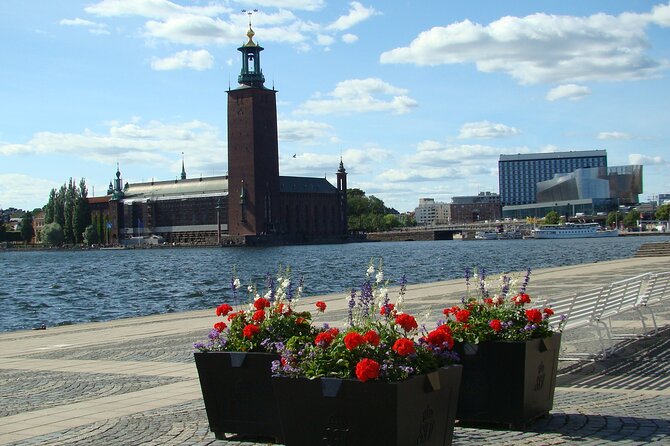
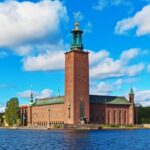
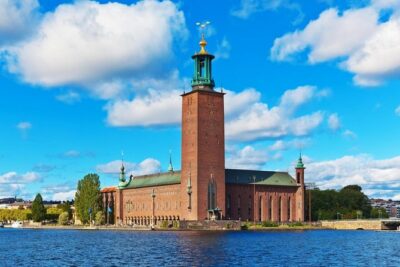
This is also where the route links everyday civic life with global traditions. You’ll look toward Stockholm City Hall, the venue for the yearly Nobel Prize banquet. That’s a detail that makes the city feel bigger than itself, because you’re connecting local architecture to an event people recognize worldwide.
The stop is about 15 minutes, so you’ll likely get a guided “look here, notice that” moment rather than free-for-all sightseeing. If you’re the type who likes to understand where things are, this is a highlight.
Tip: if it’s breezy, hold your phone securely. The bridge can feel open.
Lejonbacken: the classic Palace photo spot and what you can learn from it
Lejonbacken is one of those Stockholm spots where people stop because the view is so photogenic. You’ll be on the north side of the Royal Palace, and the area is known for Lejonbacken photo opportunities.
Here the guide does a nice job of mixing aesthetics with specifics. You’ll see the Royal Garden with a statue of Karl XII, and you’ll be encouraged to notice how Stockholm grew architecturally. To the right, you’ll spot the Financial District, built around the turn of the 20th century, when architectural styles were changing and multiplying.
You also get a detail that turns a landmark into a living calendar: the Grand Hotel, where Nobel laureates stay during the ceremonies. It’s not a tour inside the hotel; it’s more like a reminder that the city’s grand events are housed inside buildings you can spot just by looking up.
This stop is about 15 minutes, so it’s ideal if you want iconic views without losing an hour to optional detours.



Slottsbacken and the Royal Palace chapel: Bernadotte dynasty context you’ll actually use
Next comes Slottsbacken, where the route passes the Royal Palace inner courtyard and includes a short visit to the Palace Chapel. This is one of the best “change of pace” moments because you’re moving from exterior city views into a more focused royal tradition setting.
Even with a short chapel stop, the guide helps you understand why the Palace Chapel matters: the Royal family uses it for ceremonies like baptisms. That’s a small line, but it gives the building a human rhythm, not just a museum-label feeling.
Then you’re outdoors again, facing the statue of Carl XIV Johan. You’ll learn his backstory: a military career connected to Napoleon’s era, followed by adoption into the Swedish royal family as the first from the Bernadotte dynasty—the dynasty still ruling. The guide also covers what Carl XIV Johan is associated with in Sweden: diplomacy plus efforts related to infrastructure and education, including the idea of using those reforms to help Sweden recover what was lost in earlier wars.
There’s also a modern historical echo mentioned: in 2014 Sweden celebrated 200 years of peace, tying that to industrial growth, natural resources, and Swedish inventions that helped form the foundation of a welfare state. That’s a lot of ideas for one outdoor stop, but the point is clear: the royal story isn’t trapped in the past.
This segment is about 10 minutes, so if you want deeper detail, you’ll probably want to ask the guide a question before you move on.
Stortorget: Bloodbath of Stockholm and why the Nobel Prize Museum belongs there
Stortorget is the Old Town square you’ll recognize fast. It’s the central square in Stockholm’s Old Town and among the most photographed areas in the city. The surrounding houses combine 17th-century Scandinavian Renaissance and 18th-century Classicism styles, so the square feels like a transition zone between eras.
The guide also gives you a darker story tied to the square. At Stortorget, the Bloodbath of Stockholm took place in November 1530, when around 100 noblemen and priests were beheaded by Danish king Christian II. In Sweden, he’s known as Christian the tyrant. Learning this here changes how you see the architecture. It’s not just pretty stone; it’s a place where power turned into violence.
Then comes the Nobel connection, but this time as a museum. The Nobel Prize Museum is located at Stortorget, and the guide explains how the Swedish Royal Academies and other committees designate Nobel winners across science and the arts. It’s an effective pairing: a square associated with brutal political force, next to a museum that celebrates ideas.
This stop runs about 15 minutes. You’ll likely have enough time to look around, but not enough time for deep museum wandering—which is fine, because the goal is context and direction.
Stockholm Old Town lanes: Köpmangatan, Österlånggatan, and Skeppsbron
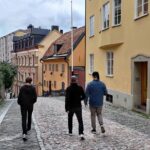
From Stortorget, the route turns into true walking through atmosphere. You’ll head along Köpmangatan (Merchants Street), a street mentioned in written material since 1350. Then you move through narrow alleyways that help you feel the medieval vibe without needing to “pretend” in your head.
After that, the route continues along Österlånggatan and down toward Skeppsbron. Skeppsbron matters because it links the city’s layout to its work: ships loaded cargo there starting in the 17th century. That’s the kind of detail that makes Old Town feel practical, not just postcard-perfect.
This part is about 20 minutes, and it’s the stretch where you’ll probably notice the difference between “seeing landmarks” and actually walking the city’s original streets. If you’re used to guided tours that only point and talk, this section feels better because you’re moving through the place rather than standing beside it.
And because your tour ends near Kungsträdgården, you can keep going easily if you want. The route offers an obvious next step: you can take the tram to Djurgården, the island of museums, where you’ll find the Vasa Museum, Viking Museum, ABBA museum, and Skansen among other options. That’s a smart way to turn one guided walk into a full day plan.
How the guide experience usually feels: friendly, clear, and visual
The most consistently praised part of this kind of tour format is how approachable the guide is and how easy it is to stay focused while walking. From the feedback, the vibe is friendly and informative, with a personable guide who explains Swedish history in a way that lands.
Another point I’d take seriously: the guide uses visual aids, especially for architecture and design. That’s a big deal at places like the Opera, the Parliament building, and the palace-area exteriors. When you can connect what you’re looking at with what the guide is saying, you remember it later.
The route also touches on the Viking era briefly in context. If you’re hoping for a full Viking-history story, this tour is more about the Stockholm core from medieval and beyond—so treat Viking details as context, not the main meal.
Also, Stockholm can be windy, and you’ll stand outside at several open viewpoints. If you show up wearing a windproof layer, you’ll enjoy the stops more and feel less like you’re “enduring” them.
Price and value: what $106.42 buys you in real terms
At $106.42 per person for about 1 hour 45 minutes, you’re paying for three things that matter in a walk tour: a guide who can explain the why behind the buildings, a tight route that reduces wasted wandering, and the benefit of a small group (max 10).
What helps value here is that the stops are largely ticket-free experiences—no admission fees are indicated for the stops along the way. You’re getting guided interpretation of major sites without paying for multiple paid entrances. That’s a practical way to manage your budget while still seeing a lot of iconic structures.
There’s also a modern convenience factor. You get a mobile ticket, and the tour is offered in English. Add the fact that it’s near public transportation, and this can be an easy fit even if your day is packed.
One small consideration: because it’s popular enough that it’s typically booked about 11 days in advance, I’d plan ahead rather than assuming you can decide last minute.
Who should book this small-group Stockholm walk
This is a great match if you want:
- A guided orientation to central Stockholm that connects royal sites, government buildings, and Old Town streets
- Short, clear stops (mostly about 10–20 minutes each) instead of long museum marathons
- Friendly group energy with room to ask questions
- A route that ends in a practical spot for continuing the day (Kungsträdgården)
You might want to skip it if your ideal day is mostly indoor, ticket-heavy sightseeing. This tour is built for walking, looking, and learning outdoors and at one short chapel moment.
It’s also suitable if you’re traveling with at least a moderate fitness level. The walking is manageable, but you won’t want to treat it like an elevator ride.
Should you book Beautiful Stockholm Small Group Walking Tour?
I think you should book it if you want Stockholm in a compact dose: royal architecture, government history, and Old Town street texture in under two hours. The small group size, the ticket-free stop style, and the guide’s focus on architecture explanations with visual aids make it feel like a thoughtful way to learn more than you’d get by walking alone.
Book it sooner if you’re traveling in peak times, since it’s often reserved around 11 days ahead on average. And if windy weather is in your forecast, pack a light wind layer—you’ll enjoy every viewpoint more.
FAQ
How long is the Beautiful Stockholm Small Group Walking Tour?
It’s approximately 1 hour 45 minutes.
Where does the tour start and end?
The tour starts at Gustav Adolfs torg, 111 52 Stockholm, Sweden. It ends near Karl XII’s statue, at Karl XII:s torg 9, 111 47 Stockholm, Sweden, at the southern end of Kungsträdgården.
Is the tour offered in English?
Yes, the tour is offered in English.
How large is the group?
The tour has a maximum of 10 travelers.
Do I need to buy tickets for the stops?
Admission tickets are listed as free for each of the stops described.
Do I get a mobile ticket?
Yes, it includes a mobile ticket.
Is it near public transportation?
Yes, it’s listed as being near public transportation.
What fitness level is needed?
Travelers should have a moderate physical fitness level.
What is the cancellation policy?
You can cancel for a full refund up to 24 hours in advance of the experience’s start time.
More Tours in Stockholm
More Tour Reviews in Stockholm
More Gamla Stan Walks

Just Added: The Latest Stockholm Reviews










Gamla Stan Old Town Walks, compared.
 ★ 4.7Ghost Walk and Historical TourFrom $312,206 reviews
 ★ 5.0Walking Tour of Stockholm Old TownFrom $241,175 reviews
 ★ 4.5The Original Stockholm Ghost Walk and Historical Tour – Gamla StanFrom $381,165 reviews
 ★ 4.7Old Town Walking Tour with Local GuideFrom $15719 reviews
 ★ 5.0Best of Stockholm Walking Tour-3 Hours, Small Group max 10 peopleFrom $49645 reviews
 ★ 4.5The Nordic Food Walk StockholmFrom $122642 reviews
 ★ 5.0Walking Tour of Stockholm’s Old Town, Gamla StanFrom $13451 reviews
 ★ 4.9Old Town Historical Walking TourFrom $52344 reviews
Browse the lists this tour appears in