
Reviewed · GAMLA STAN OLD TOWN WALKS
Walking Tour of Stockholm Old Town
A windy cobblestone maze can feel like a lot. This 2.5-hour walking tour turns Gamla Stan into a clear, story-led route with major sights you can actually place on a map.
Two things I really like: the mix of history and current-city context at a pace that fits busy itineraries, and the fact that the tour is small (max 20), so it stays lively and easy to follow.
One possible drawback: several big stops have admission tickets not included, so you’ll want to decide ahead of time what you want to enter versus just see from outside.
You also get real “how to see Stockholm smart” energy from the guides. In the feedback, guides like Gaia, Sophie, Olivia, and Aggie are repeatedly praised for keeping the flow engaging, with jokes and helpful side tips (including when to catch things like the guard ceremony timing). That matters, because Old Town can feel like a postcard loop unless someone explains what you’re looking at.
The route covers a lot of ground, so it’s best for active walkers. You’ll be on your feet for about 2 hours 30 minutes, and it’s a good bet to wear layers—this is Sweden, and weather can change quickly even when you still want to keep sightseeing.
In This Review
- Key highlights worth planning around
- Why this 2.5-hour Gamla Stan walk works for first timers
- Meeting at Gustav Adolfs torg, then ending at Stortorget
- Riksdagshuset to Old Town: Parliament, foundations, and what it tells you
- German Church and Riddarholmen: Gamla Stan’s religious and political heartbeat
- Järnpojke and Storkyrkan: the dragon story you can’t miss
- Nobel Prize Museum and the Royal Palace: two culture stops, no full-day detour
- Stortorget, the Stockholm bloodbath, and Marten Trotzigs gränd
- Royal Opera and the battle of Brunkeberg: closing with symbols
- Price and value: is $24.07 a good deal?
- Who this walking tour fits best (and who should think twice)
- The guides are a big part of the value
- Should you book this Stockholm Old Town walking tour?
- FAQ
- How long is the Walking Tour of Stockholm Old Town?
- Where does the tour start and end?
- What time does the tour start?
- How much does the tour cost?
- Is the tour in English?
- Is this mainly a walking tour?
- What about admission tickets?
- How big is the group?
- What happens if the weather is poor?
Key highlights worth planning around
- A fast “Gamla Stan orientation”: you’ll leave knowing where the stories happened, not just what the buildings look like.
- A politics-to-streets connection: Parliament, the Nobel Prize world, and royal symbols are tied back to Old Town’s origin story.
- Perfectly sized time: 2.5 hours is long enough to learn, short enough to keep the rest of your day open.
- A route with both big landmarks and small details: you’ll stop for major churches and museums, plus the famous little statues and one very narrow street.
- Small group feel (max 20): you can ask questions without the tour turning into a lecture hall.
- Guides that make it stick: feedback repeatedly mentions upbeat delivery, clear explanations, and humor.
Why this 2.5-hour Gamla Stan walk works for first timers
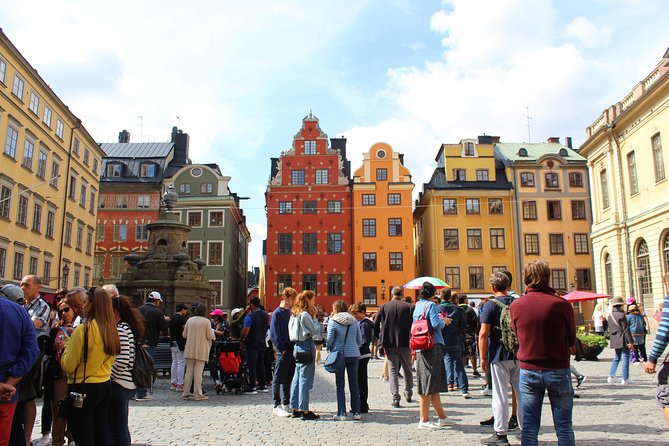
Stockholm’s Old Town (Gamla Stan) is pretty, but it can also be confusing. The lanes twist, the buildings look similar at a glance, and it’s easy to bounce from one photo spot to the next with no sense of why any of it matters. This tour is built to fix that.
The timing is a big part of why it works. At roughly 2 hours 30 minutes, you’ll cover a strong core without committing to a half-day or burning your whole morning. It’s an ideal first-visit move because you’ll start recognizing landmarks later when you go back on your own.
I also like that the tour doesn’t treat Old Town like a museum-only zone. It links the politics, religion, and royal power that shaped Stockholm to the squares, churches, and streets you walk past today.
More laps of Gamla Stan and the old town lanes

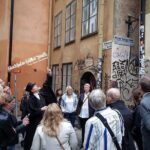
Meeting at Gustav Adolfs torg, then ending at Stortorget
The tour starts at Gustav Adolfs torg (111 52) at 10:00 am, and it finishes at Stortorget (111 29). That matters because it lets you build the rest of your day around a central anchor. If you end at Stortorget, you’re in the right place for lunch, exploring on foot, or continuing to nearby sights.
Also, the group size is capped at 20, which keeps the route from feeling like a herd. On a walking tour, this is the difference between hearing details and just hearing footsteps.
Finally, the tour uses a mobile ticket, so you’ll want your phone charged. The meeting point is near public transportation, which helps if you’re mixing this with other parts of Stockholm on the same day.
Riksdagshuset to Old Town: Parliament, foundations, and what it tells you
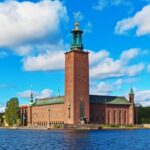
You kick things off at the Parliament Building (Riksdagshuset), built from 1895 to 1904. Even if you don’t go inside, seeing it early is smart: it sets up the idea that Stockholm’s story isn’t only medieval romance. It also includes modern governance and the way power is displayed.
The tour then moves into Old Town for a guided walk focused on the story behind its foundation and how it became what you’ll see today. This is where you start connecting the street pattern to the city’s growth. If you’ve only seen Stockholm from waterfront views so far, this is the moment you’ll understand the “why” behind the maze of Gamla Stan.
One practical note: at this stage, an included admission portion is listed for the Old Town segment. Since the exact included entry details aren’t spelled out beyond that, I suggest arriving with the expectation that you might be entering at least one part of the experience, rather than viewing everything purely from the curb.
German Church and Riddarholmen: Gamla Stan’s religious and political heartbeat
Next up is the German Church in Gamlastan (Esglesia Alemanya), described with a neoclassical style and tied to the German community there for centuries. Even if you don’t pay to enter, a stop like this helps you understand how immigrant communities and trade connections shaped Old Town’s identity.
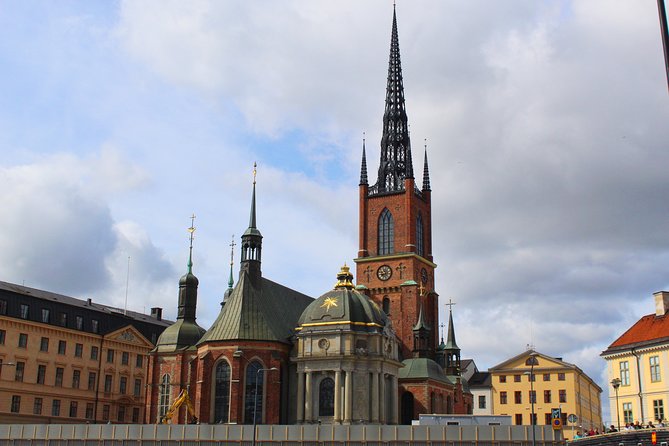
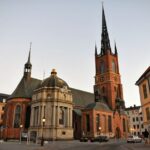
Then you cross to Riddarholmen Church, also known in this route as part of the history of how Gamla Stan was founded. You’ll learn about the Knights Islet area and the fact that it contains its own palace, described here as the first one in Stockholm. It’s a reminder that “Old Town” isn’t one timeline—it’s a stack of eras layered into one small area.
A caution if you’re planning admissions: this stop lists admission ticket not included. That’s common with guided walks—your guide focuses on the story and you decide what’s worth extra entry time. If churches are a priority for you, budget extra or be ready to skip interior visits when time runs short.
Järnpojke and Storkyrkan: the dragon story you can’t miss
Now comes the kind of stop you’d never find on your own unless someone pointed it out. You’ll visit Järnpojke, described as the smallest statue in Stockholm, built in 1950, also known as the kid looking at the moon. It’s also listed as one of the most visited statues in the city—so yes, it earns its place.
Then you head to Storkyrkan (Storkyrkan / Cathedral of Stockholm), the main church of Gamla Stan, and the home of the St George and the dragon sculpture. This is one of those “stop for five minutes, remember it for years” moments. A guide’s job here is to connect the artwork to the battle stories and symbols that would have mattered to people at the time.
Admission ticket note: Storkyrkan is listed as not included in admission tickets for this tour. Still, you’ll get the significance and visual framing from the guide. If you enjoy art in context more than you need to pay to see every interior space, you can enjoy the main story with less extra cost.





Nobel Prize Museum and the Royal Palace: two culture stops, no full-day detour
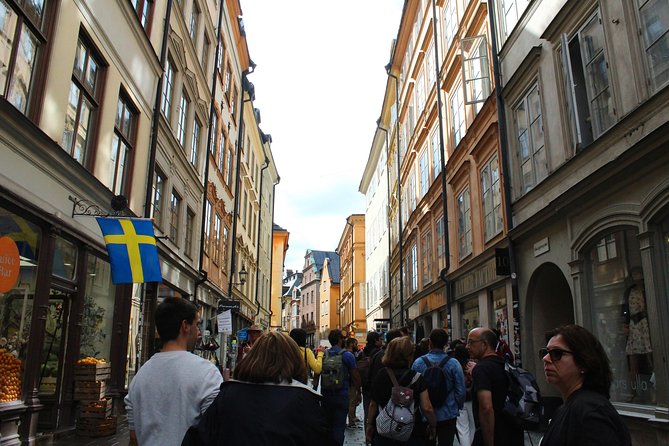
The tour then shifts into world-famous Swedish institutions, starting with the Nobel Prize Museum. It’s paired with the Swedish Academy context, where the literature prize is decided. Even if you don’t enter the museum, the stop gives you a useful frame: this isn’t only a place to admire Nobel-related displays; it’s tied directly to the cultural institutions behind Swedish literary prestige.
After that, the route reaches the Royal Palace, noted for having four museums. That’s the reason this stop feels like a “big city moment” inside a small Old Town walking loop. Stockholm’s royal image isn’t only outside-facing grandeur—it’s also curated collections inside.
Admission tickets are listed as not included for both Nobel Prize Museum and the Royal Palace. Translation: you’ll see the key sights in the route, then you decide whether to spend extra time and money on entrances. If you want the full museum experience, consider this tour as your orientation first, then plan separate museum time later.
Stortorget, the Stockholm bloodbath, and Marten Trotzigs gränd
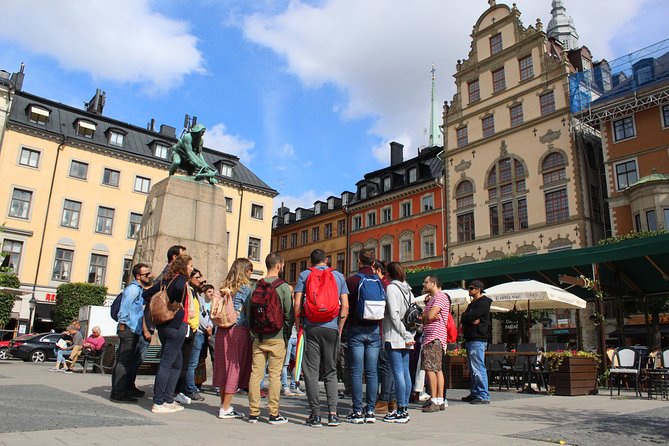
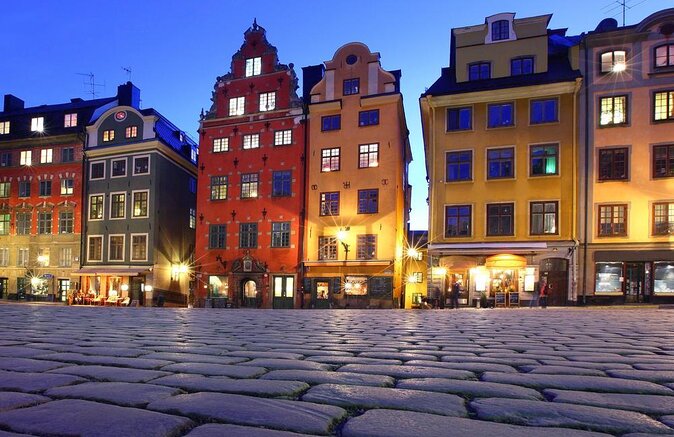
Stortorget is one of the most important places in Gamla Stan, and this tour uses it well. You’ll stop at Stortorget, described as the main square of Gamla Stan, including mention of major events like the Stockholm bloodbath. A square like this can look simply “historic,” but a guide helps you understand it as a stage where power and fear played out in public.
This stop also lists an included admission ticket, so it’s worth assuming there may be a specific included element tied to the square portion. If you like guided context more than standalone entry, you’ll still get value here even if you don’t expand into extra museums.
Then the tour takes you to Marten Trotzigs gränd, the narrowest street in the city, named after a prominent businessman. Even with time on your own, this street is the kind of detail you’d walk past without recognizing its significance. Here, it feels like a payoff: you’re learning the big stories, then ending with a tiny physical “wow.”
Admission ticket note: this street segment is listed as admission included. Again, the wording points to an included portion rather than only a pass-by, so don’t rush through it.
Royal Opera and the battle of Brunkeberg: closing with symbols
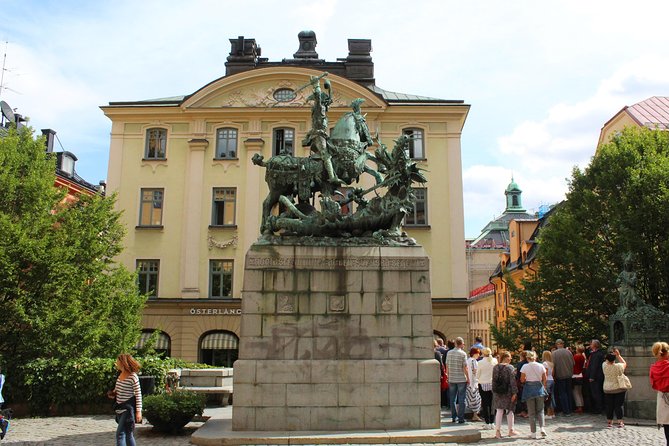
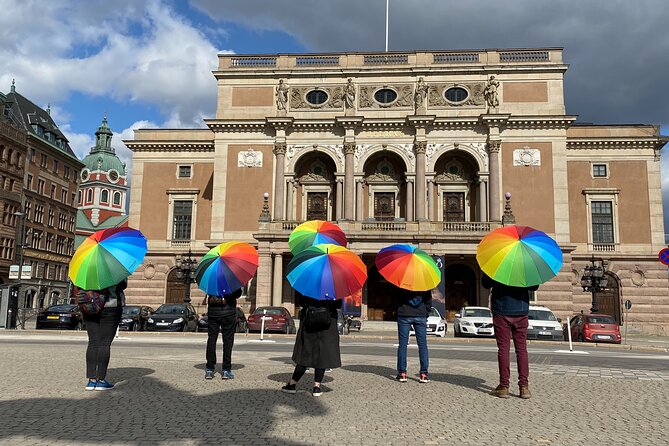
The route also includes the Royal Swedish Opera, a classic Stockholm landmark. You’ll get it as part of the bigger cultural map: royal and national identity isn’t limited to palaces and churches—it shows up in the arts.
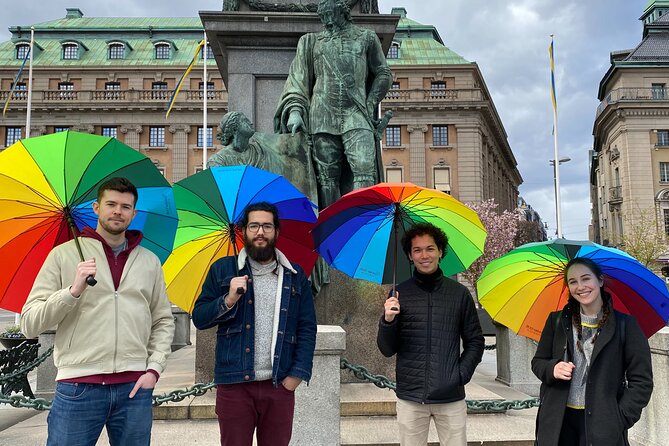
Finally, you end at one of the most story-driven stops: the St. George & The Dragon Statue tied to the battle of Brunkeberg in 1471, where Sten Sture defeated the armies of Christian I of Denmark, as described on this route. The point here isn’t just the battle name. It’s that Old Town’s art repeats the same themes again and again: protection, authority, conflict, and legitimacy.
Admission ticket note: this final statue stop lists admission as included. It’s a nice way to close on something iconic without leaving you wondering whether you missed the “real” interior or context piece.
Price and value: is $24.07 a good deal?
At $24.07 per person, this tour lands in the budget-friendly category for a guided, high-sight walking experience. You’re paying for three things that matter in Stockholm:
1) direction through a confusing area,
2) context that makes landmarks feel connected, and
3) time efficiency so you don’t spend your first day guessing.
Also, the tour is booked on average 45 days in advance, which usually hints it’s a popular first-visit slot—especially for people trying to do Old Town early in the trip.
One thing to plan for is admissions. Several major landmarks in the route list admission tickets as not included (parliament, churches like the German Church and Riddarholmen, Nobel Prize Museum, Royal Palace, Storkyrkan, Royal Opera). That doesn’t make the tour bad—it just means your final spend depends on how many interiors you choose to add.
If you prefer learning first and paying only when you’re sure, you’ll do well here. If you want every museum interior, you’ll likely spend more once you see what’s on offer.
Who this walking tour fits best (and who should think twice)
This is best for active travelers who like walking and want a structured way to see Old Town. It’s also a great fit if you’re visiting Stockholm for the first time and you want a fast overview before you branch out to museums or neighborhoods.
You’ll also enjoy it if you like stories that connect politics, symbols, and buildings—because the route deliberately moves from Parliament to churches to royal and cultural institutions.
Think twice if you hate walking in cold or wet weather. The experience specifically requires good weather, and it’s clear the tour is designed for being outdoors for a good chunk of time. Also, if you’re trying to maximize every museum stop in one go, the “not included” admissions mean you’ll need extra planning time.
The guides are a big part of the value
The strongest signal in the feedback is the human touch. Many guides are praised by name—Gaia, Olivia, Sophie, Dante, Aggie, Rose, Katherine, Kyra, Lova, and Tale—and the common themes are: upbeat delivery, clear explanations, and a sense of humor.
That matters because Old Town can overwhelm you. When the guide keeps things engaging, you don’t just memorize facts; you start seeing patterns. People also mention helpful extra suggestions for food and timing, like when to catch changing-guard moments.
Small group size (max 20) supports this too. It’s easier to ask a question about what you’re looking at—why a square matters, what a statue represents, or how a building fits into the wider story.
Should you book this Stockholm Old Town walking tour?
I’d book it if you want an efficient, story-driven way to get your bearings in Gamla Stan. The route covers the right mix of iconic stops and “you’ll actually remember that” details like Järnpojke and Marten Trotzigs gränd, all within a schedule that won’t choke your whole day.
I wouldn’t prioritize it if you already know Old Town well or if you’re determined to do every interior museum and church on one outing. The tour is best as an orientation and context builder—then you choose your extra entry stops afterward.
If you’re going soon, I’d also consider your timing. Start with this in the morning so you can use what you learn later while wandering. And if weather is iffy, have a flexible plan, since the experience requires good conditions.
FAQ
How long is the Walking Tour of Stockholm Old Town?
It lasts about 2 hours 30 minutes.
Where does the tour start and end?
It starts at Gustav Adolfs torg, 111 52 Stockholm, Sweden, and ends at Stortorget, 111 29 Stockholm, Sweden.
What time does the tour start?
The listed start time is 10:00 am.
How much does the tour cost?
The price is $24.07 per person.
Is the tour in English?
Yes, the tour is offered in English.
Is this mainly a walking tour?
Yes. It is a walking tour, so it’s best for active travelers.
What about admission tickets?
Some stops list admission tickets as included, while others list them as not included, so you may need to pay separately for certain attractions.
How big is the group?
The tour has a maximum of 20 travelers.
What happens if the weather is poor?
The experience requires good weather. If it’s canceled due to poor weather, you’ll be offered a different date or a full refund.
More Tours in Stockholm

More Tour Reviews in Stockholm
More Gamla Stan Walks


Just Added: The Latest Stockholm Reviews










Gamla Stan Old Town Walks, compared.
 ★ 4.7Ghost Walk and Historical TourFrom $312,206 reviews
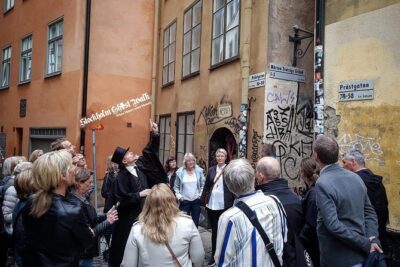 ★ 4.5The Original Stockholm Ghost Walk and Historical Tour – Gamla StanFrom $381,165 reviews
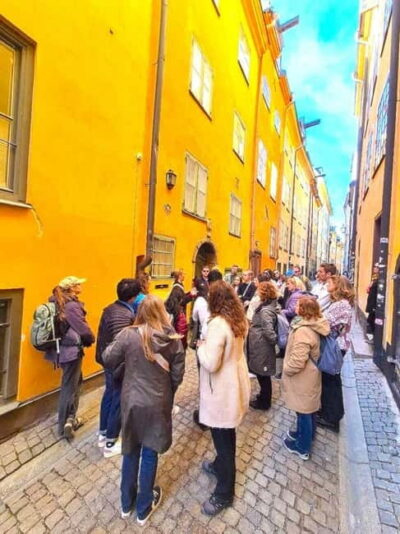 ★ 4.7Old Town Walking Tour with Local GuideFrom $15719 reviews
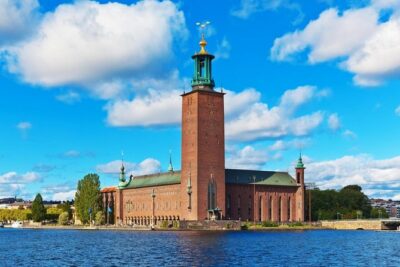 ★ 5.0Best of Stockholm Walking Tour-3 Hours, Small Group max 10 peopleFrom $49645 reviews
 ★ 4.5The Nordic Food Walk StockholmFrom $122642 reviews
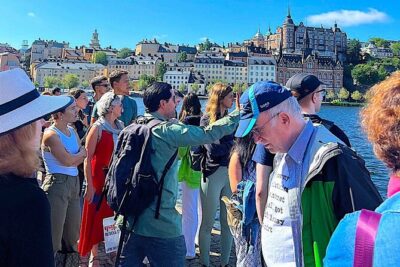 ★ 5.0Walking Tour of Stockholm’s Old Town, Gamla StanFrom $13451 reviews
 ★ 4.9Old Town Historical Walking TourFrom $52344 reviews
 ★ 4.0Old Town Tour of StockholmFrom $51289 reviews
Browse the lists this tour appears in