
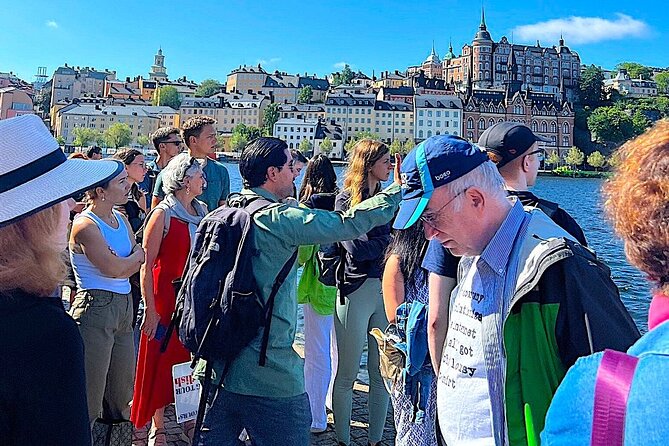
Reviewed · GAMLA STAN OLD TOWN WALKS
Walking Tour of Stockholm’s Old Town, Gamla Stan
Gamla Stan rewards slow walking. This English-guided stroll strings together the best of Stockholm’s medieval core, from Järnpojken luck-rubbing to final steps near the Royal Palace. It’s built as a set of short stops, so you leave with names, context, and a clear sense of where everything sits in real space.
What I really like is how the tour blends tiny, memorable details with bigger historical meaning. You get guided stories that make landmarks click fast, and the experience is powered by guides who bring real personality, like Ben’s clear British English and Marta’s laugh-out-loud storytelling. You also get a lot for the money: a two-hour route packed with major sights and frequent free-to-enter stops.
One watch-out: this is an outdoor, cobblestone walk with some wind off the water and limited places to sit. If you’re sensitive to cold or have mobility limits, plan for layers, good shoes, and a bit of standing.
In This Review
- Key highlights you’ll feel right away
- Why Gamla Stan Works Best on Foot From Mälartorget
- Price, timing, and group size that keep it fun
- Järnpojken: the tiny Iron Boy stop you’ll remember
- Riddarholm Church: where Swedish royalty is laid to rest
- Prästgatan and Mynttorget: cobblestones, color, and the city’s daily rhythm
- Tyska Brunnen, St. Gertrud’s Church, and the medieval network of streets
- Tyska Brunnen (the German Well)
- St. Gertrud’s Church
- Mårten Trotzigs gränd: Europe’s narrowest alleyway
- Nobel Museum: why prizes belong inside Gamla Stan
- Storkyrkan (St. Nicholas Cathedral) and Stortorget’s big-picture square
- Storkyrkan: an older church than most of the city’s landmarks
- Stortorget: colorful buildings and the Old Town’s center
- Finnish Church (Finska Kyrkan): a different cultural thread in the same walk
- Ending near the Royal Palace: what to do next
- Weather, shoes, and comfort tips that matter in real life
- Should you book this Gamla Stan walking tour?
- FAQ
- What’s the duration of the Gamla Stan walking tour?
- How much does the tour cost?
- Is the tour guided in English?
- Where do I meet the guide?
- Where does the tour end?
- Are entrance fees included?
- What should I do about weather?
- What’s the cancellation rule if plans change?
Key highlights you’ll feel right away
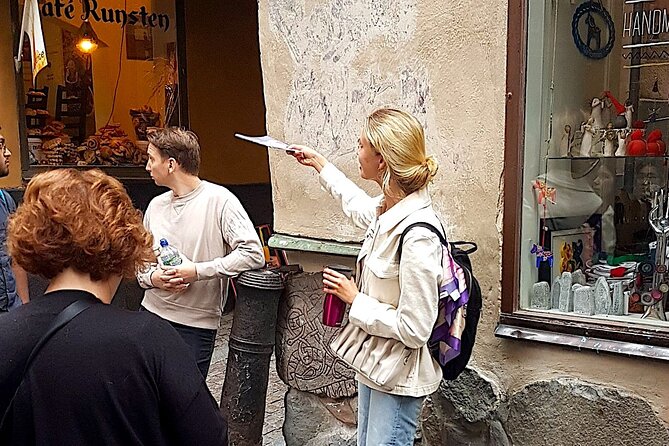
- Rub the head of Järnpojken for good luck at Stockholm’s smallest public statue
- Medieval churches on the same loop including Riddarholm Church and Storkyrkan
- Old Town streets that are made for wandering like Prästgatan and Mynttorget
- A Nobel Prize detour inside Gamla Stan at the Nobel Museum (set in an 18th-century building)
- Europe’s narrowest alleyway stop at Mårten Trotzigs gränd (about 90 cm wide)
Why Gamla Stan Works Best on Foot From Mälartorget
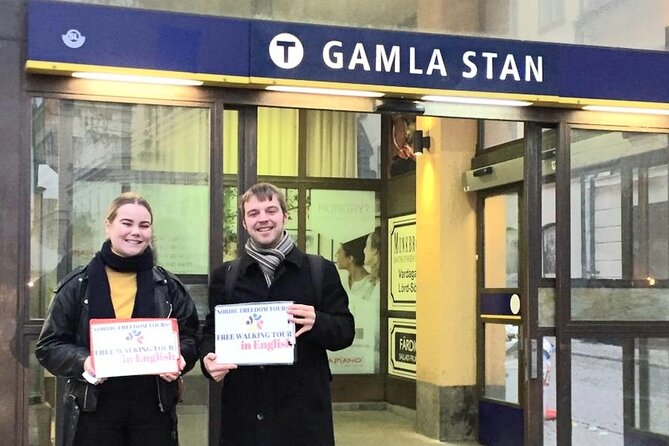
If you want Stockholm to feel real, you need the walking version. The starting point is Mälartorget 4, and from there you step into Gamla Stan as locals experience it: tight lanes, uneven cobblestones, small squares, and church spires that keep reappearing as you turn corners.
This tour is especially good for your first visit because it doesn’t just drop you at “pretty places.” It shows how the district hangs together—where the squares are, how the churches relate to the waterfront and palace zone, and why the Old Town still feels like the city’s center of gravity.
I also like that the route is designed around short pauses. Even when you’re just standing on a corner, you’re not left figuring it out alone. You get context in plain language, then you move on before fatigue sets in.
More laps of Gamla Stan and the old town lanes

Price, timing, and group size that keep it fun
At $13.30 per person for about two hours, this is the kind of tour that makes sense even if you’re not a “big tour person.” You’re not paying for attractions tickets throughout the day; most stops are free to enter, and the value is in the guided waypoints and storytelling.
Timing matters too. Most departures have a typical advance booking pattern (often around two weeks out), so I’d grab your slot early—especially if you’re traveling on a weekend or in winter.
Group size is capped at 25, which helps with flow. In practice, guides keep the group together and moving at a pace that works for mixed fitness levels. That said, there’s still walking: expect cobblestones and a bit of a hill-or-two depending on the route that day.
Järnpojken: the tiny Iron Boy stop you’ll remember
Your first landmark is Järnpojken, a small bronze statue fondly nicknamed the Boy Looking at the Moon. It’s known as Stockholm’s smallest public statue, and the tradition is simple: visitors rub the head for good luck.
Why this works: the statue is small enough that you’ll notice it, but the story gives you a reason to care. It’s not just a photo moment. It’s a charming doorway into the Old Town’s habit of turning everyday streets into rituals.
How to enjoy it:
- Stand close enough to read the details, but don’t slow the group too long.
- Do the head-rub quick and move on. The value is in the next stops too.
One practical tip: in winter, that bronze can feel colder than you expect. I’d keep gloves on until you’re ready.
Riddarholm Church: where Swedish royalty is laid to rest
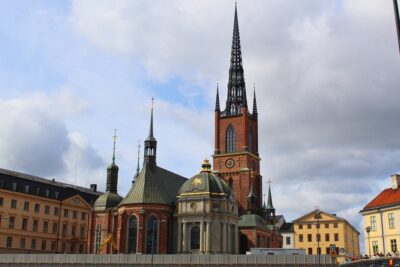
Next up is Riddarholm Church on Riddarholmen Island, near the Royal Palace area. It’s a historic burial church with medieval architecture and a major claim to fame: it’s the final resting place for Swedish monarchs.
This stop gives you a useful perspective shift. Gamla Stan can look like a collection of pretty buildings from street level, but the church reminds you this place once ran on power, ceremony, and long timelines.
What you can look for:
- The church’s medieval feel from the outside, then the sense that you’re near something both solemn and central.
- How its position fits into the palace landscape around it.
You’ll get about 15 minutes, which is enough to absorb the setting without turning the experience into a sit-and-read museum visit.
Prästgatan and Mynttorget: cobblestones, color, and the city’s daily rhythm
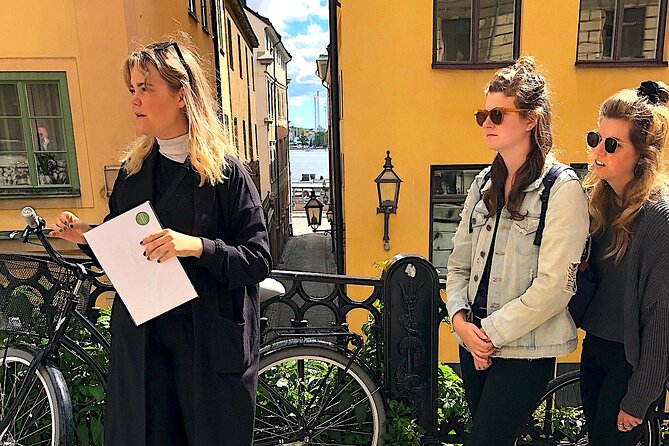
At Prästgatan, you’ll stroll a narrow cobblestone street lined with colorful historic buildings, plus small shops and cozy cafes. This is where the Old Town starts to feel like a lived-in neighborhood rather than a postcard.
Then you move to Mynttorget, a square with a lively atmosphere and great proximity to the Royal Palace area. Even if you never go far into the shops, these squares help you build an internal map. They’re natural places to pause, orient, and connect the route you’re walking.
Why these two stops matter together: they show two sides of Gamla Stan.
- The “street view” side at Prästgatan
- The “public space” side at Mynttorget
Plan for a bit of uneven ground and wind exposure around open squares, especially near the waterfront.





Tyska Brunnen, St. Gertrud’s Church, and the medieval network of streets
After the squares, the tour leans deeper into the Old Town’s quieter corners.
Tyska Brunnen (the German Well)
You’ll visit the Tyska Brunnen, a historic well in Gamla Stan dating back to the 17th century. It’s a small landmark, but it tells you this district isn’t only grand churches and palaces. It’s also practical architecture—water, daily life, and community memory.
St. Gertrud’s Church
Then comes St. Gertrud’s Church, with origins from the 1300s. This medieval church is known for its architectural beauty and cultural role through centuries of Swedish history.
What I like here is contrast. You go from a modest well to a much larger spiritual landmark, and your mental timeline stretches. It helps you understand why Gamla Stan has layers: different eras built near each other, not in neat lines.
You’ll usually get around 10 to 15 minutes at each of these stops, so don’t expect long interior time every time. The goal is to connect you to the story quickly.
Mårten Trotzigs gränd: Europe’s narrowest alleyway
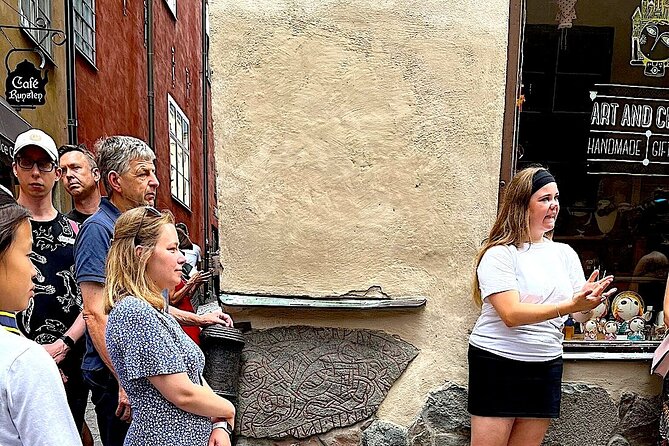
One of the most fun moments is Mårten Trotzigs gränd, famous as Europe’s narrowest alleyway. It dates to the Middle Ages, and it’s about 90 cm wide.
This is a stop you’ll laugh about while you’re learning. Stand there and it hits you physically: the city was built for close quarters, not comfort-first design. The alley makes the Old Town’s medieval planning feel real, not theoretical.
Practical advice:
- Don’t block the flow. Step aside for photos quickly.
- If it’s crowded, rotate position so the group can keep moving.
This is also a good moment to check your footwear. Cobblestones + a tight space = the spot where slipping would be most annoying.
Nobel Museum: why prizes belong inside Gamla Stan
Then you shift to modern global history at the Nobel Museum in the Old Town. It focuses on the Nobel Prize, its laureates, and their achievements. The museum opened in 2001, and it’s housed in a building dating to the 18th century.
This stop is valuable because it breaks the “only medieval” feeling. Stockholm’s Old Town isn’t frozen in time. It’s layered: centuries of life, then an international story you can walk to.
If you like turning everyday sightseeing into context, this is one of the tour’s best choices. You’ll see how Stockholm connects to ideas, innovation, and global attention—without having to leave the Old Town zone.
Storkyrkan (St. Nicholas Cathedral) and Stortorget’s big-picture square
Storkyrkan: an older church than most of the city’s landmarks
Next is Storkyrkan (St. Nicholas Cathedral), described as the oldest church in Stockholm’s Old Town. It dates back to the 13th century and is known for blending Gothic and Baroque styles. You’ll also get a sense of its long role as the main place of worship in the area.
Why this stop works: the Old Town can feel like a maze, but a landmark church like this acts as your anchor. After learning what you’re looking at, the rest of the walk starts to make more sense.
Stortorget: colorful buildings and the Old Town’s center
Finally, you reach Stortorget, a square dating to the 13th century. It’s known for colorful buildings and close association with the Nobel Museum area.
Stortorget is the kind of place where you can stand for a minute, look around, and realize you’ve been walking inside a historical layout that’s still visible today.
If you want a quick way to remember your route, this square helps. It’s the “you’re here” marker your brain needs.
Finnish Church (Finska Kyrkan): a different cultural thread in the same walk
Your last major church stop is the Finnish Church (Finska Kyrkan). The building dates to 1725 and is tied to the Finnish-speaking community, with Baroque architecture.
This is one of those visits that makes your Old Town experience feel more human. Gamla Stan isn’t only Swedish royalty and merchant history. It’s also a place shaped by migration and language communities over time.
If you care about how cities evolve, this stop is a smart addition. It widens your view beyond the obvious tourist storyline.
Ending near the Royal Palace: what to do next
The tour wraps up near the Royal Palace (Kungliga slottet), Stockholm’s official residence of the Swedish monarch. The palace is Baroque and has over 600 rooms, plus several museums.
This ending is practical: by finishing here, you get options. If you want to keep sightseeing, you’re already in the right zone to choose what fits your energy level and interests. If you’d rather wander independently, the Old Town layout near the palace gives you an easy next step.
My suggestion: treat the guided walk as your foundation, then decide on your own pace afterward. With the context you’ve built, you’ll read the buildings differently.
Weather, shoes, and comfort tips that matter in real life
This tour runs outdoors and can be quite windy near the water. In winter, dress like you actually plan to be outside for two hours, not like you’re dashing between stops.
From the field, I’d add these practical notes:
- Wear comfortable shoes with grip. Cobblestones can be slick.
- Bring layers. You can warm up fast while walking, then cool off quickly in open areas.
- If it’s cold, hand warmers are a smart idea.
Seating is limited. You get short breaks at stops, but you shouldn’t expect many places to sit along the way. If you need frequent rest breaks, consider bringing a small portable comfort item and pace yourself from the start.
If you use a mobility aid, know that cobblestones and small climbs can slow things down. The tour is described as accessible for most travelers, but the ground texture is still the ground texture.
Should you book this Gamla Stan walking tour?
Book it if you want an Old Town orientation that goes beyond surface photos. This walk is a strong fit for first-time visitors because it links major sights (churches, squares, palace zone) with small landmarks that make the district feel memorable.
Skip it or think carefully if you’re expecting a lot of sitting time or easy flat ground. Also, if you’re traveling in extreme weather, you’ll want to confirm conditions first, since the experience is noted as requiring good weather.
For me, the decision comes down to value and impact. For $13.30 and about two hours, you’re getting a guided story route across key Gamla Stan anchors, plus a modern detour at the Nobel Museum. That mix is hard to beat for a short visit.
FAQ
What’s the duration of the Gamla Stan walking tour?
It lasts about 2 hours.
How much does the tour cost?
The price is $13.30 per person.
Is the tour guided in English?
Yes, it’s offered in English.
Where do I meet the guide?
You meet at Mälartorget 4, 111 27 Stockholm, Sweden.
Where does the tour end?
It typically ends near the Royal Palace (Kungliga slottet) at 107 70 Stockholm, Sweden.
Are entrance fees included?
Most stops are described as free admission based on the information provided. Tip is not included.
What should I do about weather?
The tour requires good weather. If canceled due to poor weather, you’ll be offered a different date or a full refund.
What’s the cancellation rule if plans change?
You can cancel for a full refund if you cancel at least 24 hours before the experience’s start time. If you cancel less than 24 hours before, the amount paid is not refunded.
More Tours in Stockholm
More Tour Reviews in Stockholm
More Gamla Stan Walks

Just Added: The Latest Stockholm Reviews










Gamla Stan Old Town Walks, compared.
 ★ 4.7Ghost Walk and Historical TourFrom $312,206 reviews
 ★ 5.0Walking Tour of Stockholm Old TownFrom $241,175 reviews
 ★ 4.5The Original Stockholm Ghost Walk and Historical Tour – Gamla StanFrom $381,165 reviews
 ★ 4.7Old Town Walking Tour with Local GuideFrom $15719 reviews
 ★ 5.0Best of Stockholm Walking Tour-3 Hours, Small Group max 10 peopleFrom $49645 reviews
 ★ 4.5The Nordic Food Walk StockholmFrom $122642 reviews
 ★ 4.9Old Town Historical Walking TourFrom $52344 reviews
 ★ 4.0Old Town Tour of StockholmFrom $51289 reviews
Browse the lists this tour appears in