
Reviewed · STOCKHOLM MUSEUM & ATTRACTION TICKETS
Millesgården Museum: sculpture park and art galllery
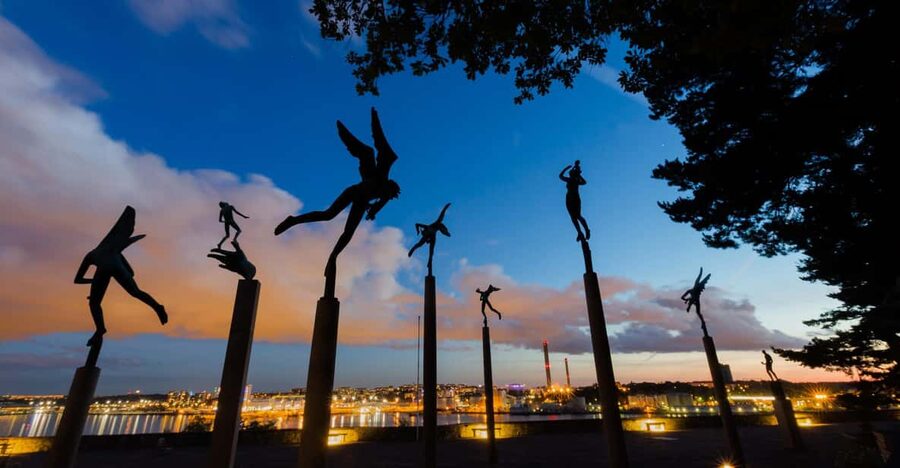
A sculpture garden with a view. That’s the first hook at Millesgården, and it’s backed up by a real artistic setting: Carl and Olga Milles’ home, a sculpture park with fountains and terraces, plus Anne’s House. I especially love the sculpture park’s mix of flowers, fountains, and around one hundred works, and I also really enjoy walking through the artist’s home—from the large studio to the Pompeii-inspired Gallery. The main thing to consider is that the art gallery can be in a switch period, so on some days your exhibition time may feel a bit shorter than you expect.
You’ll get a full day here, but you don’t need to rush. It’s about 20 minutes from central Stockholm in Lidingö, and the whole place is designed for slow wandering. Plan to sit a few minutes, because the views over Stockholm only make sense once you stop moving.
If you come with realistic expectations, this works beautifully. You’re paying for a specific kind of value: art in a garden, art inside a working artist’s home, and interiors by designers tied to Svenskt Tenn.
In This Review
- Key things worth your attention
- Getting to Millesgården: tram, bus, bike, or parking
- Sculpture park terraces and fountains: the real outdoor show
- Carl and Olga Milles’ artist home: studios, galleries, and collections
- Anne’s House and Svenskt Tenn style: a design stop you’ll remember
- Art Gallery and Lanthandel: plan your timing and comfort breaks
- The one-day flow: a practical route that avoids backtracking
- Price and value: why $19 can feel fair
- Useful practical notes before you go
- Should you book Millesgården Museum?
- FAQ
- How long is the Millesgården Museum visit?
- What’s included in the ticket?
- Which languages are available for the audio guide?
- What are the opening days and hours?
- How do I get there using public transportation?
- Is there parking available?
- Can I pay cash at Millesgården?
- Are oversize bags allowed?
Key things worth your attention
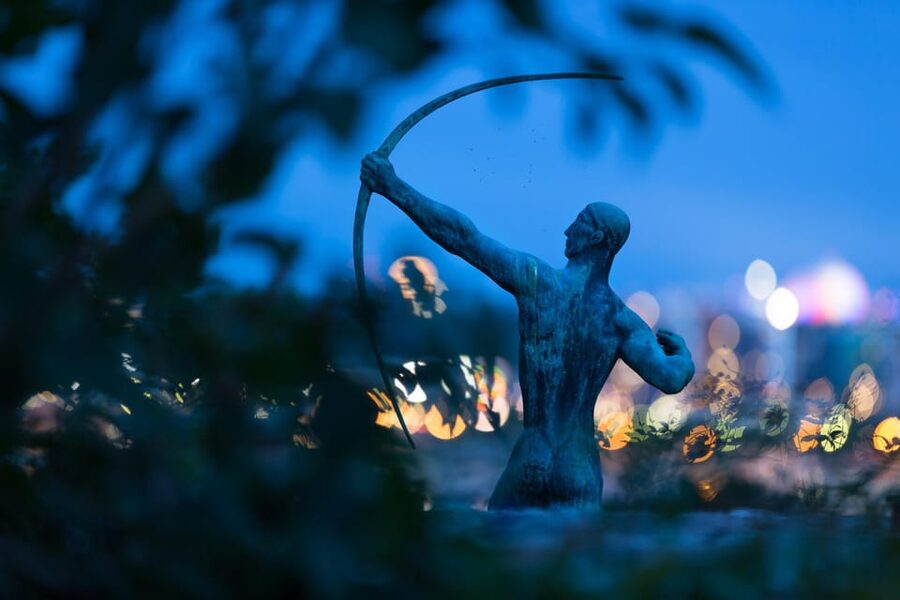
- Around one hundred sculptures, including about ten large fountain groups across the park
- Fountains and flower-adorned terraces that make the whole visit feel gently planned
- Carl Milles’ Large Studio and the home’s rooms filled with collections and classical objects
- Blue Dutch tiles in the breakfast room, plus the Pompeii-inspired Gallery
- Anne’s House, decorated by Estrid Ericson and Josef Frank for Svenskt Tenn
- Art Gallery exhibitions plus a museum shop, so you can leave with something memorable
Getting to Millesgården: tram, bus, bike, or parking
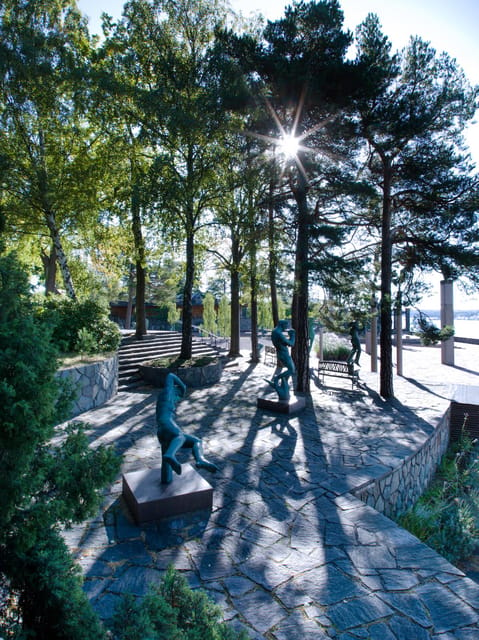
Millesgården is in Lidingö, just outside central Stockholm. From T-Centralen, expect about 20 minutes travel time. It’s easy enough that you can treat this as a calm half-day that turns into a full day without stress.
Public transport is straightforward:
- Take the subway to Ropsten, then ride bus 201, 202, 204, 206, 211, 212, or 221 to Torsviks Torg. From there it’s a 7-minute walk.
- Or skip the buses and take the Lidingöbanan (local tram) from Ropsten to Torsvik or Baggeby. Millesgården sits between those stops, and again it’s about a 7-minute walk.
If you like biking, that’s a strong option here. There’s a cycle path over the Lidingö bridge, and getting there on two wheels makes sense for a place built around walking.
For drivers, free parking is available at Herserudsvägen 32, right outside the main entrance. Do watch out for the “no oversized stuff” rule, though—more on that later.
More Stockholm sights indoors, tickets sorted



Sculpture park terraces and fountains: the real outdoor show
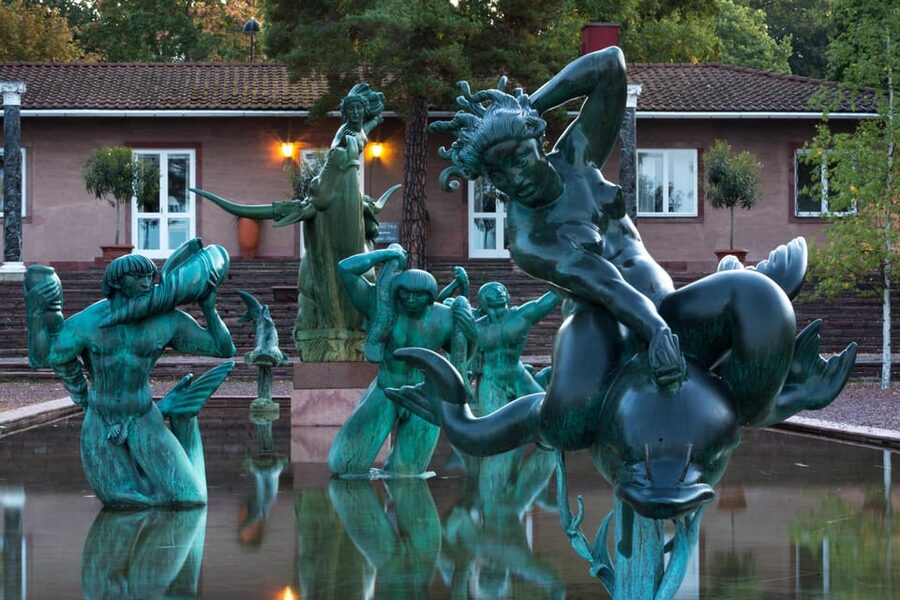
The sculpture park is the reason most people fall in love with Millesgården. You arrive at a garden that feels deliberate, not random. It’s the kind of place where you walk a few steps and suddenly the view, the sculpture, and the fountain all connect.
Here’s what to look for as you go:
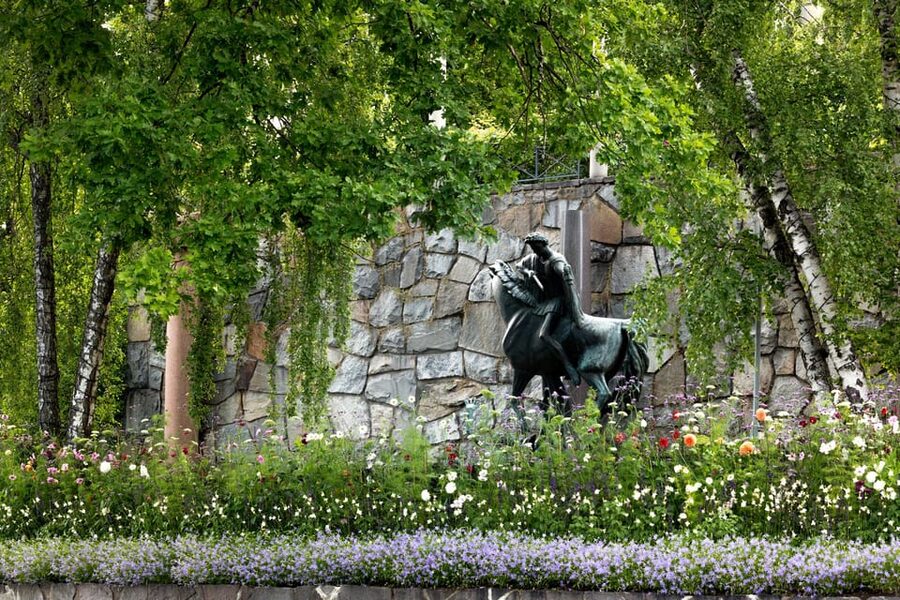
- Around one hundred sculptures by Carl Milles
- About ten larger fountain groups, which means water isn’t just a detail—it’s part of the composition
- Terraces and planted areas designed so you keep moving, but not in a frantic way
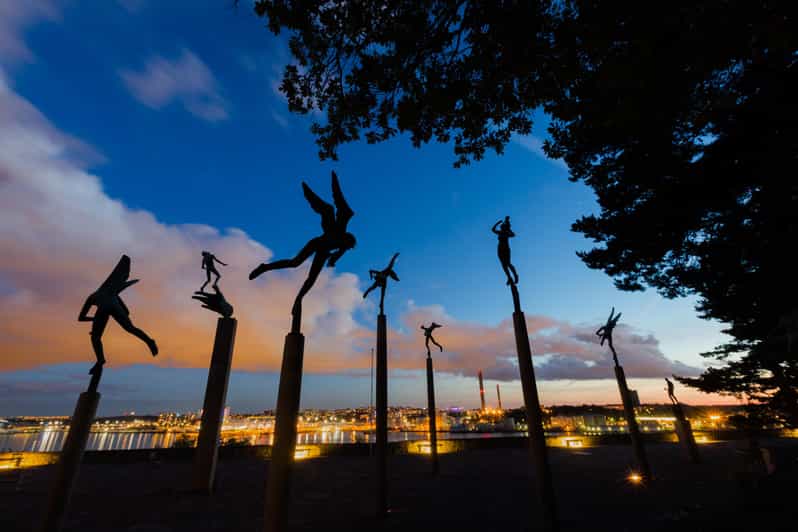
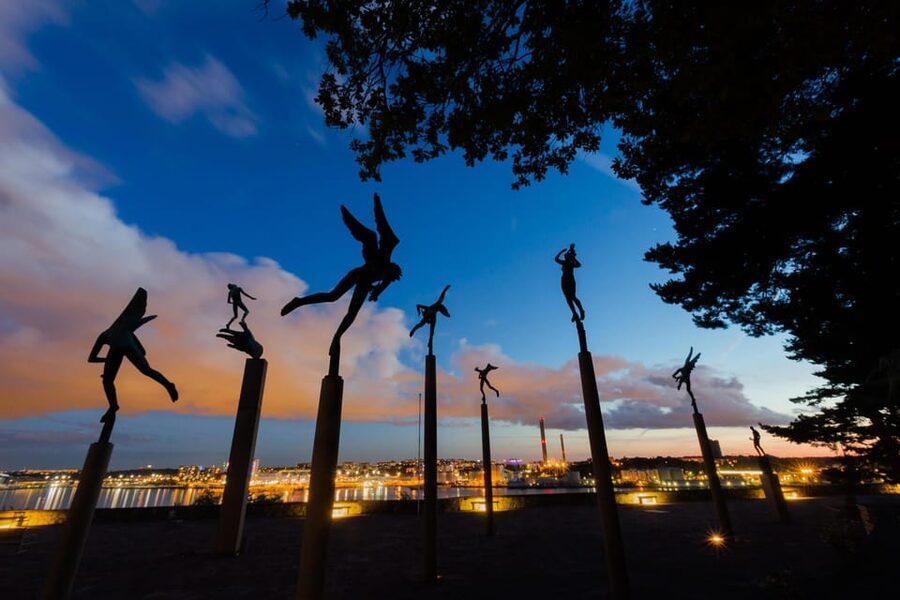
- The chance to see Stockholm from the park, so your outdoor time feels larger than just “a nice garden”
The fountain groups are especially worth your time because they change how you read the sculptures. In a garden setting, the scale can feel different at each distance. Up close, you notice surfaces and forms. From farther back, the whole thing becomes an outdoor “stage.”
One practical tip: give yourself time to loop back. The park layout makes it easy to miss a view the first time through if you keep a strict one-direction pace.
Carl and Olga Milles’ artist home: studios, galleries, and collections

After the park, the visit shifts indoors in a way that makes the outdoor sculptures feel more grounded. The Artist’s Home is where you understand the artist behind the garden.
In the home, you can explore several major spaces:
- The Large Studio, where Carl created his large sculptures
- The breakfast room with blue Dutch tiles
- The Pompeii-inspired Gallery
- Carl’s grand collection of classical sculptures and objects
This is one of those visits where the buildings matter as much as the art. The studio space helps you connect the physical act of making with what you’re seeing outside. And the Pompeii-inspired Gallery adds a different mood—more theatrical, more “museum-like,” but still connected to Carl’s eye.
If you care about design details, don’t rush the small moments. Tile colors, room light, and how objects sit in space are part of why this feels different from a typical museum.
Also, if you’re using the included audio guide (Swedish or English), pace yourself for the best effect. One important consideration from an earlier visit experience: it’s possible to miss how to use the audio guide if you’re expecting it to be obvious right away. Give yourself a minute at the start, then follow the cues inside.
Anne’s House and Svenskt Tenn style: a design stop you’ll remember

Anne’s House is the interior highlight that many people don’t expect to hit as hard as it does. Instead of being a generic “period room,” it’s decorated by Estrid Ericson and Josef Frank from Svenskt Tenn.
This part of the visit works because it balances the more sculptural energy of Carl Milles’ spaces. You’re seeing a different kind of creativity—one focused on interiors, textiles, and how a room can feel lived in and intentional.
Even if you’re not a serious design collector, you’ll likely appreciate how this house changes the tempo. It turns the day from “outdoor art and atelier spaces” into “home design you can experience with your eyes.”
Art Gallery and Lanthandel: plan your timing and comfort breaks
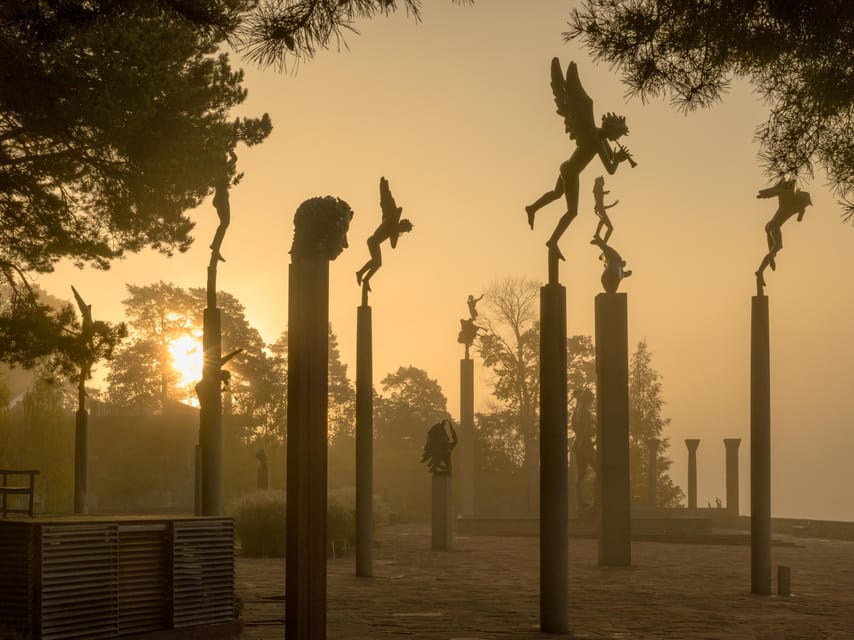
The Art Gallery at Millesgården is where temporary exhibitions come into play. It’s included in your visit, and it’s also where the day can vary slightly depending on what’s on. On some days, you might notice that an exhibition is in the middle of a handoff, so the gallery experience could feel a touch shorter or less complete than you were hoping for.
That’s not a deal-breaker. It just means you should treat the gallery as part of the bonus, not the main event.
For food and breaks, there’s Millesgården Lanthandel, where you can enjoy lunch or an afternoon coffee. I like building the day around this so you’re not trying to eat fast while you’re still excited to keep walking.
A simple pacing idea:
- Park first, then home
- Use Lanthandel either right before Anne’s House or right after, depending on your energy
- Leave enough time for the Art Gallery at the end, since indoor spaces help you reset
Also note the museum is cash-free, so bring a card. That matters when you’re traveling light and might otherwise assume you can pay with coins.




The one-day flow: a practical route that avoids backtracking
Millesgården works best when you accept it as a “slow route.” You don’t need to sprint between rooms, but you also don’t want to arrive with zero plan.
Here’s how I’d structure a smooth one-day visit:
- Start outdoors and get your bearings on the terrace layout. You’ll also see the fountains and how the sculptures are placed in relation to sightlines.
- Move into the Artist’s Home and hit the large studio and Pompeii-inspired Gallery before you start feeling museum-fatigued.
- Take a food or coffee break at Lanthandel when you’re ready—this is where you keep the day enjoyable.
- Finish with Anne’s House, then round out your visit in the Art Gallery and museum shop.
If you’re standing still too long in any one room, you’ll lose the rhythm that makes this visit feel cohesive. The building + park pairing is the point.
Price and value: why $19 can feel fair
At about $19 per person for a one-day visit, Millesgården is priced for value, not luxury. You’re getting more than a single display—you’re getting multiple art “settings” inside one ticket.
Here’s what makes the price feel reasonable:
- The sculpture park is outdoors, but it’s not casual. You’re seeing a concentrated body of work, not just a few pieces scattered around.
- The Artist’s Home adds depth: studio space, a breakfast room with distinctive blue Dutch tiles, and a Pompeii-inspired Gallery that changes the mood.
- Anne’s House is a major value add because it ties artful interior design to Svenskt Tenn names you can recognize if you follow Scandinavian design.
- The day also includes the Art Gallery, plus a museum shop if you want a souvenir that doesn’t feel random.
So yes, you’re paying for a museum experience—but you’re also paying for an actual environment: garden + home + design.
Useful practical notes before you go
A few small rules can save you irritation:
- Oversize luggage isn’t allowed, and large bags are also not permitted.
- The museum is cash-free, so plan on paying by card in the shop and restaurant.
- Opening hours run Tuesdays to Sundays, 11:00–17:00, all year round.
Audio guides are included in Swedish and English. And if you booked a guide, the meeting point is simple: ask in the reception for where to go.
On the accessibility front, it’s listed as wheelchair accessible, which matters because much of the value here is the flow between outdoor terraces and indoor rooms.
Should you book Millesgården Museum?
Book it if you want a day that mixes art and atmosphere instead of forcing you to “check off” galleries. This is a great fit for anyone who likes sculptures but also cares about context—where they were made, how they’re shown, and how the home and design world connect.
Skip (or at least keep expectations flexible) if you’re mostly chasing one specific blockbuster exhibition. Since the Art Gallery can be mid-switch on some days, your best bet is to treat the sculpture park and Artist’s Home as the core of the experience.
If you’re in Stockholm with limited time and you want something calm, local, and visually rewarding, Millesgården is a strong choice for a one-day cultural break.
FAQ
How long is the Millesgården Museum visit?
The experience is listed as valid for 1 day, so you can spend your time moving through the park, the artist’s home, Anne’s House, the art gallery, and the museum shop.
What’s included in the ticket?
You get access to the Art Gallery, Artist’s home, Antiques collection, sculpture park, and Anne’s House.
Which languages are available for the audio guide?
The audio guide is available in Swedish and English.
What are the opening days and hours?
Millesgården is open Tuesdays to Sundays, 11:00–17:00, all year round.
How do I get there using public transportation?
Go to Ropsten by subway, then take bus 201, 202, 204, 206, 211, 212, or 221 to Torsviks Torg (about a 7-minute walk). Or take the Lidingöbanan tram from Ropsten to Torsvik or Baggeby, then walk about 7 minutes.
Is there parking available?
Yes. There is free parking at Herserudsvägen 32, just outside the main entrance.
Can I pay cash at Millesgården?
No. The museum is cash-free, and you can pay by credit or debit card in the museum shop and restaurant.
Are oversize bags allowed?
No. Oversize luggage and large bags are not allowed.
More Tour Reviews in Stockholm

More Stockholm Museums & Tickets



Just Added: The Latest Stockholm Reviews












Stockholm Museum & Attraction Tickets, compared.
 ★ 4.5Skansen Open-Air Museum Admission TicketFrom $273,427 reviews
 ★ 4.1Stockholm Pass: Save up to 50% – Includes Vasa Museum TicketFrom $952,392 reviews
 ★ 4.3Nobel Prize Museum and Exhibition Entry TicketFrom $18994 reviews
 ★ 4.3SkyView Glass Gondola RideFrom $19815 reviews
 ★ 4.8Avicii Experience Skip-the-Line Entrance TicketFrom $23763 reviews
 ★ 4.5Fotografiska Museum Entrance TicketFrom $22702 reviews
 ★ 4.5The Viking Museum Exhibition and Viking RideFrom $22667 reviews
 ★ 5.0Vasa Museum Guided Tour, Including Ticket & GuideFrom $60330 reviews
Browse the lists this tour appears in