

Reviewed · VIKING SIGTUNA & UPPSALA DAY TRIPS
Entrance ticket to The Viking Museum
Vikings get personal fast in Stockholm, thanks to the Ragnfrid’s saga show and the English audio guide that explains raids, shipbuilding, and farm life. It’s heavy on narration and reading, so some kids (and certain teens) may want more hands-on action than you’ll get here.
I like that you can ask questions freely as you move through the galleries, with staff in Viking gear and archaeological objects up close. Expect movies, projections, and sound effects to set the mood, not just display cases.
In This Review
- Key things that make this visit work
- Entering The Viking Museum in Stockholm without wasting time
- What you actually see: movies, projections, artifacts, and Viking everyday life
- Ragnfrid’s saga: the 11-minute story ride that anchors the visit
- The galleries: learning Viking raids, ships, and farm life in a small footprint
- Archaeological guides in Viking gear: asking questions as you go
- Where Norse mythology fits: myth meets truth, not myth alone
- Timing: how long should you plan, and when to go?
- Tickets, getting in, and what you need to know before you arrive
- Price and value: is $22.68 worth it?
- Best fit: who will love it, and who should adjust expectations
- Don’t miss the cafe and photo moments
- My decision guide: should you book the Viking Museum?
- FAQ
- How long does the Viking Museum visit take?
- Is this offered in English?
- Do I need a printed ticket?
- How far in advance should I book?
- When will I get confirmation?
- Is the museum near public transportation?
- Are service animals allowed?
- Can most travelers participate?
- Can I cancel for a full refund?
- Where does Ragnfrid’s saga begin and what does it cover?
Key things that make this visit work
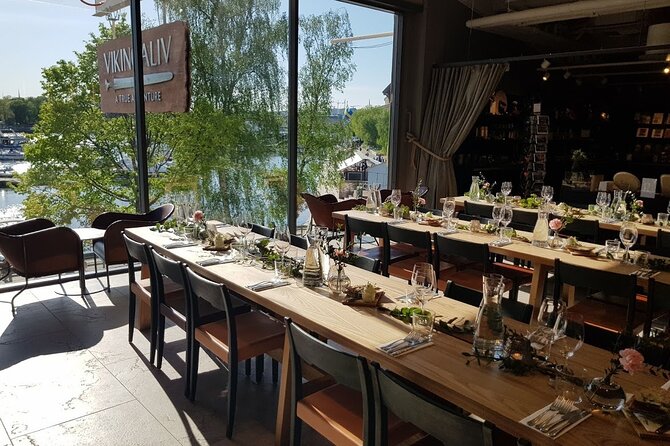
- Ragnfrid’s saga ride (about 11 minutes): a scripted story told by Ragnfrid, starting at Frösala Farm.
- Mix of tech and artifacts: projections and sound effects with real archaeological finds nearby.
- English experience: audio guide and show content are offered in English.
- Talk to the guides: you can ask questions while you explore; they’ll point out what matters.
- Small-space efficiency: you can learn a lot without needing half a day.
Entering The Viking Museum in Stockholm without wasting time
The Viking Museum is one of those places where planning matters, mainly because it’s easy to turn a short stop into a long one. With the ticket set up as a mobile option, you spend less time figuring out logistics at the door. You also get an experience designed to run about 1 to 2 hours, so it fits well into a busy day of museums.
The museum is also set up for visitors who want an English experience. The offering is in English, and that’s a big deal here, because much of what makes the visit click is the story-driven presentation.
Price-wise, you’re paying about $22.68 per person. That sounds steep compared to a quick walk-in museum, but the value comes from how much you get in the allotted time: a narrated storyline, media presentations, and interactive-feeling displays rather than only static panels.
More Viking days out to Sigtuna and Uppsala



What you actually see: movies, projections, artifacts, and Viking everyday life
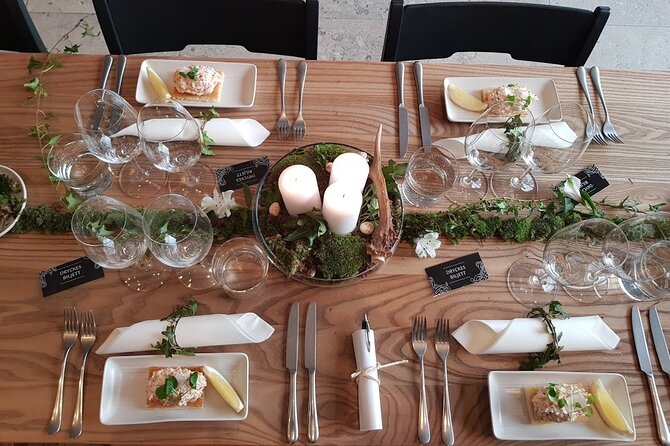
The museum doesn’t try to shock you with battles at every corner. Instead, it builds a picture of Viking life through a blend of media and objects. You’ll see museum displays that use movies, scenery, projections, and sound effects to make the era feel immediate.
Then you get the grounding: archaeological objects and relics are part of the same route. For me, that mix is what separates this from a pure “story museum.” It gives you myth on one side and material culture on the other, without making you choose.
A good chunk of the content focuses on what Vikings did and how they lived. You’ll learn about raids and journeys, plus ship-building mastery. You also get the everyday side: what life at a farm looked like, and how Norse mythology shows up again and again. That myth-meets-truth approach is present throughout the visit, not stuck in one corner.
Ragnfrid’s saga: the 11-minute story ride that anchors the visit
If you’re short on time, don’t skip the main narrative show. The heart of the experience is Ragnfrid’s saga, a ride about 11 minutes long told by Ragnfrid herself. It starts at Frösala Farm, where you meet Ragnfrid and her husband Harald.
From there, the story moves through two key directions you’ll keep hearing about when you study the Viking Age: action in the west and forced labor in the east. You’ll witness plundering in the west and the slave trade in the east as the ride carries you forward. The pacing uses sound, light, and atmospheric settings, so it feels like you’re traveling through the era rather than watching a slideshow.
This is also where the museum leans into storytelling. If you enjoy history that’s told as a human narrative, you’ll probably feel the pull. If you hate scripted narration and want only artifacts and facts, this may feel like a lot of “theater for a small time slot.” It’s still short, but it’s clearly the centerpiece.
The galleries: learning Viking raids, ships, and farm life in a small footprint
The museum is compact, and that’s not a flaw if you treat it like what it is: a focused stop. The displays aim to cover big themes quickly—raids, journeys, ship-building skills, and day-to-day farm life—while keeping you moving through spaces with audio and media support.
One practical advantage: you’re not trapped in a maze of unrelated rooms. The story you hear in the ride connects to what you see in the galleries. When you spot details about ship-building or everyday life, you’re not wondering why they matter; they’re part of the same overall arc.
Still, here’s the trade-off. Some of what you get is reading on panels and listening to guided narration. If you’re traveling with kids who need movement and play to stay interested, plan extra breaks or be ready to speed through the more text-heavy areas.
Archaeological guides in Viking gear: asking questions as you go
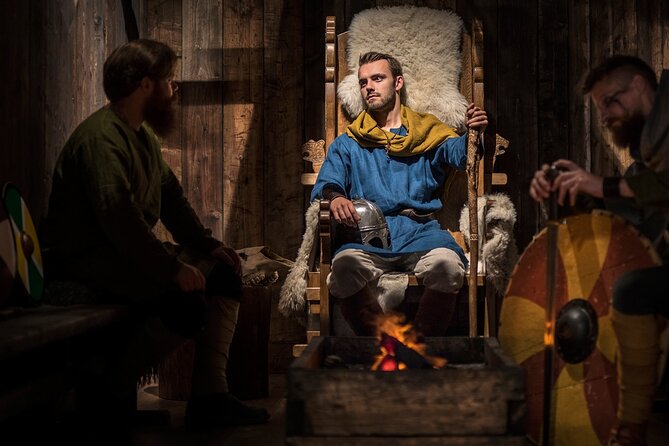
A lot of museums give you a rule: look, read, move on. This one feels more like a conversation in motion. The museum has guides in Viking gear who answer questions as you explore.
That matters because Viking history can get messy fast—myth and legend mix with real evidence, and it’s easy to confuse what’s proven with what’s retold. When you ask questions on-site, you get context that helps you sort out what the evidence supports versus what stories claim.
You can also use the guides to tailor your visit. If your interest is ships, ask about ship-building. If your interest is daily life, ask what archaeologists look for on farms and in settlements. The museum setup makes these questions worth asking instead of feeling like you’re interrupting.
More Stockholm sights indoors, tickets sorted





Where Norse mythology fits: myth meets truth, not myth alone
You’ll notice Norse mythology sprinkled across the museum rather than isolated in a single section. That’s a smart design choice because it mirrors how Viking-era culture worked—stories weren’t separate from practical life. Myth could explain the world, while real evidence explains how people lived, traveled, traded, and built.
The museum’s approach seems built to answer a common visitor question: what’s legend, and what’s grounded in evidence? By pairing media and artifacts, you get a more balanced view. You’re not only told stories; you’re also shown the kinds of finds that help scholars interpret Viking life.
Timing: how long should you plan, and when to go?
Plan for about 1 to 2 hours. If you’re the type who reads every panel and takes photos, lean toward the longer end. If you want the main story, the key exhibits, and a cafe stop, 1 hour can feel like enough.
A helpful tactic is to check for any scheduled language options beyond the standard audio. There’s advice that you can find a free guide show in your language at certain times. Even without exact timing listed here, the idea is simple: look at the schedule when you arrive so you can add a live bit if it matches your interests and energy level.
As for pacing, don’t try to stack too many museums back-to-back right after this. The ride and media presentations can be intense for a short time. A gap of at least an hour before or after helps you digest what you learned.
Tickets, getting in, and what you need to know before you arrive
This is an admission ticket experience with an English offering and a mobile ticket format. You should receive confirmation at the time of booking, and the museum is near public transportation, so it’s easy to weave into a day in Stockholm.
Service animals are allowed, and most visitors can participate. That’s useful if you’re deciding between “hands-on style” museums versus ones built on storytelling and guided movement. The museum isn’t advertised as a strict physical challenge; the main requirement is staying engaged with the narrative and displays.
Also, if you’re someone who likes last-minute spontaneity: this venue tends to book ahead, with an average booking window of about 26 days. That doesn’t mean it will sell out instantly, but it’s a sign the museum is popular enough that prebooking can reduce stress.
Price and value: is $22.68 worth it?
For $22.68 per person, you’re paying for more than entry. You’re paying for a curated route that combines three things that usually cost extra elsewhere: a storyline ride (Ragnfrid’s saga), English audio support, and guided-style interaction with staff.
If your main goal is Viking facts from artifacts only, you might feel the time is split between media and objects. One valid comparison is that you could spend an extra hour at another major Stockholm museum focused on a single famous vessel or archeological theme. The Viking Museum does not try to outdo those places on one subject.
But if you want the Viking Age explained through a structured experience—raids, journeys, ship-building, farm life, and myth—then the price can make sense. The museum is built for efficient learning, not a deep multi-hour seminar.
Best fit: who will love it, and who should adjust expectations
This is a solid choice for adults and families who like history told through story, sound, and visual cues. If your group includes kids who enjoy animated narratives and don’t mind some reading and guided explanation, you’ll probably find it fun and approachable.
On the other hand, if you’re traveling with teenagers who prefer realism, documents, or higher interactivity, you may want to pair this with something more hands-on. Even a strong museum can feel “cheesy” when the audience expects modern pacing and lots of games.
My practical advice: treat it as a short, well-designed intro to Vikings, not as a final word. If you go in expecting a compact mix of artifacts and a storytelling ride, you’ll feel like you used your time well.
Don’t miss the cafe and photo moments
The experience isn’t only inside the galleries. There’s a cafe that’s worth a break, and one specific suggestion is reindeer meatballs. It’s the kind of meal that makes a museum day feel like more than just exhibits.
For photos, the museum also offers good opportunities. Even if you’re not a serious photographer, the ride setting and display areas tend to create backgrounds that look good without needing much effort.
My decision guide: should you book the Viking Museum?
Book it if you want:
- An English-friendly way to understand Vikings in about 1 to 2 hours
- The Ragnfrid’s saga ride as a main anchor, plus media and artifacts
- A chance to ask questions while you walk through the exhibits
Skip or re-think it if you:
- Want only artifact-heavy viewing with minimal narration
- Are traveling with older teens who get bored by script-heavy presentations and panel reading
- Are planning a very museum-dense day and need something more specialized than a general Viking overview
If you like story-driven learning and you want a clean intro to the Viking world—myth, daily life, travel, and ship-building—this museum is a strong stop in Stockholm.
FAQ
How long does the Viking Museum visit take?
The experience is listed as about 1 to 2 hours.
Is this offered in English?
Yes. The experience is offered in English.
Do I need a printed ticket?
No. You use a mobile ticket.
How far in advance should I book?
On average, this is booked about 26 days in advance, so booking ahead is a good idea to reduce stress.
When will I get confirmation?
You’ll receive confirmation at the time of booking.
Is the museum near public transportation?
Yes. It’s near public transportation.
Are service animals allowed?
Yes. Service animals are allowed.
Can most travelers participate?
Yes. Most travelers can participate.
Can I cancel for a full refund?
Yes. Free cancellation is available up to 24 hours in advance of the experience start time for a full refund.
Where does Ragnfrid’s saga begin and what does it cover?
The ride begins at Frösala Farm with Ragnfrid and her husband Harald, and it includes plundering in the west and the slave trade in the east as part of the story.
More Tour Reviews in Stockholm





More Stockholm Museums & Tickets
More Viking Day Trips to Sigtuna & Uppsala




Just Added: The Latest Stockholm Reviews












Viking Sigtuna & Uppsala Day Trips, compared.
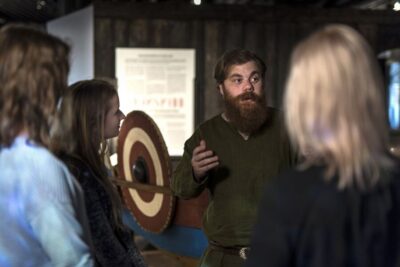 ★ 4.5The Viking Museum Exhibition and Viking RideFrom $22667 reviews
 ★ 4.5Viking History, Runes & Countryside 9h Tour to Sigtuna & UppsalaFrom $298283 reviews
 ★ 4.5Viking History and Swedish Countryside Tour to Sigtuna & UppsalaFrom $274162 reviews
 ★ 4.7From Stockholm: Uppsala and Sigtuna Viking Sites TourFrom $235157 reviews
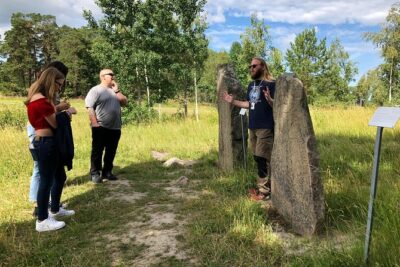 ★ 4.5Viking History Small Group Tour from Stockholm: Half Day Including SigtunaFrom $193111 reviews
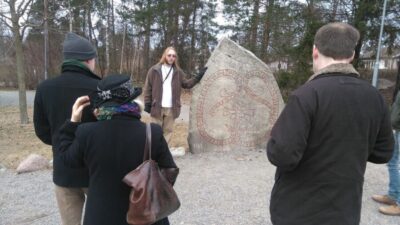 ★ 4.5From Stockholm: Viking Culture Guided Tour with TransferFrom $19381 reviews
 ★ 4.5Full Day Viking Tour with Fika Swedish Coffee BreakFrom $24181 reviews
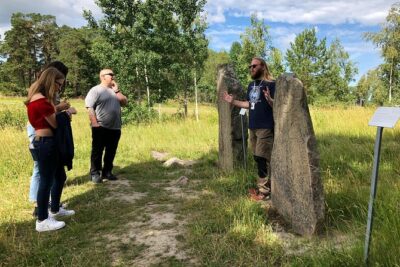 ★ 5.0Private Full Day Viking History Tour from Stockholm Including Sigtuna and UppsalaFrom $67251 reviews
Browse the lists this tour appears in