
Reviewed · VIKING SIGTUNA & UPPSALA DAY TRIPS
Viking History and Swedish Countryside Tour to Sigtuna & Uppsala
Runestones and royal mounds, all in one day. This Stockholm-area tour strings together Viking-era sites and medieval Swedish landmarks, then sprinkles in countryside driving so it never feels like you are stuck in a museum box. You’re set up for an easy rhythm: hotel pickup, a guided route out of the city, then guided stops you can actually connect the dots on.
I especially love the mix of places that explain Viking life in more than one way: the legal gathering site of Arkils tingstad and the long run of evidence you see at Granby, from inscriptions to preserved house foundations. I also like the human side of the day—on past departures with guides like Urban and Olof, the storytelling has humor, and the group management is tight, with practical pacing and helpful pauses for breaks.
The main consideration is simple: it’s a long 9-hour day with a lot of outdoor standing and lots of stone, church, and runestone stops in sequence. If you hate being rushed or you get bored by repeating themes, you may feel it. Pack layers, comfy shoes, and plan to stay patient with the drive-and-stop flow.
In This Review
- Key highlights that make this tour worth your time
- A practical look at the Stockholm-to-Viking-countryside day
- Täby Church drive-by and the early Viking footprint near Stockholm
- Vallentuna’s Arkils tingstad: Viking law and decision-making in a ring of stones
- Granby and Granbyhällen: from runes to longhouse life
- Hökeriet farmhouse stop: fika and Viking-era shopping culture
- Sigtuna in about an hour: oldest-town walking with Lake Mälaren views
- Uppsala Cathedral: Lutheran medieval grandeur plus history on the spot
- Gamla Uppsala mounds: kingship before Christianity
- Price and value: is $274.19 fair for a 9-hour guided history route?
- Comfort tips for a long day: heat, standing time, and hearing the guide
- Who should book this Viking history route (and who should skip it)
- Should I book it?
- FAQ
- How long is the Viking History and Swedish Countryside tour?
- Where is pickup in Stockholm?
- What’s the group size?
- Is the tour offered in English?
- Is lunch included?
- Is a fika included?
- What Viking-era places do you visit?
- How much time do you get in Sigtuna and Uppsala?
- Is this tour suitable for children?
- What is the cancellation policy?
Key highlights that make this tour worth your time
- Viking politics made visible at Arkils tingstad (a real assembly/ting site, not just a “fun fact”)
- Jarlabanke’s Bridge and runestone context near Stockholm so you see the Viking world close to the capital
- Granbyhällen and the longhouse foundations for a hands-on feel of daily life
- Sigtuna’s oldest-town atmosphere with about an hour of walking time by Lake Mälaren
- Uppsala Cathedral + Gamla Uppsala mounds for a clean Viking-to-Christian timeline
A practical look at the Stockholm-to-Viking-countryside day
This is set up as a full-day excursion from central Stockholm, using an air-conditioned minibus and a professional guide. You get hotel pickup and drop-off within the general central area (and yes, you’ll want to provide a phone number so the operator can confirm your exact pickup time 1–2 days ahead).
The day runs about 9 hours, and the group is kept small—up to 17 people. That size matters. It’s big enough to keep it lively, but small enough that the guide can usually handle questions and timing without the whole thing feeling like a cattle call.
One big quality-of-life detail: multiple departures mention using in-ear devices or headsets so you can hear the guide clearly while moving between stops. When the van is a little chilly or the wind is strong, that audio support really helps.
More Viking days out to Sigtuna and Uppsala


Täby Church drive-by and the early Viking footprint near Stockholm
Your day starts close to the city, with a drive-by at Täby Church—a historic landmark with Romanesque and Gothic architecture from the 13th century. Even as a quick pass, it sets the tone: this tour is really about continuity. You are not just visiting Viking “then.” You’re also seeing what followed.
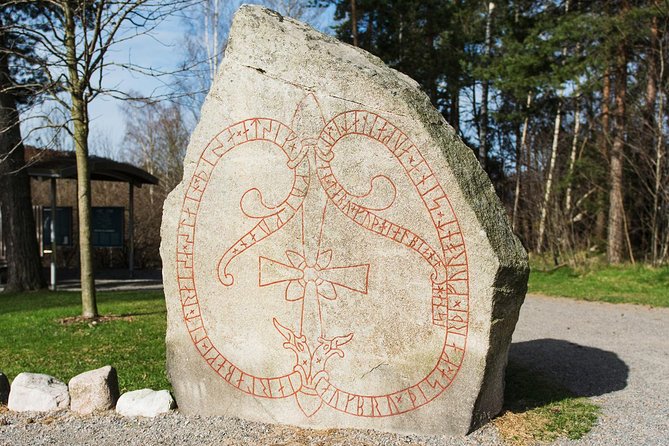
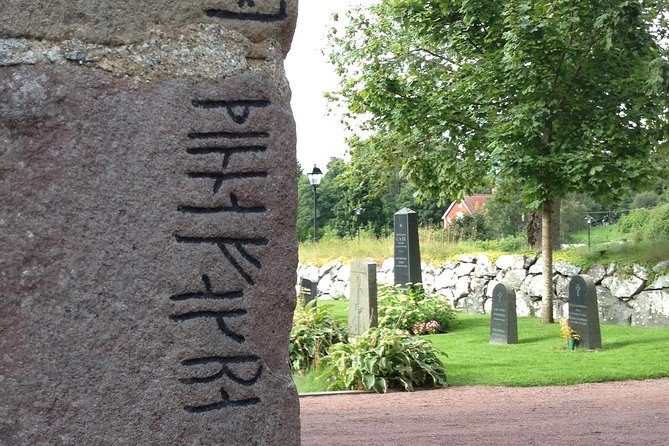
Then you move into one of the best kinds of stops for first-timers: places where Vikings left physical evidence you can point at. The tour visits Jarlabanke’s Bridge—an ancient Viking Age bridge from around the 11th century. It’s named after Jarlabanke, the chieftain credited with ordering the bridge’s construction. Near the bridge, the runestone inscriptions tie the site to Jarlabanke and his family, and the guide explains what the wording meant as a public statement of power.
If you like history that feels specific (not vague), this is a great way to start. It also avoids the classic mistake of only taking you to the most famous sites on the map. You get a Viking footprint near where you’re sleeping.
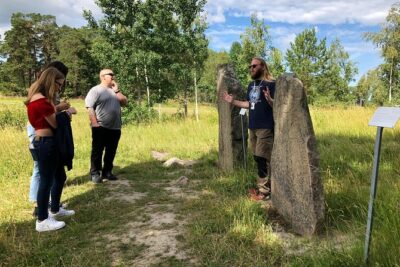
Vallentuna’s Arkils tingstad: Viking law and decision-making in a ring of stones
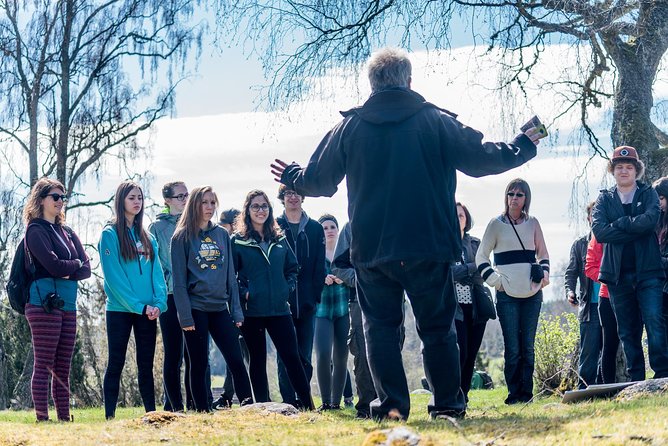
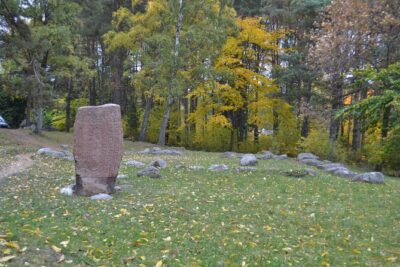
One of the most memorable stops is Arkils tingstad in Vallentuna. This is the Viking Age assembly site, where communities gathered to resolve disputes, make decisions, and enact laws. The tour plan gives you about 30 minutes here, and this is one of those places where the guide’s explanation is the difference between seeing stones and understanding what they were for.
What I found valuable is that this is not presented as mythology. It’s presented as a working political system—one that existed long before the modern state. The site includes stones arranged in a square pattern, which may have served as seating or a structure for attendees.
After that, you get a quieter moment at Lake Vallentuna with a short stop down near the banks. It’s not a long nature hike, but it’s a nice reset between more intense sites.
Practical tip: this is one of those “dress for the weather” moments. Even if the day is dry, lake-area wind can sneak up fast.
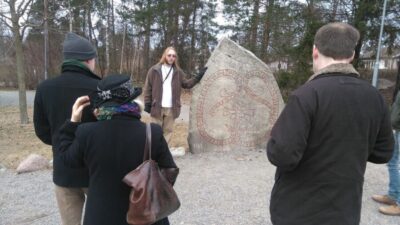
Granby and Granbyhällen: from runes to longhouse life
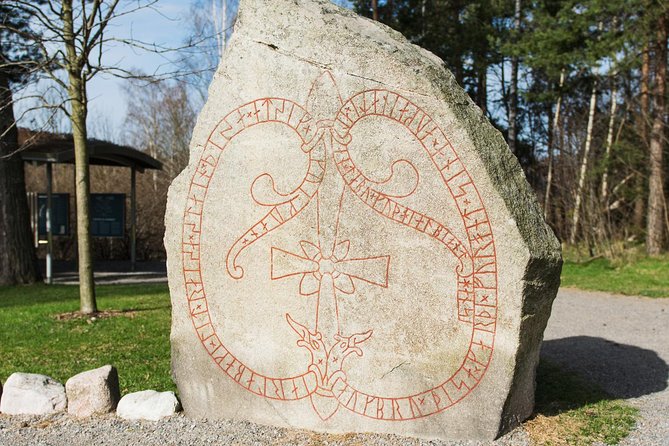
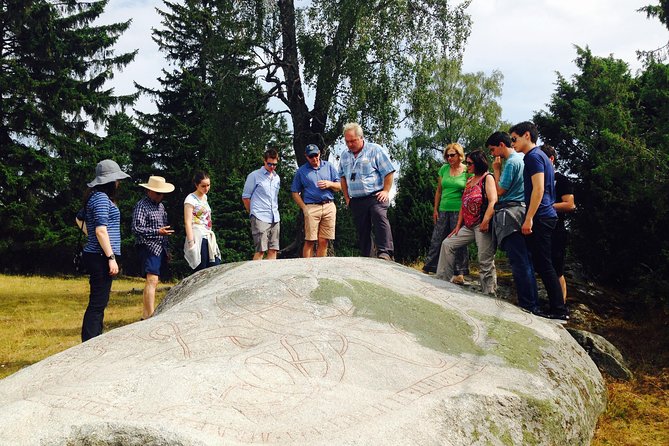
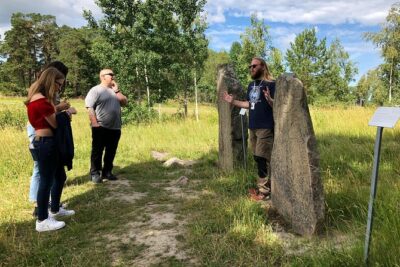
Granby is where the tour starts feeling more hands-on. The headline stop is Granbyhällen, also called the Granby Stone, which carries one of the longest and most informative Viking texts from the area. The wording relates to a Granby family and may have been intended as an inheritance message—so you’re not only reading history, you’re seeing what mattered to people: family lines, property, status.
The plan also includes time at the preserved Viking house foundations. You actually step into the longhouse walls, where a Viking family lived about a thousand years ago. This is one of the best kinds of “wow” stops on a day like this, because it turns abstract Vikings into routine Vikings: living spaces, structure, and the idea that this was everyday life, not just warriors and ships.
Time here is about 25 minutes, and that’s enough to absorb the core story without dragging the whole day down. Still, if you are the kind of person who could spend an hour just staring at rune shapes and stone surfaces, you may wish for a bit more.
Hökeriet farmhouse stop: fika and Viking-era shopping culture
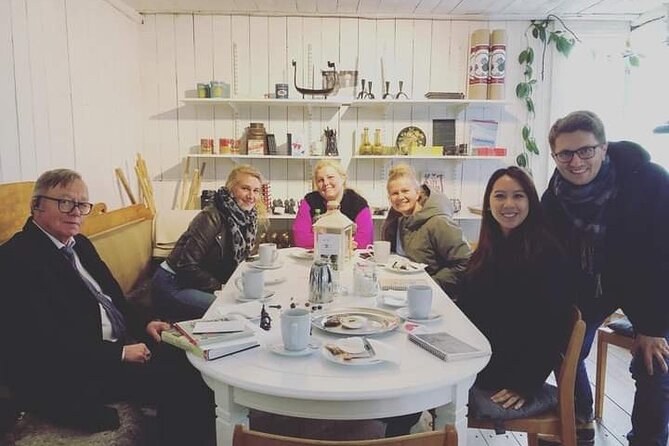
Right after the runes, you get a break at Hökeriet, a provision shop setting described as selling food items and household goods. On many departures, there’s a Swedish fika offered at the Granby farm stop—think coffee and something sweet—served in a cozy farmhouse environment by the co-owner or a relative.
Even if the exact fika details vary, the point of this stop is consistent: it gives you a human pause in the middle of all the stone and dates. You also get a chance to shop for regional handcrafts and Viking-themed souvenirs.
One caution based on how the day is scheduled: since lunch is listed as not included (own expense), plan your appetite timing. That fika stop can help you avoid a mid-afternoon energy crash.
More of Stockholm history, up close



Sigtuna in about an hour: oldest-town walking with Lake Mälaren views
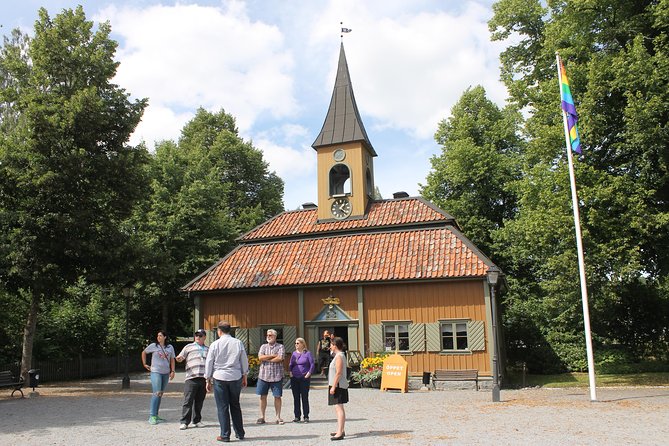
Then you reach Sigtuna, Sweden’s oldest town, founded in the 10th century. You get around 1 hour of time here, plus the built-in benefit of a relaxed stroll on cobblestone streets lined with older wooden and stone buildings.
Sigtuna matters on this itinerary because it represents a shift from purely Viking-world evidence into a town that grew and endured. The tour time is short, but it’s long enough to get your bearings fast: you can focus on the lakeside vibe, look around the old streets, and take in the atmosphere near St. Mary’s Church.
A few past guides have been praised for getting the pacing right here—basically making sure the stop doesn’t feel like a quick drive-by photo stop. Still, I’ll be honest: if you want a long wander with deep café time, you’ll probably want a second trip back later.
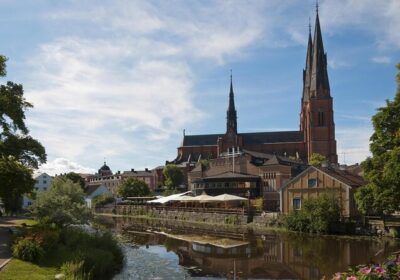
Uppsala Cathedral: Lutheran medieval grandeur plus history on the spot
From Sigtuna, the day moves to Uppsala, where you visit Uppsala Cathedral (Uppsala Domkyrka). The plan gives about 20 minutes at the cathedral area.
This is where you see the medieval Gothic style in a big way: soaring spires, stained glass, and vaulted interiors. There’s also the historical layer. The cathedral holds the tomb of Swedish Reformation king Gustav Vasa, and the tour points you toward the cathedral museum and treasury as nearby options (depending on what’s practical in the moment).
One detail you can use if you want that “I’m really here” feeling: the cathedral experience includes the option to climb the bell tower for panoramic views. In 20 minutes, you’ll have to judge whether that’s worth it for you, but it can be a memorable payoff if the timing lines up.
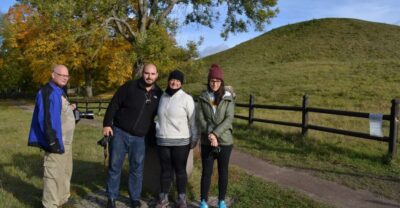
Gamla Uppsala mounds: kingship before Christianity
Next comes Gamla Uppsala, a village area with royal burial mounds dating to the 6th and 7th centuries. The tour focuses on the key idea: these are burial sites linked to legendary Swedish kings, with three prominent mounds commonly named after monarchs like King Aun, King Egil, and King Adils.
Even if you don’t know the names, the archaeological story is the point. Excavations have turned up grave goods like weapons and jewelry, which helps connect the mounds to social structure: power, status, and the way communities honored the dead.
This stop is about 30 minutes, and it works well because it gives you a visual “end of the Viking timeline” feeling before the day shifts even more firmly into medieval Christian-era landmarks.
Price and value: is $274.19 fair for a 9-hour guided history route?
At about $274.19 per person for an approximately 9-hour tour, the value hinges on what you like to do on trips.
Here’s why I think it can be good value for the right traveler:
- You get hotel pickup and drop-off plus transport by air-conditioned minibus.
- A professional guide gives you the connecting tissue between sites that would otherwise read like a list of stones and churches.
- Many stops are scheduled with free admission as listed in the tour plan, so you’re not constantly paying small fees that add up.
- You see a lot of distinct places in one day: Täby area sites, Vallentuna, Granby, Sigtuna, Uppsala Cathedral, and Gamla Uppsala mounds.
Where you might feel the price more than you expect:
- Lunch and drinks are not included, and with a long day, your personal spending can creep up.
- The route is time-pressured. If you prefer deep, slow exploring at one site, this may feel like too much stamping and not enough breathing.
For me, the sweet spot is this: if you’re in Stockholm for a limited time and want a clear Viking-to-medieval storyline without renting a car, this is the efficient choice.
Comfort tips for a long day: heat, standing time, and hearing the guide
This is one of those trips where your comfort choices affect your enjoyment.
Based on real feedback from past departures, keep these in mind:
- The van can run cool on some days, so dress in layers. One review noted the van temperature felt cold because heating wasn’t strong enough.
- There’s a lot of outside time, including standing at rune-related sites. Bring comfortable shoes and consider rain gear if the forecast looks iffy.
- If you rely on phone batteries for photos, note that at least one past rider reported no charging ports in the van. Bring a power bank if you can.
- If you have trouble hearing the guide in noise or at certain angles, use the provided headsets/in-ear devices when available and position yourself where audio works best.
Also, plan a hydration strategy. One suggestion in feedback was that a water setup would be helpful. Even if it isn’t provided, you can solve this yourself.
Who should book this Viking history route (and who should skip it)
Book it if:
- You want a guided, story-led Viking and medieval day without doing navigation yourself.
- You like runes, assembly sites, and evidence you can physically see, like Granbyhällen and longhouse foundations.
- You’re excited to pair Sigtuna’s old-town feel with Uppsala Cathedral and the royal mounds.
Consider skipping or pairing it with something else if:
- You hate long days and quick transitions. This is about keeping momentum.
- You prefer fewer stops with more time at each one. Some people felt the day ran long because the schedule stays packed.
- You mainly want action-packed Viking adventures (raids, ships, battles). This day is more about civic life, burial culture, and stone evidence, with churches layered in.
If you’re the kind of traveler who loves a tight itinerary for a single theme, you’ll likely have a great day. If you want slow wandering and lots of cafés, you may feel squeezed.
Should I book it?
My take: yes, if your goal is a high-impact Viking-and-medieval education day outside Stockholm. You’ll get a strong storyline: near-city Viking power (Jarlabanke’s Bridge), Viking governance (Arkils tingstad), everyday life (Granby longhouse foundations), then town and cathedral chapters in Sigtuna and Uppsala, with Gamla Uppsala closing the loop on kingship before Christianity.
Before you book, read the vibe of your own travel style. If you’re comfortable with a packed schedule, you’ll love the way the guide connects runes, stones, and institutions. If you’re chasing a relaxed day with lots of downtime, save your energy—or plan a second day in Uppsala/Sigtuna on your own after the tour so you can slow down where you care most.
FAQ
How long is the Viking History and Swedish Countryside tour?
It runs about 9 hours (approx.).
Where is pickup in Stockholm?
Pickup is offered from hotels in central Stockholm within the tour’s general pick-up area.
What’s the group size?
The maximum group size is 17 travelers.
Is the tour offered in English?
Yes, the tour is offered in English.
Is lunch included?
No. Food and drinks are not included, and lunch is at your own expense.
Is a fika included?
Swedish fika at the Hökeriet farmhouse stop is available on most but not all tours.
What Viking-era places do you visit?
You’ll visit sites such as Arkils tingstad, Jarlabanke’s Bridge, Granbyhällen (the Granby Stone), preserved longhouse foundations in Granby, and the royal burial mounds of Gamla Uppsala.
How much time do you get in Sigtuna and Uppsala?
You get about 1 hour in Sigtuna, and about 20 minutes at Uppsala Cathedral (with time to explore the cathedral area on your own afterward).
Is this tour suitable for children?
It is not recommended for children under 8 years old.
What is the cancellation policy?
You can cancel for a full refund up to 24 hours in advance of the experience start time. Free cancellation is available up to that cutoff.
More Tours in Stockholm


More Tour Reviews in Stockholm



More Viking Day Trips to Sigtuna & Uppsala
Just Added: The Latest Stockholm Reviews












Viking Sigtuna & Uppsala Day Trips, compared.
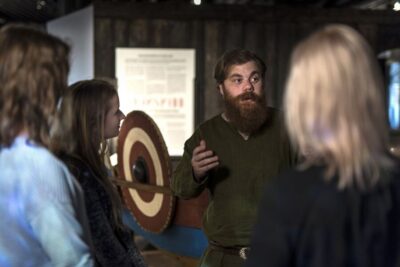 ★ 4.5The Viking Museum Exhibition and Viking RideFrom $22667 reviews
 ★ 4.0Entrance ticket to The Viking MuseumFrom $22301 reviews
 ★ 4.5Viking History, Runes & Countryside 9h Tour to Sigtuna & UppsalaFrom $298283 reviews
 ★ 4.7From Stockholm: Uppsala and Sigtuna Viking Sites TourFrom $235157 reviews
 ★ 4.5Viking History Small Group Tour from Stockholm: Half Day Including SigtunaFrom $193111 reviews
 ★ 4.5From Stockholm: Viking Culture Guided Tour with TransferFrom $19381 reviews
 ★ 4.5Full Day Viking Tour with Fika Swedish Coffee BreakFrom $24181 reviews
 ★ 5.0Private Full Day Viking History Tour from Stockholm Including Sigtuna and UppsalaFrom $67251 reviews
Browse the lists this tour appears in