
Reviewed · GAMLA STAN OLD TOWN WALKS
Gamla Stan: Essential Tour of Stockholm
Old Town feels like a timeline you can walk. This Gamla Stan essential tour strings Swedish history together in order, from Viking-era origins through German influence, a Danish power struggle, and the 1520 Stockholm bloodbath tied to Gustav Vasa. You’ll move from the big medieval story to what life in Sweden looks like now, without turning it into a lecture.
I especially like the way the route hits the island’s most recognizable corners while staying chronological—so your brain gets a clean line from past to present. And I also love the street-level details, including a stop for Mårten Trotzigs gränd, the narrow street that feels like it was built for hiding secrets (and great photos).
One thing to plan for: you’re on your feet for about 2.5 hours on narrow old-town streets. If the weather turns or you’re not a steady walker, you’ll want to dress for cold and drizzle and keep an eye on where the group is heading.
Key points I’d highlight before you book
- Chronological storytelling ties Viking, German influence, and the Danish clash to the 1520 Stockholm bloodbath and Gustav Vasa.
- Quaint narrow-street moments, including a focused stop at Mårten Trotzigs gränd.
- Big-name landmarks in a tight loop: Royal Palace area, Stockholm Cathedral, and the main square, Stortorget.
- High-energy guides (I’ve seen names like Gaya, Katherine, Sophie, Oscar, and Maria) who use humor and answer questions.
- A small-enough group feel, with at least one reported group of about 15, so you can hear and move at a human pace.
- Wheelchair accessible, with the guide helping you stay on track in the old streets.
In This Review
- Why Gamla Stan Works Best as a 2.5-Hour Timeline Walk
- Meeting at Gustav Adolfs torg: The Rainbow Umbrella Hack
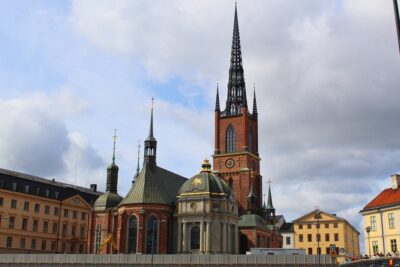
- Parliament House and Riddarholmen: Getting the Power Map Right
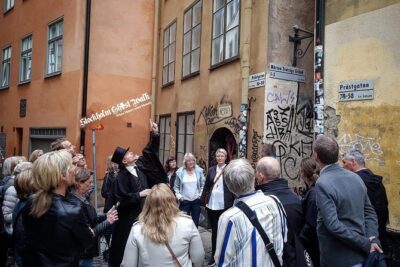
- Mårten Trotzigs gränd: A Narrow Street Moment You’ll Remember
- German Church: Where the German Influence Thread Becomes Real
- Royal Palace Area and the St. George and Dragon Stop
- Stockholm Cathedral and the 1520 Turning-Point Stories
- Ending at Stortorget: Using the Main Square as Your Base
- Guides, Group Size, and How This Tour Stays Fun
- Price and Value: Is $21 a Good Deal?
- Who Should Book This Gamla Stan Essential Tour
- Should You Book It?
- FAQ
- How long is the Gamla Stan walking tour?
- Where do we meet the guide?
- What is the tour language?
- What stops are included in the route?
- Is it wheelchair accessible?
- Is free cancellation available?
- Can I reserve now and pay later?
Why Gamla Stan Works Best as a 2.5-Hour Timeline Walk
Gamla Stan can be a little overwhelming on your own. You see gorgeous buildings, tricky intersections, and street names that sound like they belong in a fantasy novel—then you wonder what to connect first.
This tour keeps you grounded by moving through history in order. You start from the Viking era and work forward, using the places you pass as anchors: German influence, then the Danish clash that leads to the Stockholm bloodbath in 1520, and finally Gustav Vasa’s succession. That sequence matters because Sweden’s story doesn’t feel random when you hear it as a chain of events you can picture in the streets around you.
At the same time, it doesn’t stop at medieval drama. You’re also invited to connect the past to today’s Swedish way of life, which is where the tour feels more useful for visitors who want more than postcards.
Meeting at Gustav Adolfs torg: The Rainbow Umbrella Hack
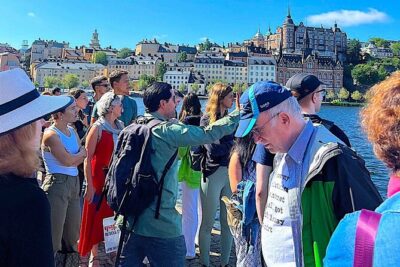
Your start point is Gustav Adolfs torg, and the guide will be in the middle of the square holding a rainbow-colored umbrella. That detail is genuinely helpful. In a city center full of people, you want a fast, low-stress way to find your group.
The tour is in English, and it’s built around short guided segments at major stops. The pace is not rushed-marathon speed, but it is active. If you like to read street plaques slowly, this may feel like the wrong format; if you want a guided orientation that you can build on later, this hits a sweet spot.
If you think you might be late, the operator asks you to let them know so the guide can help you reach the tour. In practical terms: plan a buffer. Old Town streets are gorgeous, but they’re not always convenient for sprinting.
More laps of Gamla Stan and the old town lanes

Parliament House and Riddarholmen: Getting the Power Map Right
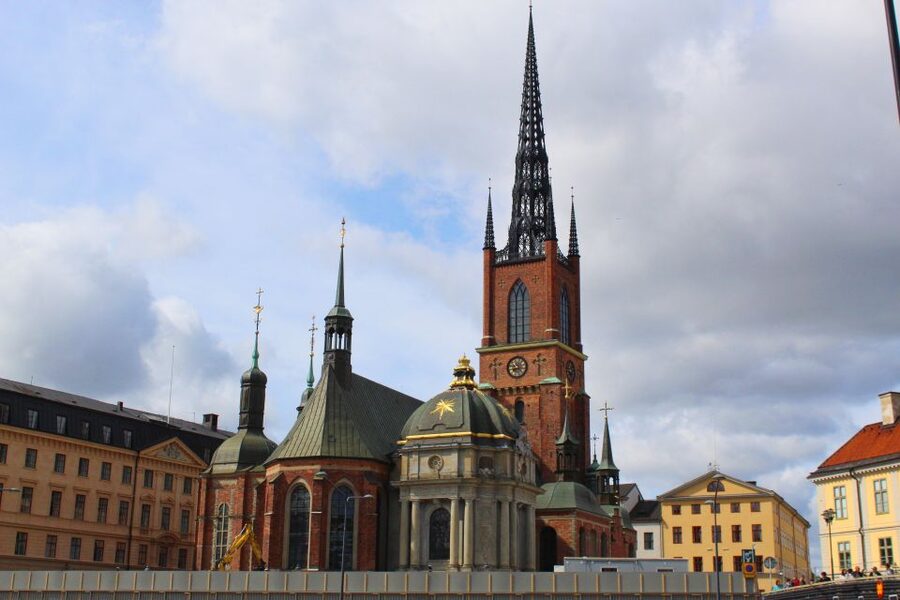
After you meet, the itinerary introduces you to Parliament House (10 minutes) and Riddarholmen (10 minutes). Even if your Swedish history background is light, these stops matter because they help you understand what the places represent: governance and the royal/church world of central Stockholm.
What I like about this structure is that it gives you contrast early. The tour isn’t only about castles and cathedrals in the romantic sense—it also points to how power is organized, where it shows up, and why the old islands still matter.
Riddarholmen in particular sets you up for the next segments by keeping the focus on key historic Stockholm spaces. You’re not wandering randomly; each short stop is meant to lock in a mental reference point before you move on.
Mårten Trotzigs gränd: A Narrow Street Moment You’ll Remember
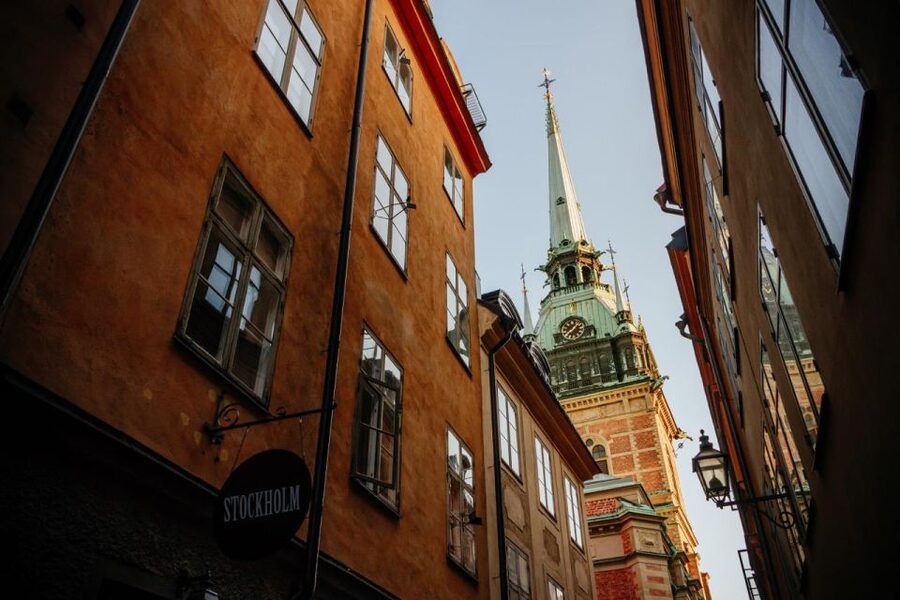
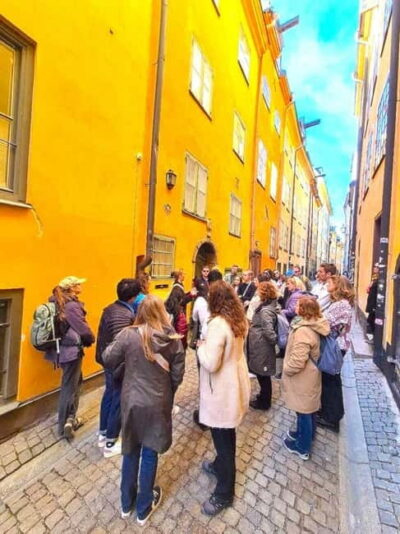
Then comes one of the best “wow, that’s small” moments in central Stockholm: Mårten Trotzigs gränd, Stockholm’s narrowest street. The tour keeps this to about 10 minutes with guided focus, which is the right amount of time.
Here’s why that stop is valuable. In a city where many sights are grand and wide, narrow lanes make you feel scale. You can see how medieval Stockholm worked—how people moved, how streets compressed, and how the town’s physical layout shaped daily life.
It’s also a great place to ask questions. The tour format encourages you to speak up when something sparks your curiosity, and this is the kind of spot where details (like why streets developed the way they did) can really click.
German Church: Where the German Influence Thread Becomes Real
Next you’ll visit the German Church in Stockholm (10 minutes). This fits the tour’s overall storyline: German influence is one of the big beats in the chronology.
I like that the guide doesn’t treat history like a distant timeline on paper. Instead, the German Church gives you a concrete location to attach that part of the story to. Even if you don’t know much about Hanseatic-era ties going in, it becomes easier to track the theme as you walk.
This stop also helps you understand why Gamla Stan isn’t just Swedish-only folklore. Stockholm’s history is tied to trade, foreign connections, and political pressure—topics that are often mentioned in passing unless someone gives you a path to follow. Here, you get that path.
Royal Palace Area and the St. George and Dragon Stop
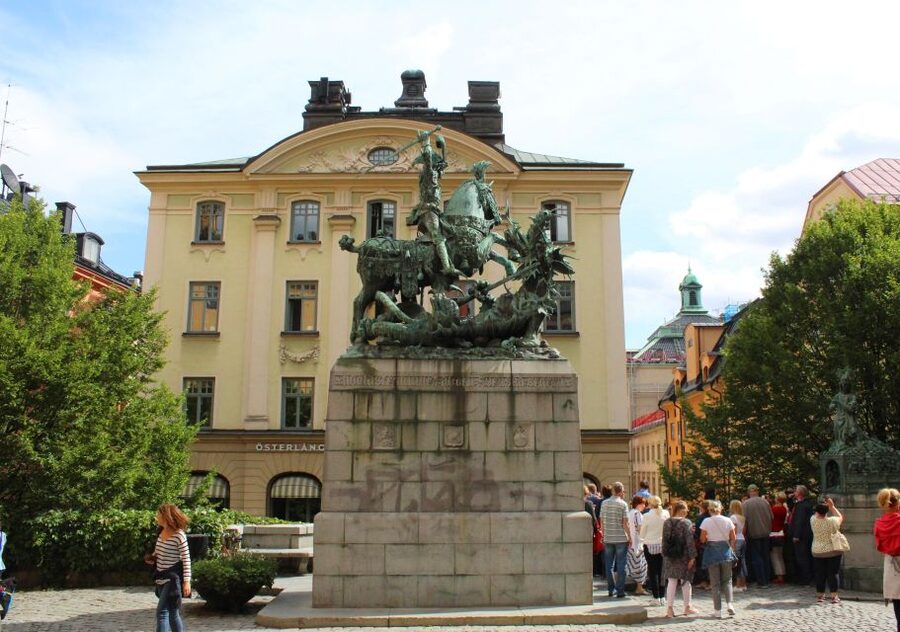
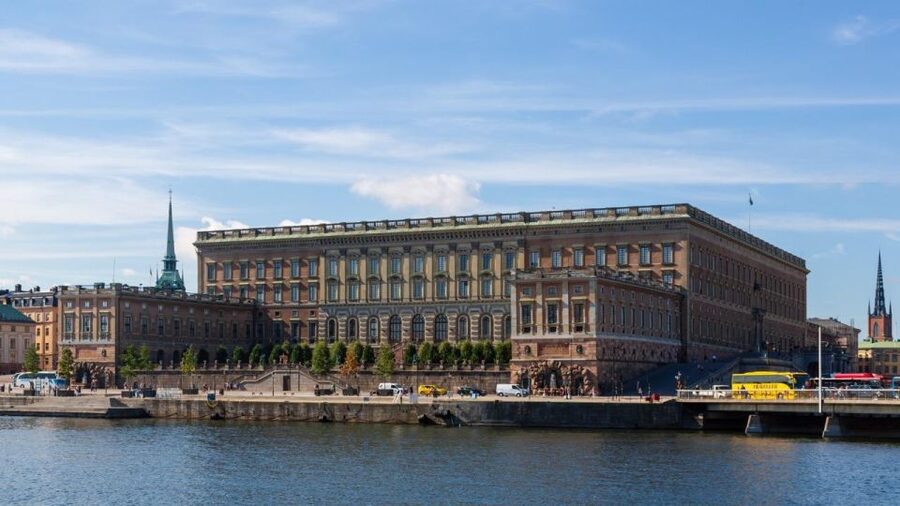
The tour then heads to the Royal Palace (10 minutes). You’ll also hear about emblematic art and symbols tied to Stockholm, including the statue of St. George and the Dragon, plus time spent around the island’s headline areas.
This segment is where the tour balances drama with context. Royal places can turn into just a photo stop, but the guide’s job is to connect what you’re seeing to what came before in the chronology—so the palace doesn’t feel like it dropped out of the sky.
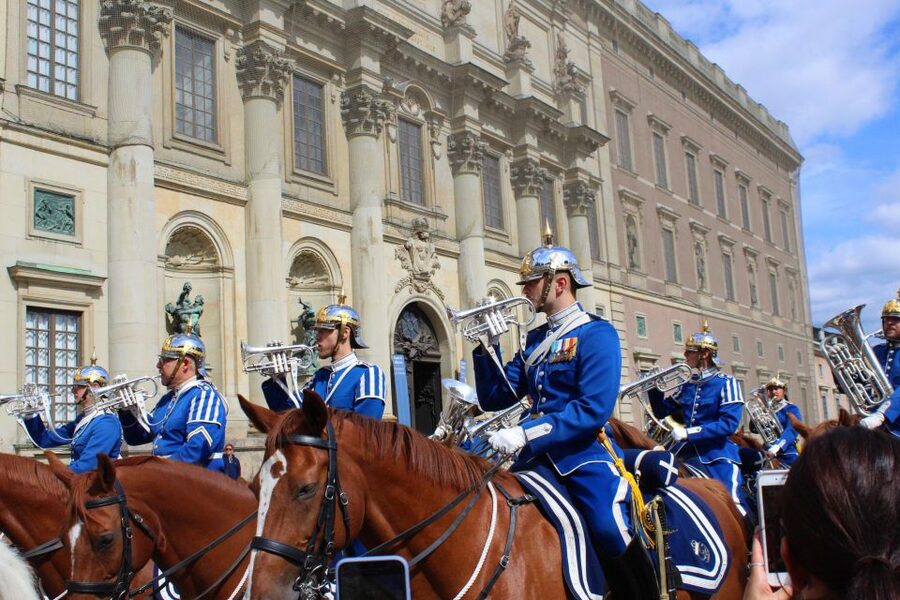
One practical bonus: depending on timing, you might catch the changing of the guard, and in at least one case it included a marching band. That’s not something you can count on every day, but it’s a fun reminder that big ceremonial moments do happen in this area.
Tip for making this section work for you: keep your questions for the guide right after they finish an event-related point. If you wait, the group moves on fast and you miss the best chance to get a direct explanation.






Stockholm Cathedral and the 1520 Turning-Point Stories
After the palace area, you’ll visit Stockholm Cathedral (10 minutes). This stop slots into the part of the story where the tour is moving closer to Sweden’s major turning points—especially around the Stockholm bloodbath in 1520 and what followed with Gustav Vasa.
Cathedrals can feel like “look at the building, take a picture, move on.” This tour is set up to do something else: it tries to make the building feel like part of the political and social world you’ve been building in your head.
If you like big turning points—consequences, succession, and how one violent event can reshape a country—this is where the tour’s structure starts to feel especially satisfying. You’re not hearing the bloodbath as a random date; you’re getting it placed in the chain of events that led to it.
Ending at Stortorget: Using the Main Square as Your Base
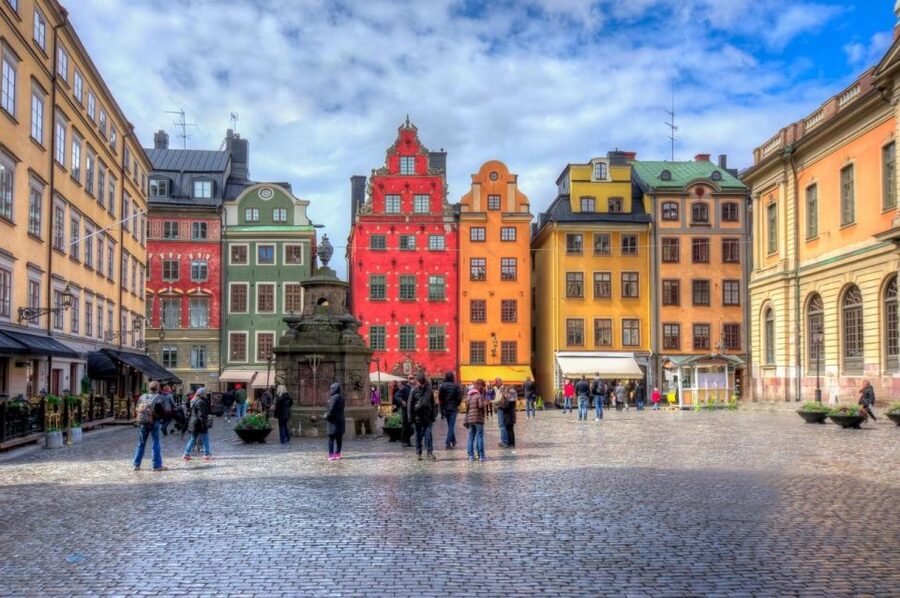
The tour finishes at Stortorget, the famous main square. This is a smart landing spot because it’s central, easy to orient from, and it gives you a natural break after the walking and the guided history.
What I like about ending at Stortorget is that it’s not a dead-end. Once the tour wraps, you still have a comfortable “hub” to keep exploring. Think of this as earning your bearings, not just collecting stamps.
If you’re planning the rest of your day, treat Stortorget like your reset button. You’ll be tired (in a good way), and you’ll be better at choosing where to go next because the guide has already given you the map in words.
Guides, Group Size, and How This Tour Stays Fun
The guides are described as dynamic, with diverse backgrounds, and they’re encouraged to answer questions. I’ve seen this show up in the guide styles too, with specific names like Sophie, Oscar, Maria, Katherine, and Gaya connected to entertaining, professional, high-energy guiding.
One review mentioned clever wordplay paired with strong historical knowledge. Another highlighted the guide asking Swedish friends questions to add cultural perspective—basically, not just facts, but how locals think about those facts.
Group size matters on tours like this. One report put the group at around 15, which is the kind of number where you cover a lot without everyone constantly trying to squeeze for position. If you’ve ever been stuck behind tall hats on a “major sights” tour, you’ll appreciate this format more.
Price and Value: Is $21 a Good Deal?
For $21 per person and about 2.5 hours, this is priced like an efficient way to get oriented fast. The tour includes a local guide and travel recommendations, which is more useful than it sounds when you’re figuring out how to spend the rest of your time.
Here’s how I’d measure value. If you’re a first-time visitor to Stockholm who wants context, this price usually makes sense because you’re getting multiple anchor stops tied to a clear story line. If you already know Swedish history deeply and only care about one landmark, you might find it less cost-effective.
But for most people, the real value is the structure: a guided loop through the core of Gamla Stan paired with a chronology you can actually follow. It turns random sights into a connected walk.
Who Should Book This Gamla Stan Essential Tour
I’d say this tour fits best if you:
- want a first-time orientation to Gamla Stan
- like history told as cause-and-effect (Viking era → German influence → Danish clash → 1520 → Gustav Vasa)
- appreciate street-level charm, especially narrow lanes like Mårten Trotzigs gränd
- enjoy interactive guiding, with room for questions
It may be less ideal if you prefer very slow museum-style pacing, or if you’re sensitive to lots of standing and walking in older streets. The good news: the tour is wheelchair accessible, but you should still factor in weather. Old Town surfaces can be uneven, and rain can change the comfort level fast.
Should You Book It?
If you want to understand Gamla Stan quickly and enjoy it at the same time, this is a solid pick. For $21, you get a guided tour that connects major places to a clear timeline, and you end in the right spot to keep exploring afterward.
Book it if you’re the type who loves asking why something happened, not just what you’re looking at. Skip it only if you already have a personal guide for the day—or if you’re not up for a 2.5-hour walk through narrow old streets.
FAQ
How long is the Gamla Stan walking tour?
The tour duration is about 2.5 hours.
Where do we meet the guide?
You meet at the center of Gustav Adolfs torg, and the guide will be holding a rainbow-colored umbrella.
What is the tour language?
The tour is offered in English.
What stops are included in the route?
The tour includes guided stops at Parliament House, Riddarholmen, Mårten Trotzigs gränd, the German Church, the Royal Palace, and Stockholm Cathedral, and it finishes at Stortorget.
Is it wheelchair accessible?
Yes, the tour is wheelchair accessible.
Is free cancellation available?
Yes, you can cancel up to 24 hours in advance for a full refund.
Can I reserve now and pay later?
Yes. You can reserve your spot and pay later.
More Tours in Stockholm
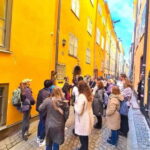
More Tour Reviews in Stockholm
More Gamla Stan Walks
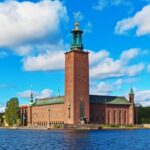

Just Added: The Latest Stockholm Reviews


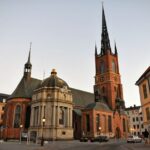









Gamla Stan Old Town Walks, compared.
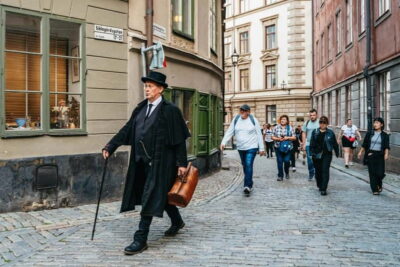 ★ 4.7Ghost Walk and Historical TourFrom $312,206 reviews
 ★ 5.0Walking Tour of Stockholm Old TownFrom $241,175 reviews
 ★ 4.5The Original Stockholm Ghost Walk and Historical Tour – Gamla StanFrom $381,165 reviews
 ★ 4.7Old Town Walking Tour with Local GuideFrom $15719 reviews
 ★ 5.0Best of Stockholm Walking Tour-3 Hours, Small Group max 10 peopleFrom $49645 reviews
 ★ 4.5The Nordic Food Walk StockholmFrom $122642 reviews
 ★ 5.0Walking Tour of Stockholm’s Old Town, Gamla StanFrom $13451 reviews
 ★ 4.9Old Town Historical Walking TourFrom $52344 reviews
Browse the lists this tour appears in