
Reviewed · GAMLA STAN OLD TOWN WALKS
Stockholm- A Beauty On The Water: Old Town Walking Tour and Boat Trip Combined
Old Town and the harbor both matter in Stockholm. This 3-hour combo pairs a guided walk around the city’s biggest royal and medieval stops with a calm canal boat ride.
I especially like the way this tour gives you two perspectives: first from streets and squares, then from the water. I also like the built-in pacing—your legs do the historic work, and the boat time gives you a proper breather without losing the best views.
One thing to consider: the walking portion involves older streets and moderate effort, and the boat audio depends on getting the right headphones setup for your seat.
In This Review
- Key highlights worth planning around
- How this 3-hour Stockholm route stays fun instead of rushed
- Royal Swedish Opera: the royal story begins in Baroque splendor
- Parliament building stops: Riksdagshuset and how power changed
- Riksbron bridge views: where you spot power and Nobel symbolism
- Lejonbacken and Slottsbacken: Royal Palace photo time with real context
- Stortorget and the medieval streets: Bloodbath history plus postcard squares
- Strömkajen and the Djurgårdsbrunn Canal boat: calm views and the fika break
- Audio check: how to make sure the commentary works
- Where you end and what to do next
- Price and value: what you’re really paying for at $135.16
- Who this tour suits (and who should skip it)
- Common hiccups and how to prevent them
- Should you book this Stockholm Old Town walking tour and boat trip?
- FAQ
- How long is the tour?
- Where does the tour start and end?
- Is the tour offered in English?
- What is included with the boat part?
- How big are the groups?
- Is there a lot of walking?
- Can I get a full refund if I cancel?
Key highlights worth planning around
- Old Town landmarks in a tight route: Stortorget, Merchants Street, and the way down toward Skeppsbron
- Royal Palace viewpoints without the overwhelm: Lejonbacken and Slottsbacken are high-impact photo stops
- Government history made human: a clear timeline from estates-based politics to modern parliamentary power
- Nobel connections everywhere: City Hall, Stortorget, and even the Grand Hotel area
- Djurgårdsbrunn Canal on a slow-moving boat: skyline views plus fika and drinks
- Small group size (max 10 people): easier questions and a pace that fits the group
How this 3-hour Stockholm route stays fun instead of rushed
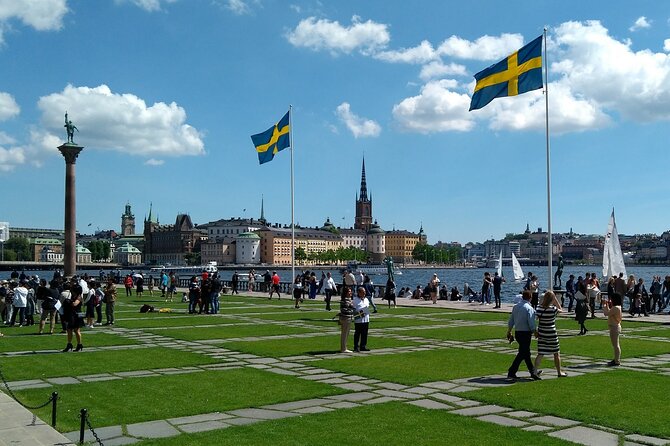
This tour is built around a simple idea: Stockholm reads best when you see both the “hard edges” (palaces, parliament, squares) and the “soft edges” (water, canal, skyline). The route starts in the royal-cultural zone near the Royal Swedish Opera and finishes at the docks by Strömkajen.
Expect a steady walk through Old Town streets, then a 50-minute canal cruise. That balance is the whole point. You get to look closely at symbols of power on land, and then you get to relax with the city stretched out in front of you on the water.
Group size is capped at 10 people, which helps. You’re not fighting for the guide’s attention every five minutes, and you’re less likely to get split into a weird line.
More laps of Gamla Stan and the old town lanes
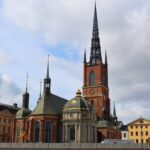
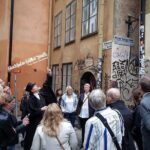
Royal Swedish Opera: the royal story begins in Baroque splendor
You start at Royal Swedish Opera in the square area around Gustav Adolfs torg. It’s a good opener because it sets the tone fast: Sweden’s story here isn’t just folklore—it’s tied to royal buildings, official institutions, and public space.
You’ll get quick context on Sweden’s formal name as the Kingdom of Sweden, then notice how many nearby structures connect to the crown. The Royal Palace is described as Baroque in style and dating to the early 1700s—this matters because it explains why so much of Stockholm’s center feels staged, intentional, and grand.
There’s also a cultural angle. The opera house ties into Giuseppe Verdi’s The Masked Ball and the Swedish king Gustav III. That’s a fun detail if you like music history, and it helps you see the city as more than just postcard views.
Practical note: this stop is short (about 15 minutes), and admission is listed as free. So treat it as a guided orientation moment, not a deep-dive museum experience.
Parliament building stops: Riksdagshuset and how power changed
Next you head to Parliament Building (Riksdagshuset), built between 1897 and 1905 with a Neo-Renaissance design and a Neo-Baroque facade section. Even if you don’t care about architecture, this is the type of building that signals “serious national business.”
What makes the stop useful is the political timeline the guide shares. You’ll hear about the predecessor system, the Riksdag of the Estates, where nobility, clergy, burghers, and peasants discussed separately before meeting the king. Then the tour moves forward: until 1866, this was top authority alongside the king.
After that comes the shift:
- In 1866, a two-chamber parliament was introduced (but not equal voting rights for everyone).
- In 1921, general suffrage arrived after political struggle led by liberals and socialists.
- In 1975, the constitution changed so the two chambers merged into one.
- You’ll also get the important point that the king’s role is representative, with no real political power.
That kind of straight, guided explanation is rare on a quick sightseeing walk. It turns buildings into meaning.
This stop is also brief (around 10 minutes) and marked as free for admissions, so it won’t eat your time.
Riksbron bridge views: where you spot power and Nobel symbolism
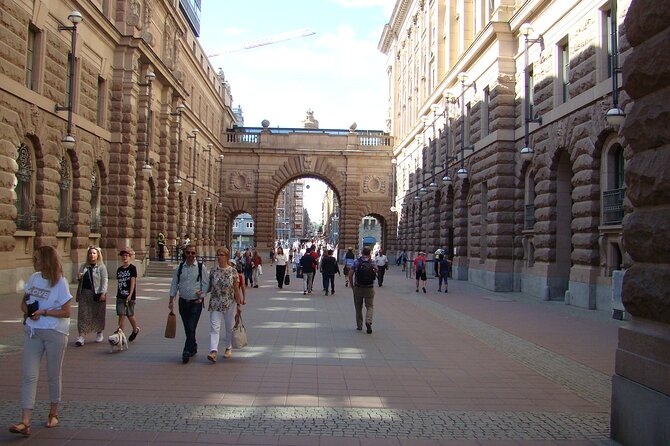
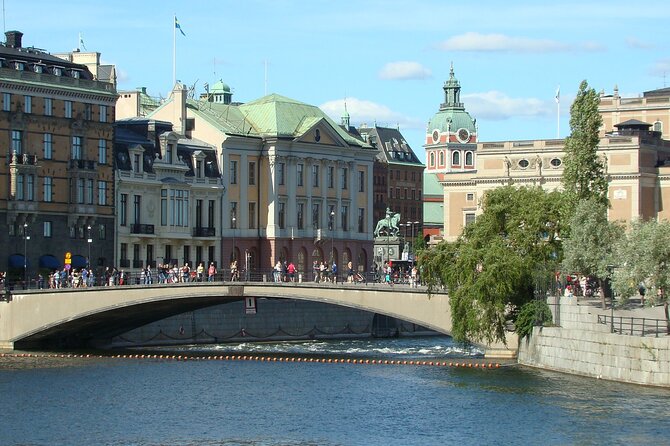
From Riksbron, you’ll see several landmarks clustered around key government and elite civic areas: Knights Island and the Prime Minister’s residence, plus the government buildings and the House of Nobility.
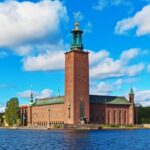
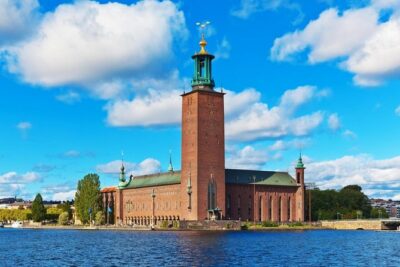
You also get a view of Stockholm City Hall, the place where the yearly Nobel Prize banquet is held. It’s a small detail until you realize how often Nobel shows up again during this route—at Stortorget, and through the Grand Hotel area as well.
Here’s why this stop matters for your experience: it gives you a “map in your head.” Once you’ve seen how these institutions sit in relation to the water and bridges, later photos and landmarks make more sense.
Expect about 15 minutes, mostly outdoors.
Lejonbacken and Slottsbacken: Royal Palace photo time with real context
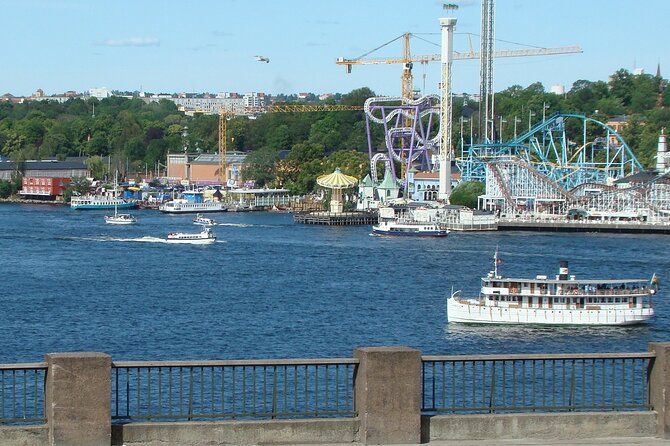
The walk brings you to Lejonbacken, on the north side of the Royal Palace. This is one of those Stockholm spots where the views and angles help your photos look better without fancy settings.
During the 17th and 18th centuries, Sweden is described as a great power in Northern Europe—so the guide ties what you’re looking at to a time when the royal sphere mattered intensely. You’ll see the Royal Garden with a statue of Karl XII, the last of the Swedish warrior kings. Then to the right, you’ll notice the Financial District built around the turn of the 20th century, when architectural styles flourished.
You’ll also get a Nobel connection here in a practical way: the Grand Hotel, described as Stockholm’s most prestigious, is where Nobel laureates stay for the ceremonies. It’s a nice example of how modern global events are layered on top of older prestige.
Then comes Slottsbacken. You pass through the Royal Palace’s inner courtyard and make a short visit to the Palace Chapel, where the Royal family baptizes children. This gives you a more personal, human-scale moment inside an area that’s otherwise all about power and image.
Outside, you’ll also see a statue of Carl XIV Johan. The guide connects him to the Napoleonic era, adoption into the Swedish royal family from the Bernadotte dynasty, and a shift in focus: diplomacy, infrastructure, and education instead of war. There’s even a celebration detail—2014 marked 200 years of peace in Sweden.
This section is timed to keep you moving, with short stops (roughly 10–15 minutes each). That works well because the Royal Palace area can swallow hours if you let it.
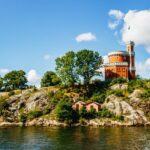
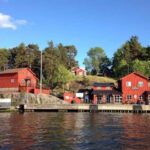
More of Stockholm seen from the water



Stortorget and the medieval streets: Bloodbath history plus postcard squares
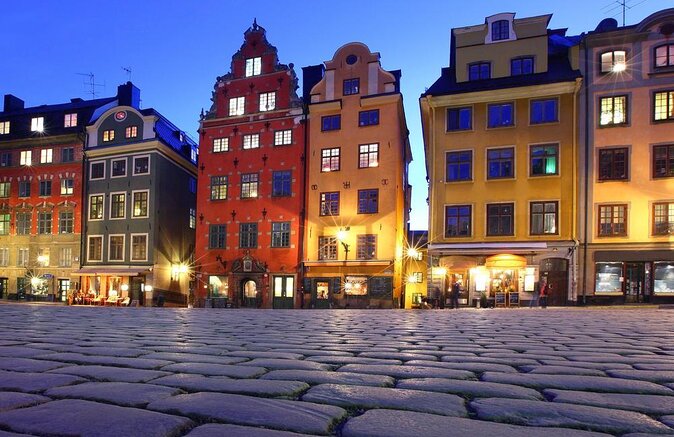
Stortorget is Old Town’s central square and one of the most photographed places in Stockholm. Around it you’ll see houses in 17th-century Scandinavian Renaissance and 18th-century Classicism styles.
What makes Stortorget more than a photo stop is the story tied to it: the Bloodbath of Stockholm in November 1530, when around 100 noblemen and priests were beheaded by the Danish king Christian II. He’s known in Sweden as Christian the tyrant.
If you like history that has consequences—not just facts—this is your moment. The guide’s framing helps you understand why Old Town has both beauty and tension baked into it.
Also here: the Nobel Prize Museum is located at Stortorget, and Swedish Royal Academies and committees designate winners of Nobel Prizes across multiple fields. That’s the running theme of this tour—history, power, and modern recognition all share the same streets.
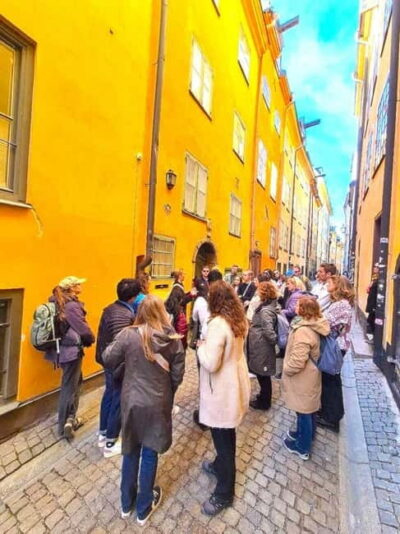
From Stortorget, the walk continues along Köpmangatan (Merchants Street), mentioned in written material since 1350. Then you move through narrow alleyways that feel medieval in a way you can sense right away: tighter streets, older textures, and a slower rhythm.
You’ll also walk along Österlånggatan and then down toward Skeppsbron, where ships loaded cargo since the 1600s. It’s an important reminder that Stockholm’s story wasn’t only royal—it was commercial, maritime, and practical.
There’s about 20 minutes here for Old Town walking. The time is short enough to keep energy, but long enough to feel like you actually moved through the city’s layers.
Strömkajen and the Djurgårdsbrunn Canal boat: calm views and the fika break
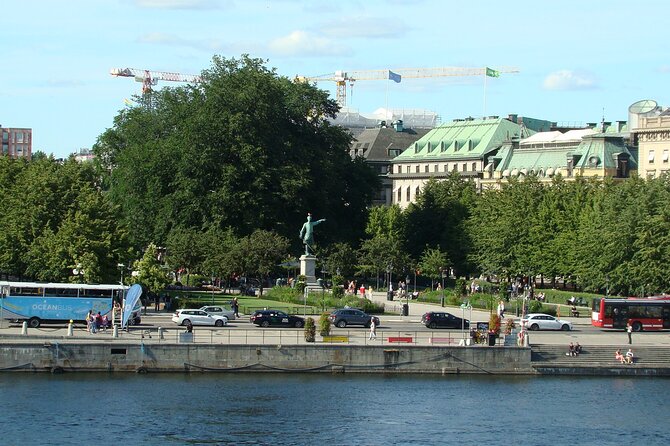
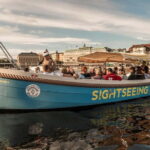
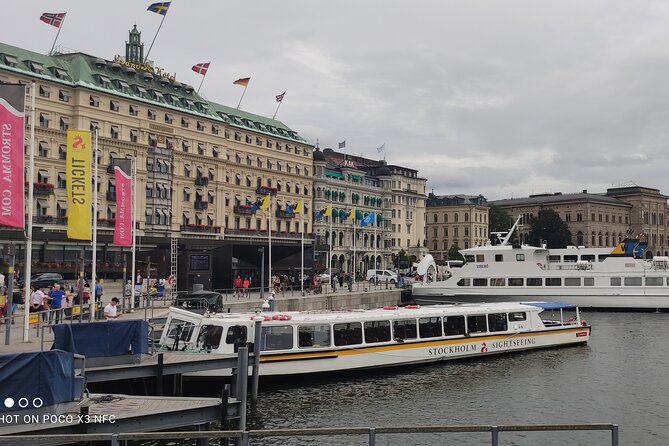
The finale is Strömkajen, where your canal cruise starts. This is operated by the Stromma Group, and the boat experience is a key part of why this tour works as a combo.
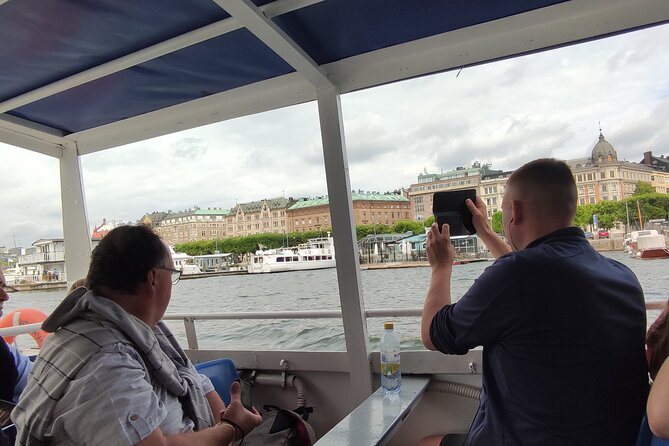
You’ll cruise through the Djurgårdsbrunn Canal, with headphones available for audioguides in English and several other languages. The ride is listed at 50 minutes, which is a sweet spot: long enough to enjoy, short enough that you don’t feel trapped on the water.
Food and drink help too. You can get fika—coffee and a cinnamon roll—plus tea and soft drinks and pastries. Beer, wine, sandwiches, and snacks are also offered. Even if you don’t plan to buy anything, it’s nice to know there’s an easy comfort option.
Audio check: how to make sure the commentary works
The one complaint that comes up is about not being able to hear the commentary through a mobile setup. Here’s the practical fix you can use:
- There are headphone sockets near seats in the front half of the boat, so you can enjoy the tour without depending on your phone.
- Earphones are provided to all passengers who prefer not to use their own or don’t have any.
When you board, look for the seat setup options right away so you’re not stuck later hunting for sound.
Where you end and what to do next
The tour ends where the boat docks near the park Kungsträdgården. That’s a smart location because it puts you close to tram links for Djurgården, Stockholm’s museum island. From there, you can reach attractions such as the Vasa Museum, Viking Museum, ABBA Museum, Skansen, and other popular options.
That makes this tour a great first-day move or an earlier afternoon start—then you can branch out.
Price and value: what you’re really paying for at $135.16
At about $135.16 per person, you’re paying for more than a walk. You’re paying for:
- A guided route that connects buildings to stories (government changes, royal figures, and Nobel-era connections)
- A timed Old Town experience that keeps you from wandering in the wrong direction
- A real boat ride on the canal with audioguides and time to recover
Is it cheap? No. But if you’re trying to see the core of Stockholm’s center in one sitting—without spending extra time piecing together separate tours—you’re buying convenience and context.
The small group cap (max 10 people) also matters for value. Larger group tours often feel like you’re listening while holding your breath. Here, you’re more likely to get your questions answered and to keep up with the pace.
My rule for this price: if you like history and want both land-and-water views, it’s a fair spend. If you mainly want photos with minimal facts, you might feel the boat part is too short for the cost.
Who this tour suits (and who should skip it)
This tour fits best if you:
- Want a first-or-second day orientation to central Stockholm
- Like political and royal history told with a walking pace
- Appreciate Nobel connections without having to build an entire Nobel sightseeing plan
- Prefer to rest your legs halfway through the day with a canal cruise
You might skip it if:
- You hate any walking on cobbled or older streets
- You’re very sensitive to audio clarity on boats (plan to use the provided audio options right away)
- You already know Stockholm’s political timeline and royal figures and want a more specialized theme
One more tip: if you end up with a guide like Bengt (a name that comes up often), expect clear storytelling plus room for questions. If Natalie or Mia is leading, the style tends to be friendly, paced for the group, and focused on getting you oriented and pointed toward good follow-up stops.
Common hiccups and how to prevent them
A few things can affect how smooth your experience feels.
First: wear comfortable shoes. The route includes narrow Old Town streets and a downhill path toward the waterfront.
Second: plan your attention for the boat audio. Don’t wait until the first minute to figure out how you’ll hear it. Choose the seat area with headphone sockets in the front half if that’s an option.
Third: manage expectations for the boat photos. Some viewpoints may be better than others, and the boat’s setup can limit where you can get perfect angles. Still, the skyline views and the canal calm are the point.
Should you book this Stockholm Old Town walking tour and boat trip?
If you want a smart first taste of Stockholm that mixes royal landmarks, parliament history, medieval Old Town streets, and a relaxing canal cruise, I think you’ll like this one. The pacing is a real strength, especially if you’re packing in multiple museum stops later.
I’d book it when you can commit early, because this tour gets snapped up well in advance. On average, it’s booked far ahead (over three months), so last-minute plans can get tight.
Only pass if your priorities are strictly one thing—either pure sightseeing with no stories, or only museums without walking. Otherwise, this is one of the more efficient ways to see the best of Stockholm’s center from land and water in a single afternoon.
FAQ
How long is the tour?
The tour lasts about 3 hours.
Where does the tour start and end?
It starts at Royal Swedish Opera, Gustav Adolfs torg 2, 111 52 Stockholm, Sweden and ends at Södra Blasieholmshamnen 9, 111 48 Stockholm, Sweden near where the boat docks.
Is the tour offered in English?
Yes, the tour is offered in English.
What is included with the boat part?
The boat trip lasts about 50 minutes and includes audioguides. Fika is available on board, and you can also find tea, soft drinks, pastries, plus beer, wine, sandwiches, and snacks.
How big are the groups?
The tour has a maximum of 10 people.
Is there a lot of walking?
You should have moderate physical fitness. The route includes walking through Old Town streets and between central landmarks.
Can I get a full refund if I cancel?
Yes. You can cancel up to 24 hours in advance for a full refund.
More Tour Reviews in Stockholm

More Stockholm Sightseeing Cruises

More Gamla Stan Walks

Just Added: The Latest Stockholm Reviews








Gamla Stan Old Town Walks, compared.
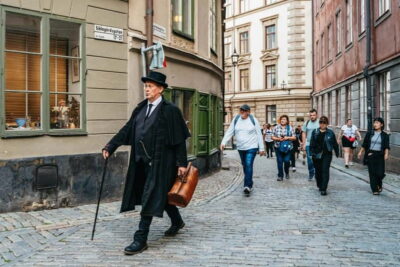 ★ 4.7Ghost Walk and Historical TourFrom $312,206 reviews
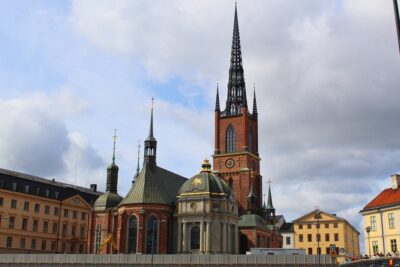 ★ 5.0Walking Tour of Stockholm Old TownFrom $241,175 reviews
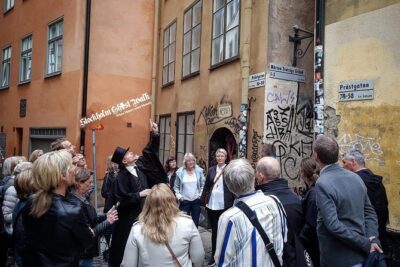 ★ 4.5The Original Stockholm Ghost Walk and Historical Tour – Gamla StanFrom $381,165 reviews
 ★ 4.7Old Town Walking Tour with Local GuideFrom $15719 reviews
 ★ 5.0Best of Stockholm Walking Tour-3 Hours, Small Group max 10 peopleFrom $49645 reviews
 ★ 4.5The Nordic Food Walk StockholmFrom $122642 reviews
 ★ 5.0Walking Tour of Stockholm’s Old Town, Gamla StanFrom $13451 reviews
 ★ 4.9Old Town Historical Walking TourFrom $52344 reviews
Browse the lists this tour appears in