
Reviewed · VASA MUSEUM TOURS
Stockholm Must See – Old Town, boat + Vasa Museum 3h small group
Stockholm can feel big. This tour squeezes the essentials into three hours, with your guide connecting streets to the people and events that shaped them. You get the key Old Town highlights, a one-way ferry over to Djurgården, and a focused visit to the Vasa Museum with skip-the-line access.
What I like most is the way the walk turns landmarks into real stories you can remember, from the killing of King Gustav III to the Bloodbath of Stockholm. I also like that the guide helps you make sense of what you’re seeing at the Vasa Museum, not just walk through rooms. The main drawback to watch for: Vasa admission isn’t included, so you’ll still need to pay that ticket separately, and later departures can feel tighter inside the museum.
In This Review
- Key things you’ll enjoy on this Stockholm Old Town + Vasa tour
- Why this 3-hour Old Town + Vasa plan works
- Meeting at Slottsbacken: how the tour sets its mood early
- Gamla Stan highlights: Palace, Stortorget, and the stories that stick
- Runestones, executioners’ lanes, and Storkyrkan’s atmosphere
- Riddarholmen, Järntorget, and the medieval feel of walking Old Town
- Marten Trotzigs alley and the harbor walk before your ferry
- Ferry to Djurgården: why this crossing is more than a ride
- Galarvarvet and Nordiska Museet: the lead-in to Vasa
- Inside the Vasa Museum: how the guide helps you see the ship
- Price of $135.69: what’s included and what you still pay
- Small-group pacing and what your guide can add
- What to wear, bring, and watch for on a wet Stockholm day
- Should you book this Stockholm must-see tour?
- FAQ
- How long is the Stockholm Old Town boat + Vasa Museum tour?
- What is the meeting point for the tour?
- Is the group size large?
- Is the Vasa Museum ticket included in the price?
- Do I get a ferry ticket?
- What’s the tour language?
- Does the tour run in bad weather?
- Is there a fitness requirement?
- Can I cancel for a full refund?
- Do I need to buy tickets for places besides Vasa?
Key things you’ll enjoy on this Stockholm Old Town + Vasa tour
- Old Town storytelling, not just sightseeing: Gustav III, the Bloodbath, executioners, and medieval battles are tied to what you see.
- Skip-the-line entry to the Vasa Museum: fewer waiting headaches, more time for the ship.
- A real ferry crossing: you’ll go from the city center to Djurgården with a one-way ticket included.
- Tight route that still covers variety: palace area, squares, alleys, harbor views, then Djurgården’s museum island.
- Small group size (max 15): easier to hear your guide and keep a good pace on cobblestones.
- Local guides with personality: the best moments often come from humor and specifics added to the facts.
Why this 3-hour Old Town + Vasa plan works
This is built for the traveler who has limited time but still wants the good stuff. Stockholm’s Old Town (Gamla Stan) is compact, but it’s easy to wander in circles if you don’t have a storyline. Here, you follow a route that moves in a logical arc: central Old Town sights, then toward the water, then over to Djurgården for the Vasa finale.
The time budget also matters. In 3 hours, you’re not meant to become a local scholar of every church and statue. You’re meant to get your bearings fast and leave knowing what each place was for—politics, trade, punishment, power—so you can explore more on your own later.
More laps of Gamla Stan and the old town lanes

Meeting at Slottsbacken: how the tour sets its mood early
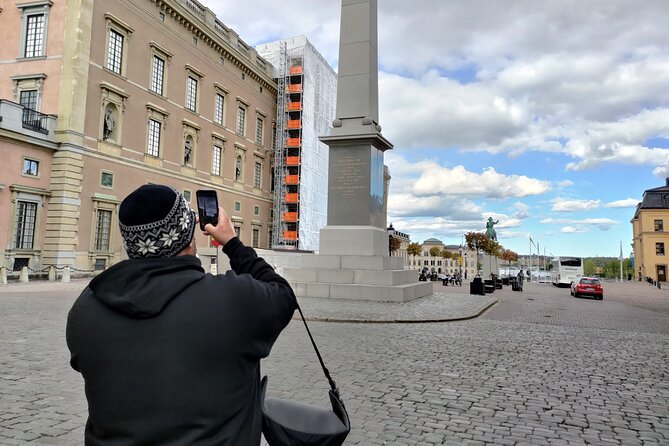
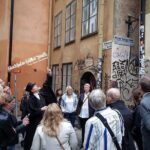
You start at Gustav III’s Obelisk at Slottsbacken (Slottsbacken 1, 111 30 Stockholm). From there, your guide kicks things off with context for the area, including the story connected to the killing of King Gustav III near the Royal Opera. It’s a strong opener because it frames the whole city as a stage: rulers, conflict, and dramatic outcomes all built into the streets.
You’ll also pass a Finnish church of Stockholm early on. You may not linger for long, but it’s a useful reminder that Stockholm isn’t just one cultural layer. It’s a crossroads, even in the center.
One practical note: there’s a time-related variation. If your departure is later (the tour mentions a 16:00 start option), the meeting point can shift to the anchor outside the Vasa Museum area. So check your exact confirmation details and show up with a little buffer.
Gamla Stan highlights: Palace, Stortorget, and the stories that stick
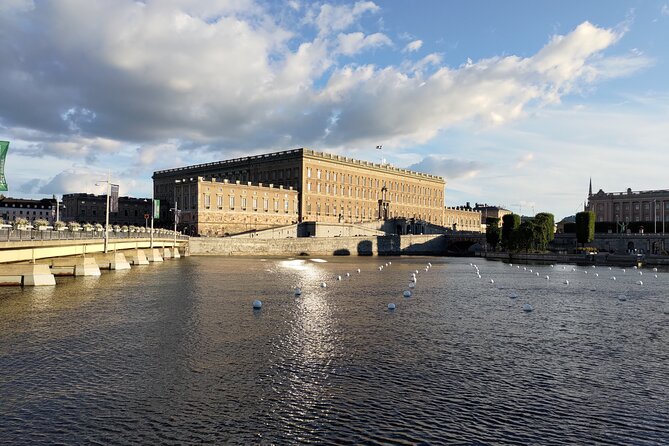
The walk swings to the Royal Palace, where the guide covers what the monarchy has meant here. You won’t get a long stop, so don’t expect an in-depth interior visit, but you will get the why behind the palace’s role in Swedish power.
Next comes Stortorget, Stockholm’s main square and a key stop for the famous dark chapter: the Bloodbath of Stockholm. This is the kind of stop that helps your brain file the city into cause-and-effect. You look at the buildings and you start understanding why those events mattered—who had the power, who didn’t, and how violence changed the political map.
A quick pass by the Nobel Prize Museum adds another angle: modern Sweden built on global ideas. Even if you don’t enter, the guide connects the museum’s story to the history of Stortorget itself, so the stop feels intentional rather than random.
Runestones, executioners’ lanes, and Storkyrkan’s atmosphere
From the square area, you move into smaller, older pockets of Old Town.
You’ll see a runestone (a brief stop, but worth the glance). Runestones feel simple until someone tells you what they were for—memory, identity, status—and then suddenly you’re reading the city like a text.
Then comes Prästgatan, known for its association with executioners. This is one of those streets where a short guided explanation can change your whole perception. It’s not just a narrow lane; it’s part of how punishments and public authority were staged in daily life.
A brief stop at Storkyrkan, Stockholm’s main church, ties things together. The guide points out how recent archaeological excavations have added detail to what life looked like earlier in the city. The stop isn’t long, but it gives you a reason to pay attention instead of treating the church like background scenery.
Riddarholmen, Järntorget, and the medieval feel of walking Old Town
On Riddarholmen, you’re on the “isle of the Nobels.” The guide’s stories here focus on monks, death, fires, and flames—so you get the feel of how the island functioned, not just how it photographs. There’s also the House of Knights stop, which adds another layer of how organized power showed up in the city’s geography.
Then you shift to Järntorget, the Iron square. The guide explains trade networks and the German part of Old Town. That’s important because it explains why certain streets and building styles exist where they do. Stockholm wasn’t isolated; it was connected, and you can still trace those connections in the urban layout.
More time with the Vasa and Stockholm ship museums





Marten Trotzigs alley and the harbor walk before your ferry
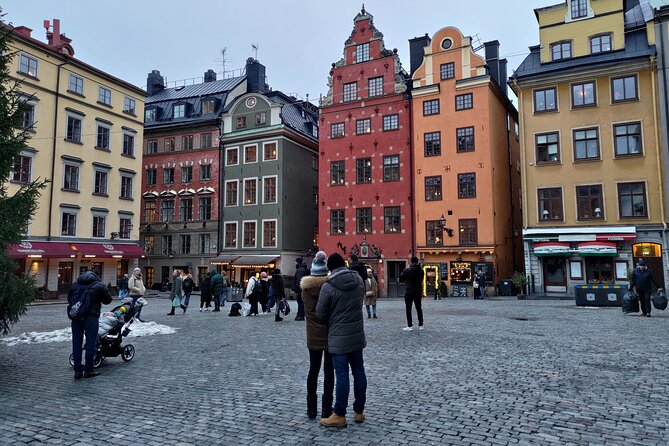
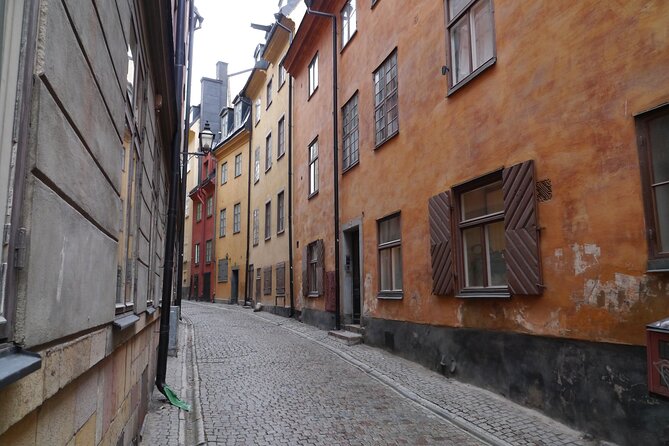
One of the best quick wow moments is Marten Trotzigs gränd, the smallest alley in Stockholm. Even with a short stop, it’s the kind of place where the story matters: the guide shares the tragic fate tied to the alley’s name. It’s a reminder that Old Town wasn’t designed for leisurely browsing; it grew for practical movement and, often, for people trying to stay out of sight.
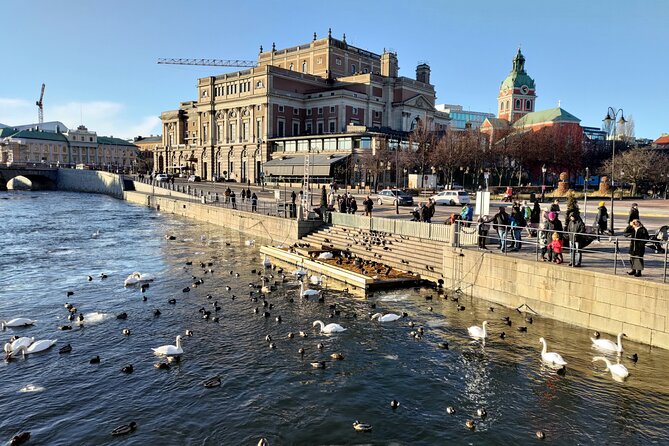
Then you end up at Skeppsbrokajen Promenade, where you look over the old harbor area while you wait for the ferry to Djurgården. This stretch is small but smart. It breaks up the walking with water views, and it also sets context: Stockholm’s history is deeply tied to waterways and trade, so you shouldn’t treat the ferry as just transportation.
Ferry to Djurgården: why this crossing is more than a ride
You get a one-way ferry ticket included, which takes you to Djurgården. That matters because Djurgården is a different world from Gamla Stan—more open space, parks, and museum island atmosphere. Your guide also frames it as the former royal hunting grounds and military navy island, later transformed into a park and museum area.
On Djurgården, you’ll hear about several points that help you understand why museums cluster here. The tour mentions Vrak and Viking museums, hosted in WWII-era shelters built to withstand airplane bombs. Even if you don’t enter them, the fact that the space itself is tied to wartime survival makes the area feel less like a generic tourist stop.
You’ll also see modern runestones at the entrance and hear about the Viking age. It’s a short moment, but it helps you bridge the Old Town past with the broader Scandinavian timeline.
Galarvarvet and Nordiska Museet: the lead-in to Vasa
Before the main museum payoff, you pass through Galarvarvet, where you can see the remains of an old naval base moved from here in the 1970s. It’s another reminder that Stockholm’s identity is built on the sea—shipbuilding, military presence, and trade routes.
Then there’s Nordiska Museet (stop is brief, and tickets aren’t included). The guide provides the museum’s purpose and collection focus: Nordic history from the 1800s onward, including objects connected to Sweden and the Nordic from roughly 1500 to today. This matters because it positions the Vasa Museum as part of a bigger story, not a one-off oddity.
Right before Vasa, the overall pacing makes sense. You’ve walked through politics and punishment, then trade and medieval streets, then harbor and naval themes. That sets you up to see the Vasa ship as exactly what it is: a dramatic piece of maritime ambition.
Inside the Vasa Museum: how the guide helps you see the ship
The tour includes a guided visit to the Vasa Museum, with skip-the-line access. The stop time is about 40 minutes for the museum portion, and Vasa admission is not included in the tour price.
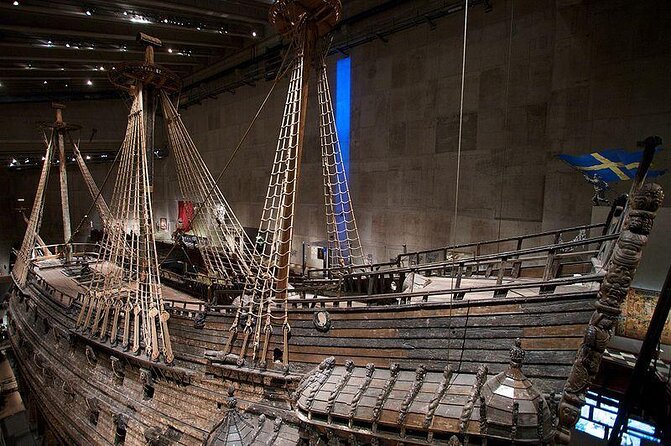
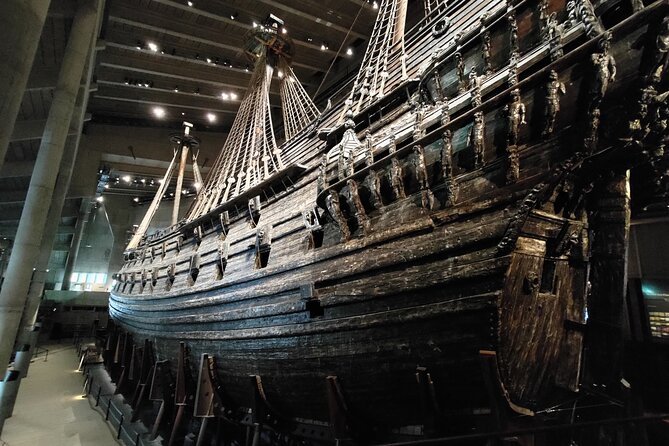
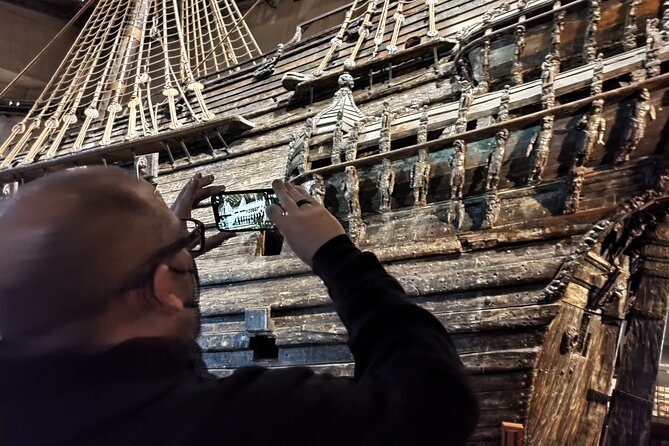
The core experience is the Vasa ship itself, described as a world-unique failure sailing about 1,200 meters before sinking. That detail isn’t just trivia; it’s the reason the museum feels so intense. You’re not looking at a typical wreck—you’re looking at a ship that failed almost immediately, and the collection shows the structure and original wood preserved remarkably well.
The guide’s job here is to make those facts usable. In a short museum time, it helps to have someone point out what to look for: the ship’s dimensions, the craftsmanship, and what the 17th-century material tells you about ambition, engineering, and risk.
One important heads-up for planning: some departures can feel tighter depending on the museum’s closing time. In the tour’s later start option, people have reported that museum time can get rushed, especially if there are delays. If Vasa is your top priority, consider choosing the earlier departure if your schedule allows.
Price of $135.69: what’s included and what you still pay
At $135.69 per person, you’re paying for a lot of coordination. The tour includes an Old Town city walk, an authorized local guide, a one-way ferry ticket, and skip-the-line access to the Vasa Museum. You’re also getting the itinerary compactness: you see a lot of major stops in a short window without having to plan routes across islands.
What you don’t get in the price is the Vasa Museum ticket itself, and the tour doesn’t include entry fees for other places you might pass by (like the Royal Palace area or Nordiska Museet). That means your total day cost will be tour price plus Vasa admission.
Is it good value? For most first-timers, yes, because the tour solves three problems at once:
- It saves planning energy in a place where walking takes effort.
- It saves time with skip-the-line access.
- It gives you explanations that make the sights easier to remember later.
If you already know you will spend hours at Vasa and want to wander at your own pace, you might skip the guided museum time and just buy your admission. But if you want a guided overview plus a smooth ferry day, the structure here fits.
Small-group pacing and what your guide can add
This is capped at 15 travelers. That cap is more than a number. With cobblestones, narrow streets, and quick stops, you want a group that doesn’t stretch distances between everyone’s feet and attention. Small group also helps the guide keep the story flowing instead of repeating instructions.
Your guide also shapes the day. The tour’s reviews highlight a pattern: guides often bring humor plus real specifics. Names that came up include Peter, Olaf, Tobi, Assa, Nicholas, and Emma—with compliments for their storytelling and the calm pacing that can start before the biggest museum crowds.
If you’re picky about hearing your guide clearly, aim to stand where you can face them during the stops. It helps a lot on narrow lanes like Marten Trotzigs gränd, where gaps in the group can reduce sound.
What to wear, bring, and watch for on a wet Stockholm day
This tour runs in all weather conditions, so dress for rain, wind, or both. Stockholm can shift from gray sky to mist fast, and you’ll be outside for most of the Old Town portion.
Bring:
- Walking shoes with grip for uneven cobblestones
- A light rain layer or umbrella you don’t mind in windy streets
- Water for the walk and ferry wait
The itinerary includes several brief stops. That means comfort matters more than you’d think. If your feet get sore early, the later museum stop won’t feel as satisfying.
Also, keep your phone charged. You’ll use a mobile ticket, and having Google Maps ready helps if you’re navigating the meeting area.
Should you book this Stockholm must-see tour?
Book it if you want a smart first taste of Stockholm: Gamla Stan highlights, a ferry crossing, and the Vasa Museum in one tidy package. It’s especially worth it if you like history as a story tied to real places, not as a list of dates.
Skip it or adjust your expectations if:
- You want to spend a lot of time alone exploring Vasa without a timed, guided structure.
- You’re traveling during a period when museum closing makes later arrivals feel rushed for the museum portion.
- You already have a guide plan that covers these sites in more depth.
If you land in the sweet spot—first-time Stockholm, limited time, and you value guidance—the tour is a practical way to get oriented and leave with a clear mental map of how this city worked.
FAQ
How long is the Stockholm Old Town boat + Vasa Museum tour?
It runs for about 3 hours.
What is the meeting point for the tour?
The start is at Gustav III’s Obelisk, Slottsbacken 1, 111 30 Stockholm. The tour ends at the Vasa Museum, Galärvarvsvägen 14, 115 21 Stockholm.
Is the group size large?
No. The tour has a maximum of 15 travelers, and it’s described as a small group.
Is the Vasa Museum ticket included in the price?
No. The skip-the-line access is included, but Vasa Museum admission tickets are not included.
Do I get a ferry ticket?
Yes. A one-way ferry ticket is included.
What’s the tour language?
The tour is offered in English.
Does the tour run in bad weather?
Yes. It operates in all weather conditions, so dress appropriately.
Is there a fitness requirement?
Travelers should have a moderate physical fitness level.
Can I cancel for a full refund?
Yes. You can cancel up to 24 hours in advance for a full refund.
Do I need to buy tickets for places besides Vasa?
The tour lists Vasa as not included, and it also notes that admission is not included for some other stops you may pass by, such as the Royal Palace area and Nordiska Museet.
More Stockholm Museums & Tickets





More Vasa Museum Visits
More Gamla Stan Walks


Just Added: The Latest Stockholm Reviews












Vasa Museum Tours, compared.
 ★ 4.1Stockholm Pass: Save up to 50% – Includes Vasa Museum TicketFrom $952,392 reviews
 ★ 5.0Vasa Museum Guided Tour, Including Ticket & GuideFrom $60330 reviews
 ★ 3.5Stockholm Pass: Save up to 50% – Includes Vasa MuseumFrom $101225 reviews
 ★ 5.0Stockholm Old Town and the Vasa Museum, a Small Group Walking Tour.From $125113 reviews
 ★ 4.9Stockholm Must See: City Hall, Gamla Stan and Vasa MuseumFrom $11073 reviews
 ★ 4.5Exclusive Grand Stockholm Tour Vasa & Skansen*****From $42964 reviews
 ★ 4.5Stockholm’s Old Town & Vasa Museum Private Walking TourFrom $47238 reviews
 ★ 5.0City Hall, Old Town & Vasa Museum – all-in-1 guided experienceFrom $8038 reviews
Browse the lists this tour appears in