
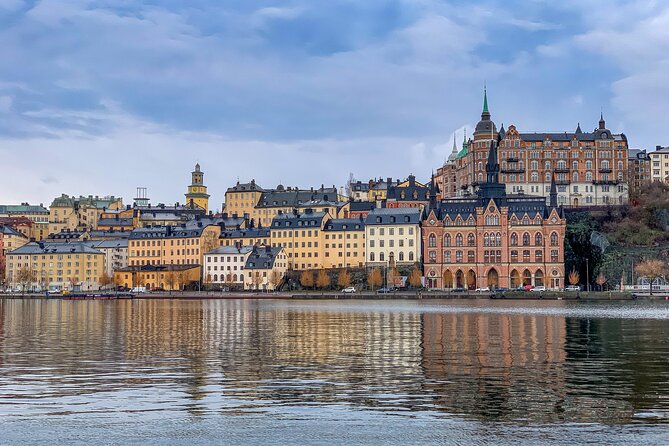
Reviewed · GAMLA STAN OLD TOWN WALKS
Stockholm: Old Town and City Guided Walking Tour
Old Town gets under your skin fast. This 2-hour guided walk through Gamla Stan and nearby city highlights strings together famous names and real places, from Gustav III’s dramatic fate to the Nobel story. You’ll move at a street level pace, with stops built around what you can actually see and point out as you walk.
I especially like the mix of live English commentary and the Vox City audio options in multiple languages. Second, the included Vox City app access turns the tour into a smart launchpad for more exploring after you finish the walk.
One thing to plan for: entry to attractions isn’t included, so if you want to go inside specific sights, you’ll need to budget for tickets. Also, the tour doesn’t provide a headset or a phone, so bring your own earbuds and make sure you can use your mobile.
In This Review
- Key things to know before you go
- From Skeppsbrokajen to Gamla Stan: how this walk really works
- Vox City app: the extra value after your 2-hour walk
- Royal Swedish Opera and the Gustav III story you can feel
- Gustav II Adolf’s square, the Vasa connection, and the city’s power map
- Gamla Stan’s oldest layers: 1,000 years of lanes and one street with a purpose
- The Supreme Court and the royal residence site: power, architecture, and what changed
- Riddarholm Church and the monarchs’ burial ground
- Birger Jarl square, the Svea High Court, and a key timeline clue
- Evert Taube statue: a photo pause that still tells you something
- Nobel Banquet and City Hall’s golden crowns
- The Great Fire of 1625, jazz bars, and a street-level Stockholm feel
- Witch-trial street myths and the Gray Man
- Stortorget, the Stockholm Bloodbath, and the cannonball detail
- Swedish Academy and the Nobel Museum connection
- Gustav III obelisk and Karl XIV Johan’s statue: ending with power in stone
- Price and logistics: is $34.70 worth it?
- Who this walking tour suits best
- Should you book this Stockholm Old Town and City guided walking tour?
- FAQ
- How long is the Stockholm Old Town and City guided walking tour?
- What is the price per person?
- Where does the tour start?
- Is English commentary included?
- Does the tour include entry to attractions?
- Do I need to bring a phone or headset?
- Is free cancellation available?
Key things to know before you go

- Start at the Gustav III statue on Skeppsbrokajen: the pier meeting point makes the route easy to find.
- English live guide plus multilingual audio: you get spoken guidance and an app backup with several languages.
- Vox City app bonus: 5 free self-guided walks and 125 points of interest across Stockholm.
- A tight, story-focused route: courts, squares, churches, and Nobel landmarks—packed into about two hours.
- Watch your inside-the-building expectations: the tour is sight-based; entrances aren’t part of the package.
From Skeppsbrokajen to Gamla Stan: how this walk really works
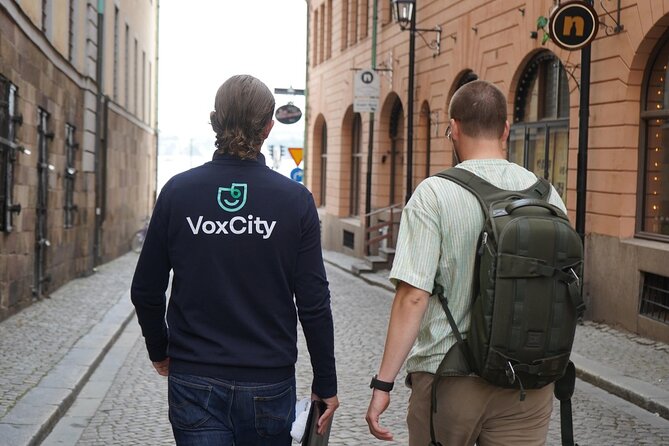
This tour starts where Stockholm feels most “harbor-town”: the pier area at Skeppsbrokajen, in front of the Gustav III statue, right below Slottsbacken. It’s a useful anchor point because Old Town can feel like a maze of lanes once you’re inside Gamla Stan. Starting at a visible landmark helps you get your bearings fast, which is half the battle on day one.
The pacing is built around short stops and quick explanations. That matters because Old Town’s details are small—inscriptions on buildings, the shape of a square, the meaning behind a street alignment. A guided route keeps you from just walking past things you’d otherwise miss.
The tour also ends right back at the start point. That’s practical. After two hours of cobbles and cold wind (Stockholm can do both), you’ll appreciate not having to figure out how to backtrack or connect to a new transit plan.
Group size is capped at 99, so this is not a tiny private stroll. Still, the structure is designed for walking and listening without constant regrouping. If you’re traveling with someone who gets annoyed by crowd flow, go with a little patience—at Old Town locations, things can naturally narrow.
More laps of Gamla Stan and the old town lanes


Vox City app: the extra value after your 2-hour walk
The best “money saved” part of this experience is what you get with the Vox City app access. Once you purchase, you’re set up with free self-guided content plus a big map-style list of points of interest.
Here’s what that looks like in real use:
- You receive access to 5 free self-guided tours.
- You get 125 points of interest across Stockholm.
- The app points you toward iconic areas beyond Gamla Stan, including islands and districts such as Kungsholmen and Djurgården.
- It’s also tied to major landmarks like the Royal Palace area and the King’s Garden.
Why this matters: a guided tour is great, but it can also end right when you’re finally warmed up to the city. The app helps you keep momentum. If you’re the type who likes to follow up with a second walk on your own, this package is doing the work of a guidebook plus an itinerary.
One practical tip: your voucher includes a QR code you’ll scan to download the audio guide before you arrive. Do that early if you can. In Old Town, getting your phone running on spotty coverage while you’re trying to meet a group is not how you want to start.
Royal Swedish Opera and the Gustav III story you can feel
One of the first stops takes you to the national stage for Swedish opera and ballet. This is linked to King Gustav III, who founded the institution in the 18th century, and the current building connects to a later royal gift from King Oscar II. That’s already interesting—but the real hook is what happened here.
The opera is famously associated with the assassination of Gustav III in 1792. Even if you’re not a theatre person, knowing this context changes how you view the building. Instead of seeing a stately façade, you’re seeing a place tied to a turning point in Sweden’s story.
What I like about opening the tour this way: it sets the tone. Old Town isn’t just cute streets and photos. The city’s most dramatic moments happened in real public buildings. You’ll carry that awareness as you move to squares and courthouses later.
Gustav II Adolf’s square, the Vasa connection, and the city’s power map
Next up: a square named for King Gustav II Adolf, often described as the Lion of the North. This stop is more than a name check. The square is connected to the ill-fated Vasa ship—an episode of ambition, maritime engineering, and failure that still echoes in Stockholm’s identity.
Then the route leads you toward the Swedish Parliament building, constructed between 1895 and 1904. Here, the details are physical:
- There’s an underground passage to the Assembly Hall.
- The Medieval Museum sits beneath the bridge.
This stop works well on a walking tour because it gives you a clear before-and-after view of Stockholm: modern civic authority right next to older layers. You get to feel how the city grew upward and outward without losing its older bones.
Gamla Stan’s oldest layers: 1,000 years of lanes and one street with a purpose
After the big civic sites, the tour slips into a more medieval-feeling pocket: Gamla Stan’s older core. You’ll be pointed to the fact that this area has been inhabited for over a thousand years—and the guide helps you translate that into what you’re seeing.
One highlight here is Västerlånggatan, a street whose trace connects to the old defensive wall of the city. It’s the kind of detail that clicks once you understand the street’s “why.” You’ll start noticing street lines, not just street photos.
This is where the guidance style matters. When the guide explains what a street was for, the cobblestones stop being just a texture. They become evidence—urban planning as a story.
Let a Stockholm local lead the way






The Supreme Court and the royal residence site: power, architecture, and what changed
One of the stops is Sweden’s Supreme Court, described as a former private residence now used for the highest court of appeal. That transformation is a powerful clue about how buildings get repurposed over centuries. You’re looking at continuity of power, even as the function changes.
Then you’ll be near the former royal residence complex: built in the 13th century, rebuilt after a fire in the 17th century, and used as a royal residence until the current king moved residence to Drottningholm Castle. Again, even if the original structures aren’t all visible today, the explanation gives context for why this area matters.
I like pairing these stops back-to-back. It makes the city’s “layers” clear:
- old residences become court or event spaces,
- royal power shifts locations,
- and the city absorbs each change into the stone.
Riddarholm Church and the monarchs’ burial ground
Riddarholm Church is one of Stockholm’s oldest buildings and—importantly—linked to Swedish monarchs through burial. It’s the kind of stop that works because you don’t need special interests to appreciate it. You’re given a clear reason why people would come here for centuries: the dead rulers shaped the living country.
From a walking-tour standpoint, a church stop also gives your feet a break while your brain stays engaged. Even if you don’t go inside any attraction (entry isn’t included), the stop still makes sense because you’re learning what to notice.
Birger Jarl square, the Svea High Court, and a key timeline clue
Another major stop centers on a square named for Birger Jarl. You’ll learn that he first mentioned Stockholm in 1252—a simple date that makes the whole city feel older than it looks.
This square also connects to Svea Hovrätt, the Swedish High Court. The combination is useful: you’re not only getting names, you’re also getting the institutional geography of Stockholm—who held power, where, and how the city organized it.
If you like history that connects time and place, this is a good section of the route. It keeps the tour from becoming random sightseeing.
Evert Taube statue: a photo pause that still tells you something
Then there’s a lighter, more human stop: a statue of Evert Taube, known as a Swedish author and musician. This is a classic walking-tour balancing act—one part serious national story, one part culture you can point at.
It’s also a practical photo moment. If you’re the kind of person who forgets to take pictures until you’re rushing, this stop gives you an easy time buffer.
Nobel Banquet and City Hall’s golden crowns
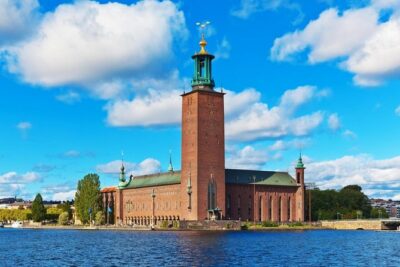
The route brings you to the Nobel Banquet area and the Blue Hall, plus a description tying City Hall to its three golden crowns. The guide also makes the crown imagery feel connected to Stockholm’s old royal branding, including the reference to the Castle of Three Crowns.
Why you should pay attention here even if Nobel isn’t your top interest: the building symbolism is part of Stockholm’s visual language. You see how the city turns prestige into public architecture.
If you’re planning a first trip, this stop gives you recognizable landmarks that you’ll later spot in postcards, photos, and skyline views.
The Great Fire of 1625, jazz bars, and a street-level Stockholm feel
Next comes an area associated with the Great Fire of 1625. The guide links that disaster to what you see around you now, and that can change how you interpret the street layout.
You’ll also be pointed toward the lively modern side of the neighborhood, including jazz bars like Stampen and boutique shops. This isn’t about pretending Stockholm is only medieval. It’s about showing how the city evolved—fire and rebuilding in the past, then creative nightlife and shopping in the present.
This section helps you feel the rhythm of the city: old stone, modern life, and the kind of corners where people actually hang out.
Witch-trial street myths and the Gray Man
One of the more atmospheric stops is on one of Stockholm’s oldest streets, described with dark tales linked to witch trials and ghosts, including the Gray Man. Even if you don’t care about legends, this is useful because it teaches you how Stockholm tells stories through place names, street age, and rumor.
I like this part of the tour because it reminds you that history doesn’t only live in museums. It also lives in how people talk about certain streets. It makes Gamla Stan feel alive in a specific, local way.
Just don’t expect a “spooky jump-scare” tour. Think of it as folklore set in real streets.
Stortorget, the Stockholm Bloodbath, and the cannonball detail
Then you hit Stockholm’s oldest square, tied to the Stockholm Bloodbath of 1520. The tour includes a striking detail: a cannonball embedded in a building, presented as a symbol of the siege in 1521.
This is one of those “one fact, three meanings” stops:
- It explains why the square matters.
- It gives you a concrete object to look for.
- It connects tragedy to the physical city you’re walking through.
If you enjoy tours where you leave with at least one unforgettable visual, this is it.
Swedish Academy and the Nobel Museum connection
The route also reaches the Swedish Academy, described as overseeing the Nobel Prize in Literature. From there, the guide points toward the Nobel Museum and the legacy of Alfred Nobel and Nobel laureates.
This stop works well because it’s close to Stockholm’s most globally recognized cultural brand. You’re walking through the part of town that helps people understand why Nobel is not just a ceremony—it has an institutional home here.
Even if you only want the outdoor experience, you’ll come away with a clearer sense of what the Academy does and why it’s in this city center area.
Gustav III obelisk and Karl XIV Johan’s statue: ending with power in stone
Near the end, you’ll see an obelisk dedicated by King Gustav III, along with a statue of Karl XIV Johan. You’ll be reminded that Karl XIV Johan was a French general who became Swedish king, adding a surprising international twist to the story of Swedish authority.
This final stretch is a good way to close the walk because it gives you one more “how power gets remembered” example. Obelisks and statues are Stockholm’s long memory, visible even after centuries.
Price and logistics: is $34.70 worth it?
At $34.70 per person for about two hours, this sits in the “good value if you’re doing your first orientation walk” category. You’re paying for:
- live commentary in English,
- multilingual audio support through the included app,
- and a route built around major landmarks and meaning, not just random street corners.
The Vox City app adds real practical value. If you’ll use it for follow-up walks, the cost feels easier to justify. If you plan to do nothing after the tour, you might still enjoy the walk—but you’ll likely miss some of the added value.
Also note: entry to attractions isn’t included. That doesn’t ruin the experience; it just means you should treat this as a guided outdoor-and-explanation tour. If your travel style is “see it from outside, then pick the best places to go in,” this fits well.
Who this walking tour suits best
This is a solid fit if:
- you want a structured Old Town introduction in a short time,
- you like hearing how specific buildings and squares connect to events,
- and you’ll actually use the app for extra self-guided exploring.
It’s also a good choice for people who enjoy stories that connect politics, disasters, and culture—rather than only architecture.
If you’re the type who hates walking in crowds or needs long pauses for photos and breaks, you might find the route a little brisk. With a max of 99 people, the flow can feel like a group event at each stop.
Should you book this Stockholm Old Town and City guided walking tour?
I’d book it if you’re planning a first visit to Stockholm and want Gamla Stan to come with explanations you can remember. The combination of live guidance, the included app with self-guided options, and the way the route covers courts, squares, Nobel-related landmarks, and the famous city tragedies makes it feel like more than a simple walk.
Skip it only if you already know Stockholm well and you only want indoor museum time. This experience is designed for what you can see and understand on the street.
FAQ
How long is the Stockholm Old Town and City guided walking tour?
It runs for about 2 hours.
What is the price per person?
The price is $34.70 per person.
Where does the tour start?
It starts at the Gustav III statue at Skeppsbrokajen, 111 30 Stockholm, and the tour ends back at the same meeting point.
Is English commentary included?
Yes. The tour includes live commentary in English, plus audio commentary available in English, Italian, French, Spanish, and German.
Does the tour include entry to attractions?
No. Entry to attractions is not included.
Do I need to bring a phone or headset?
A mobile device and headset are not included, so you should plan to use your own phone (and earbuds if you prefer).
Is free cancellation available?
Yes. You can cancel for a full refund up to 24 hours before the experience starts.
More Tours in Stockholm


More Tour Reviews in Stockholm


More Gamla Stan Walks


Just Added: The Latest Stockholm Reviews












Gamla Stan Old Town Walks, compared.
 ★ 4.7Ghost Walk and Historical TourFrom $312,206 reviews
 ★ 5.0Walking Tour of Stockholm Old TownFrom $241,175 reviews
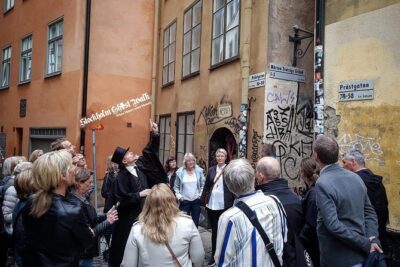 ★ 4.5The Original Stockholm Ghost Walk and Historical Tour – Gamla StanFrom $381,165 reviews
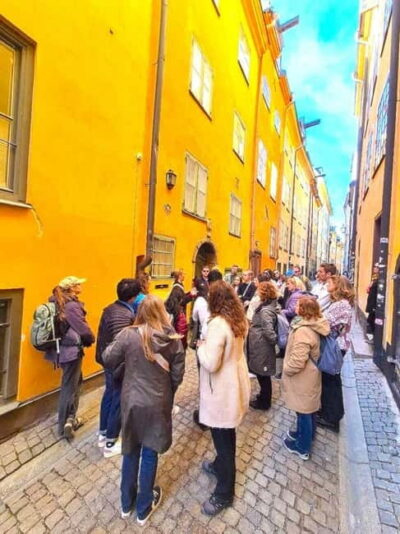 ★ 4.7Old Town Walking Tour with Local GuideFrom $15719 reviews
 ★ 5.0Best of Stockholm Walking Tour-3 Hours, Small Group max 10 peopleFrom $49645 reviews
 ★ 4.5The Nordic Food Walk StockholmFrom $122642 reviews
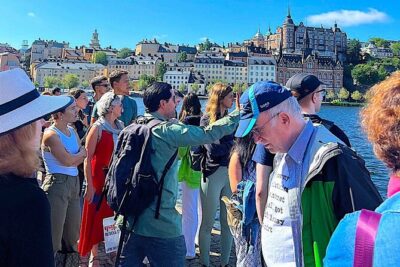 ★ 5.0Walking Tour of Stockholm’s Old Town, Gamla StanFrom $13451 reviews
 ★ 4.9Old Town Historical Walking TourFrom $52344 reviews
Browse the lists this tour appears in