
Reviewed · GAMLA STAN OLD TOWN WALKS
Stockholm: Old Town Walking Tour, stories and secrets
Medieval streets meet real stories on this 2-hour Old Town walk. It’s a guided way to see Gamla Stan without getting lost in the postcard views. Along the route, you’ll hear how power, belief, and daily life shaped Stockholm over centuries.
I like that the tour is built around stories, not just facts. Starting at the Postmuseum and moving square by square, you get context for why places matter, including monuments you might otherwise walk past without a second look.
One thing to consider: this is a lot of walking on uneven cobblestones, so it’s not suitable for mobility impairments or wheelchair users.
In This Review
- Key highlights worth your time
- Finding Stockholm’s clues at the Postmuseum start
- Runestone + Stortorget: the “this is old” moment lands early
- Royal Palace area and Stockholm Cathedral: power made visible
- Iron Boy, the Dragon statue, and the fun side of Old Town
- Mårten Trotzigs Gränd, Järntorget, and the street squeeze
- German Church, Riddarholmen views, and the quieter waterfront side
- The House of Nobility area and the finish at Mynttorget
- Price, time, and value: is $16 worth it?
- What to wear and bring for a smooth Gamla Stan walk
- Who this tour suits best (and who should skip it)
- Book it or skip it?
- FAQ
- Where do I meet the guide?
- How long is the tour?
- How much does the tour cost?
- Is the tour offered in English?
- What should I wear and bring?
- Is the tour suitable for wheelchair users or people with mobility impairments?
- Where does the tour end?
- Can I cancel and still get a refund?
Key highlights worth your time
- Postmuseum meet-up right in the heart of Gamla Stan, near the Gamla Stan subway station
- Stortorget and the central-square vibe, used as a launchpad for royal-era events
- Stockholm Cathedral area stops that connect architecture to real people and politics
- Photo stops for quirky icons like Iron Boy and the St George and the Dragon statue
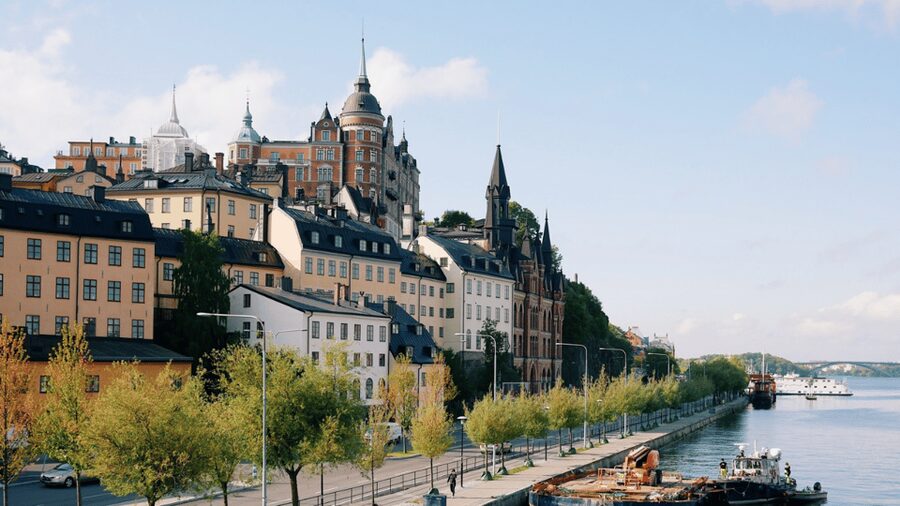
- Riddarholmen waterfront views plus Riddarholmen Church for a quieter, scenic feel
- Finish at Mynttorget, tied to freedom of speech and assembly
Finding Stockholm’s clues at the Postmuseum start
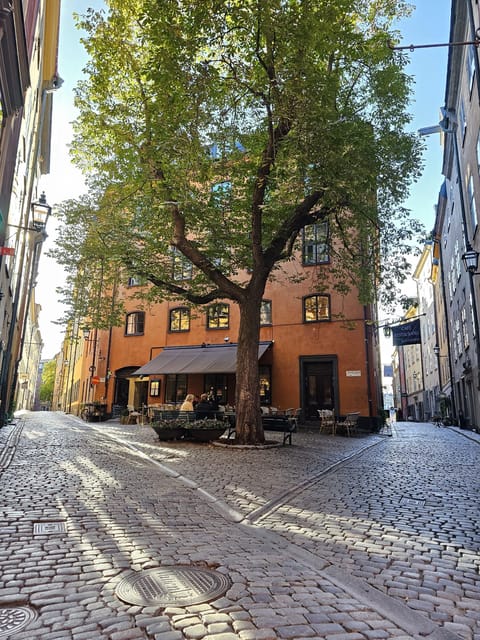
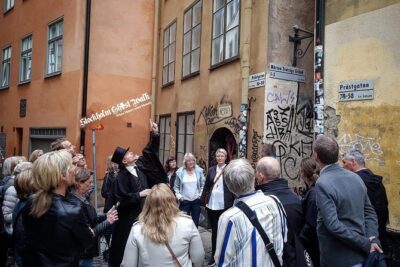
You begin at the Postal Museum (Postmuseum) at Lilla Nygatan 6 in Gamla Stan. It’s an easy starting point for a first-time visit, and you’ll spot your guide with the official logo at the entrance.
From there, the walk starts doing something smart: it uses the city’s layout as a map for the story. Rather than bouncing randomly between landmarks, you move through the Old Town in a way that makes the geography feel logical. That matters in Stockholm, where streets curve and squares pop up like stage sets.
I also like the practical pacing: most stops are short, with enough time to look up, take a photo, and listen. It keeps the energy up, and it helps you cover a lot of ground in a compact 2 hours. If you want to get your bearings fast, this is a good use of your time.
And since the guide is English-speaking, you’re not stuck piecing things together from signage. The tour leans on storytelling to connect the dots between buildings, politics, and ordinary routines.
More laps of Gamla Stan and the old town lanes

Runestone + Stortorget: the “this is old” moment lands early
Your first real pulse-check comes with the Runestone stop. It’s brief by design, but it sets the tone: Stockholm didn’t start as a museum district. Early artifacts and remnants like this help you understand the area as lived-in land, not just a scenic backdrop.
Then you hit Stortorget, the main square stop. This is where you’ll feel the Old Town’s center of gravity. You’re not just looking at a pretty open space; you’re using it as a history checkpoint. Squares like this tend to be where power, crowds, and arguments show up, and your guide uses that idea to frame what happened here.
A nice bonus is how this kind of square visit primes you for the rest of the day. After Stortorget, the Royal Palace area and cathedral stops feel less like isolated sights and more like parts of the same system.
If you’re the kind of person who likes to ask questions, this also helps. You’ll have a clearer sense of what you’re looking at, so your questions come faster and make more sense in the moment.
Royal Palace area and Stockholm Cathedral: power made visible
You’ll pass by the Royal Palace area on a photo stop. Even if you don’t go inside, it works as a quick orientation to royal presence on this island city. The Old Town layout makes it easy to see how the monarchy’s influence radiates through streets and institutions.
Next is Stockholm Cathedral, with more than one moment built in. There’s a photo stop, then a guided sightseeing stop, and then another cathedral-focused segment. That repetition sounds excessive until you realize what it’s doing: it gives you multiple angles to notice how architecture, religion, and authority connect.
Cathedral exteriors can be more about details than drama, especially on an overcast day. With a guide talking through what you should notice, you start spotting the patterns: how the building signals seriousness, how it relates to nearby institutions, and why it became a central stage for public life.
One of the more important “value” pieces here is emotional. When you understand the stakes behind the stone, the Old Town stops feel less like scenery and more like a timeline you can walk through.
Iron Boy, the Dragon statue, and the fun side of Old Town
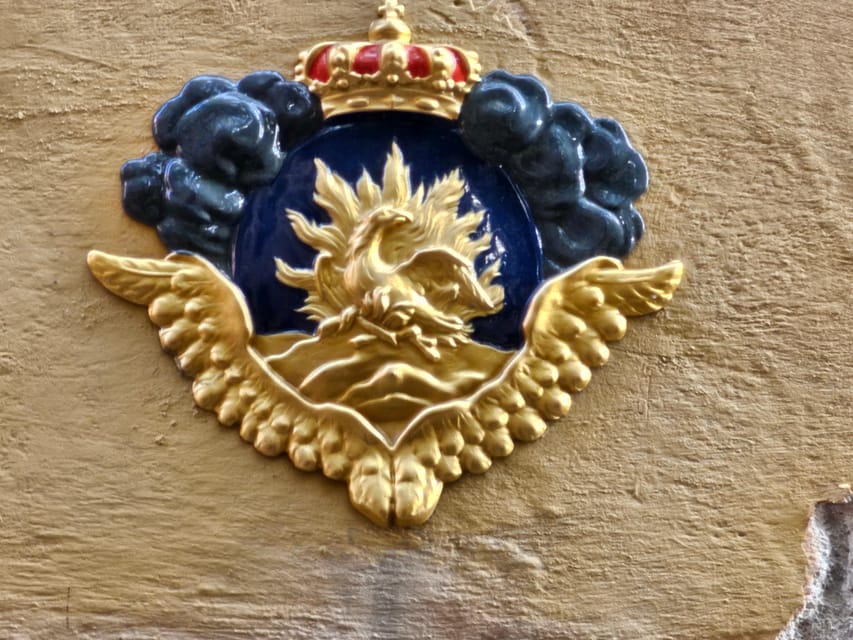
Some tours only chase famous monuments. This one includes quirky landmarks that give the Old Town its personality.
You’ll spot Iron Boy, the boy who’s watching the moon, on a short photo stop. It’s easy to treat this sort of thing as a random statue, but the way the guide frames it helps it click as part of the Old Town’s everyday storytelling culture.
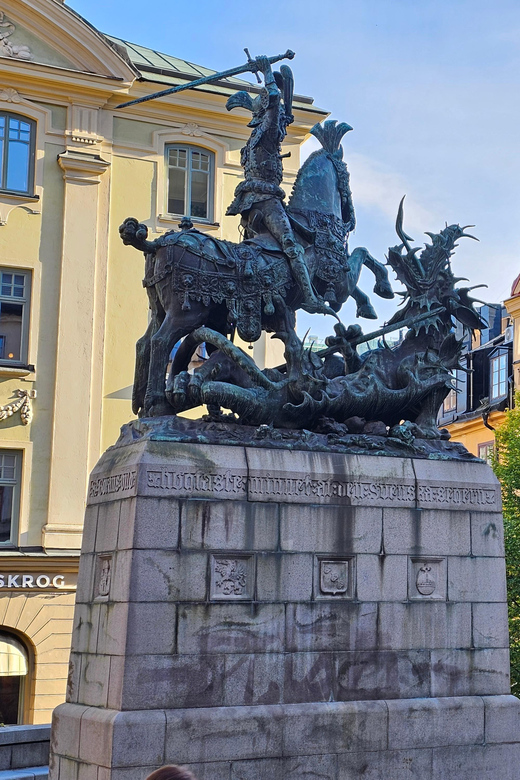
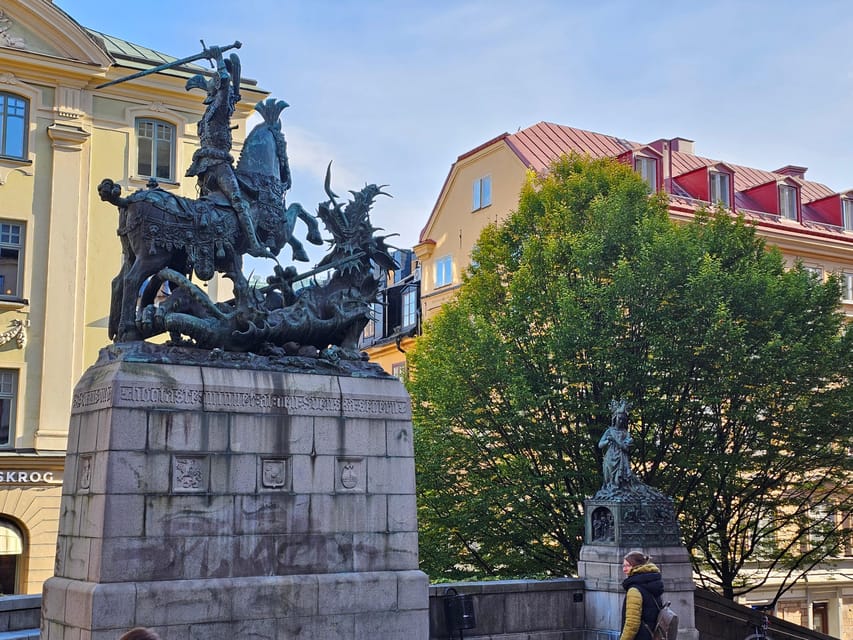
Then you’ll get to the St George and the Dragon statue. Again, it’s short, but it’s the kind of stop that adds texture. A city isn’t only kings and churches. It’s also myths, symbols, and public art that people saw every day.
After these stops, you move into street-level scenes like Österlånggatan. Short walk segments like this are where you start feeling how Gamla Stan works for locals historically: compact blocks, narrow streets, and sightlines that keep pulling you forward.
If you like Old Towns that feel lived-in instead of staged, these “smaller” moments are a big deal.
Mårten Trotzigs Gränd, Järntorget, and the street squeeze
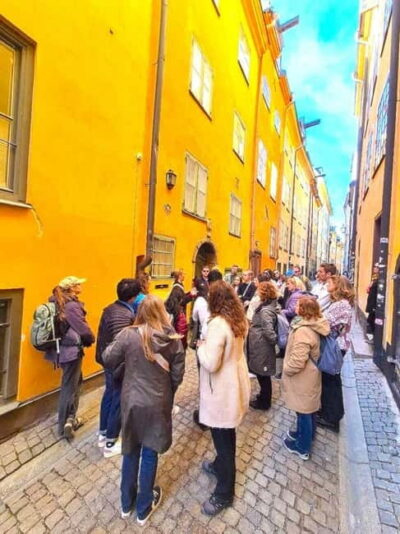
Old Town Stockholm has a talent for compact surprises. The tour leans into that with places like Mårten Trotzigs Gränd, a narrow lane that feels like a secret passage even when you’re standing right in it. You’ll pause here for a photo stop and listen as the guide ties the alley into the larger story of the area.
Then you’ll move to Järntorget for sightseeing and a short walk segment. Think of Järntorget as a chance to feel the Old Town’s commercial and communal side. Even without a shopping spree, you get that “people gathered here” sense that squares and markets create.
Västerlånggatan follows, and it’s a classic Old Town spine: a street you can imagine being busy, noisy, and practical. The tour’s timing makes this a good moment for photos because you’ve shifted from monumental stops to the kind of views that show the city’s bones.
This part of the walk is also where you’ll appreciate comfortable shoes the most. The cobblestones and turns don’t let you cruise. You’ll want shoes you trust for traction and fatigue control.





German Church, Riddarholmen views, and the quieter waterfront side
As the tour continues, you pass the German Church area. It’s another one of those stops that adds a layer: Stockholm’s Old Town wasn’t built by one group alone. Architectural and institutional variety shows up in pockets like this.
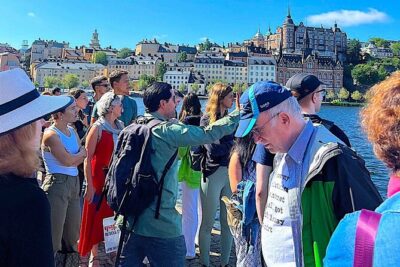
Then comes Riddarholmen, including scenic views on the way. This is a turning point. You start to shift from dense medieval streets to the watery edge of Stockholm’s story. Those waterfront views are more than pretty backdrops; they explain why this city became what it did.
You’ll also stop at Riddarholmen Church for a photo moment. The church fits the mood of the islet: a more reflective, less hectic feeling than the central squares. It’s a good contrast after the bustle of earlier landmarks.
If you’re doing this on day one, this section helps you build a mental map. You’ll begin to see how Stockholm’s geography shapes where the city concentrates power, worship, and public life.
The House of Nobility area and the finish at Mynttorget
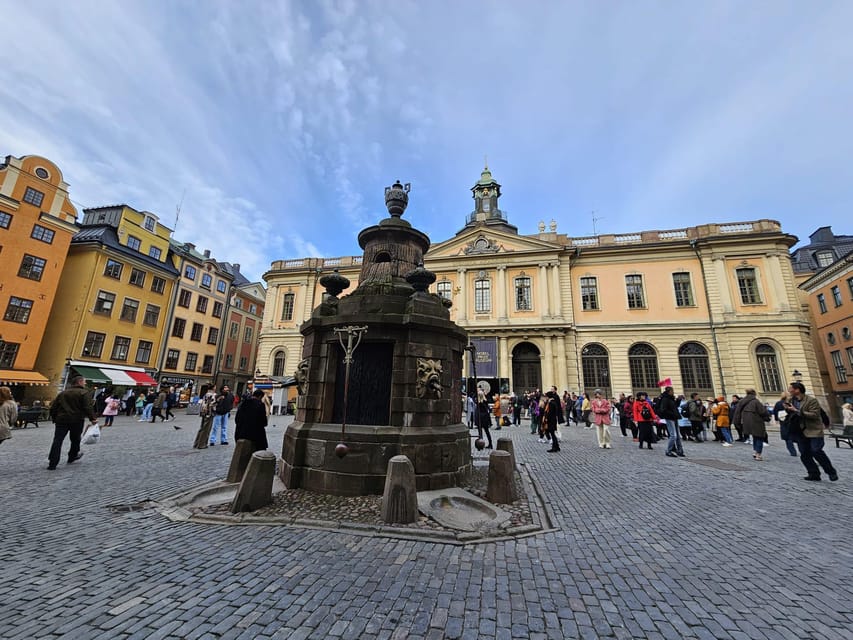
You’ll pass by the House of Nobility area, a brief stop that helps tie the story to social structure. In Old Towns, it’s easy to focus on royalty and forget who sat just below the crown. Stops like this give you that missing middle.
Finally, the walk ends at Mynttorget. This finish matters because Mynttorget is tied to freedom of speech and assembly. Ending on that idea flips the usual “power story” into something more human. It reminds you that cities don’t just record decrees; they host conversations and civic life.
In practical terms, Mynttorget is a strong place to break off. You’ll be in a central pocket of Gamla Stan, so it’s easier to continue exploring on your own afterward—whether you want a meal, a museum detour, or just one more stroll back toward your hotel.
Price, time, and value: is $16 worth it?
At $16 per person for about 2 hours, this is one of the more affordable ways to get a guided Old Town experience in Stockholm. The value isn’t only the walking. It’s the guide’s job: turning a tight route into a story you can remember.
This tour includes an English-speaking guide and focuses on historical storytelling across Swedish monarchs and everyday life. In a place where many sights look similar at first glance, that interpretive layer makes a real difference.
Just note how guides get paid. Your tour fee covers operational costs, and the guides primarily rely on tips for income. I like that they are upfront about it. If you feel you got real value—especially if your guide is a strong storyteller—plan to tip at the end.
Also, the tour starts promptly at the scheduled time. That’s good for those who want an efficient experience, but it does mean you should arrive a few minutes early and be ready to move.
What to wear and bring for a smooth Gamla Stan walk
This is a walking tour through medieval streets, so your basics matter.
Bring:
- Comfortable walking shoes (cobblestones can be tough even when the route is short)
- A camera if you want photos at the photo stops
- Weather-appropriate clothing, since you’re outside for most of the experience
If you’re planning to layer sightseeing the same day, you’ll thank yourself for choosing supportive footwear. This is the kind of activity that makes you want to keep exploring afterward, not limp back to your hotel.
Who this tour suits best (and who should skip it)
This walking tour fits you if you want:
- A first-day Old Town orientation in Gamla Stan
- Clear storytelling about Swedish monarchy and daily life
- A manageable time commitment (2 hours) with lots of sights on foot
- A guide who can answer questions and share ideas for what to do next
It’s not for you if you need wheelchair access or mobility-friendly routes. The tour is explicitly not suitable for people with mobility impairments.
And if you hate group walking or thrive on absolute silence, you might find the guided format a bit lively. But if you like interaction, the format works well because you’re close to landmarks and can ask follow-ups as you go.
Book it or skip it?
I’d book this tour if you want a smart way to understand Gamla Stan beyond the famous streets. The best reason is the combination of a tight route and story-led history. For a low per-person price, you get a guided walk that helps the city click: square to palace, cathedral to alley, waterfront to civic symbolism.
Skip it only if walking cobblestones is a deal-breaker for you, or if you prefer self-guided sightseeing with zero talking. Otherwise, this is a strong value pick for people who want Stockholm’s Old Town to feel understandable fast.
FAQ
Where do I meet the guide?
Meet your guide in front of the Postal Museum (Postmuseum) entrance at Lilla Nygatan 6, Stockholm, Gamla Stan. The nearest subway station is Gamla Stan, and you should look for your guide with the official logo.
How long is the tour?
The tour duration is 2 hours.
How much does the tour cost?
The price is $16 per person.
Is the tour offered in English?
Yes. It’s an English live tour guide.
What should I wear and bring?
Wear comfortable walking shoes. Bring a camera if you want photos, and dress for the weather since you’ll be outdoors walking.
Is the tour suitable for wheelchair users or people with mobility impairments?
No. It’s not suitable for wheelchair users or people with mobility impairments.
Where does the tour end?
The tour ends at Mynttorget in Gamla Stan.
Can I cancel and still get a refund?
Yes. Free cancellation is available up to 24 hours in advance for a full refund.
More Tours in Stockholm
More Tour Reviews in Stockholm
More Gamla Stan Walks

Just Added: The Latest Stockholm Reviews


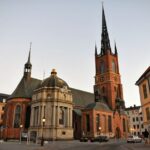
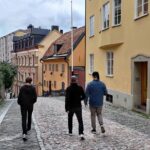








Gamla Stan Old Town Walks, compared.
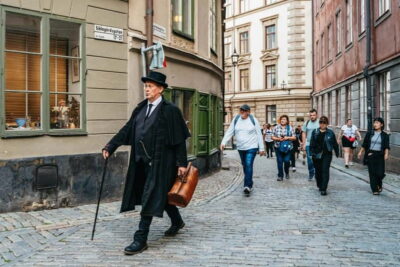 ★ 4.7Ghost Walk and Historical TourFrom $312,206 reviews
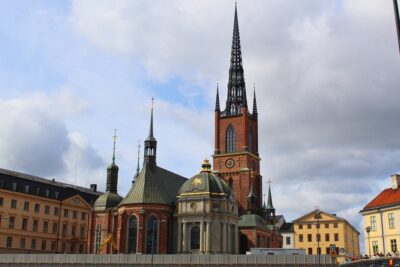 ★ 5.0Walking Tour of Stockholm Old TownFrom $241,175 reviews
 ★ 4.5The Original Stockholm Ghost Walk and Historical Tour – Gamla StanFrom $381,165 reviews
 ★ 4.7Old Town Walking Tour with Local GuideFrom $15719 reviews
 ★ 5.0Best of Stockholm Walking Tour-3 Hours, Small Group max 10 peopleFrom $49645 reviews
 ★ 4.5The Nordic Food Walk StockholmFrom $122642 reviews
 ★ 5.0Walking Tour of Stockholm’s Old Town, Gamla StanFrom $13451 reviews
 ★ 4.9Old Town Historical Walking TourFrom $52344 reviews
Browse the lists this tour appears in