
Reviewed · GAMLA STAN OLD TOWN WALKS
Unique walking tour Stockholm
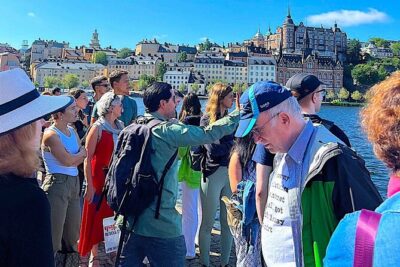
Stockholm’s best stories hide in plain sight. This small-group walk (max 15) lets you hit the classic landmarks and the overlooked corners, with Tomas using trivia and real-life context to make the city feel personal. I really like the small-group setup, because questions stay easy and you get more than one-size-fits-all facts. I also like the focus on metro stops and local details, including those quick, eye-opening bits that turn a photo stop into a memory.
One thing to consider: this is mostly an outside walking tour with short stops, so it is not a full “go inside everything” day. If you want long museum time and lots of ticketed entrances, you may feel it is a bit short and purposely selective.
In This Review
- Key takeaways before you go
- Meeting Point at Café Opera and How the Tour Flows
- Why This “Unique” Walk Works Better Than a Standard Sight Loop
- Stop-by-Stop: What You’ll See From Kungsträdgården to the Castle
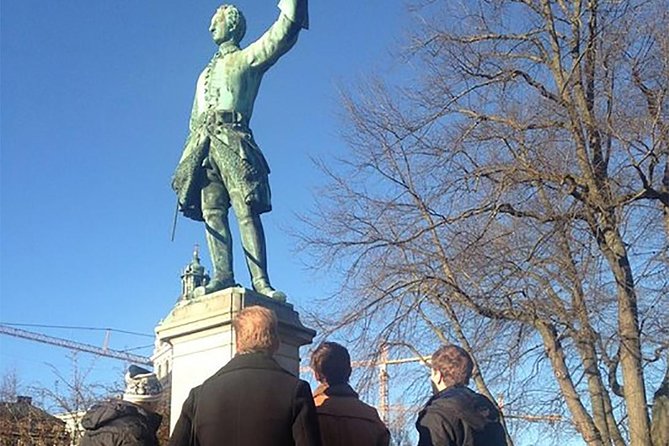
- Kungsträdgården: Trivia and the City’s Central Mood (15 minutes)
- Berzelii Park: Short Stop, Big Sense of Place (10 minutes)
- Kungstornen: Modern Landmarks With Context (10 minutes)
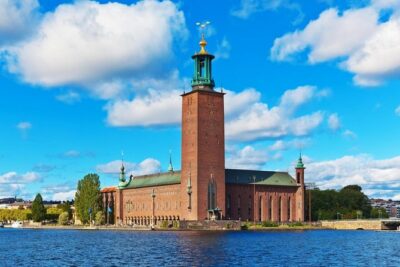
- Stockholm Concert Hall Exterior: Architecture Without the Ticket Lines (10 minutes)
- Olof Palme Memorial Plaque: A Moment That’s Easy to Miss (10 minutes)
- Gallerian Exterior: City Life, Commerce, and Design Signals (10 minutes)
- Mosebacke Torg: Street-Level Culture and Neighborhood Energy (10 minutes)
- Södermalm: The Neighborhood Stretch You’ll Appreciate (20 minutes)
- Skeppsholmen: Island Perspective and Harbor-Edge Thinking (10 minutes)
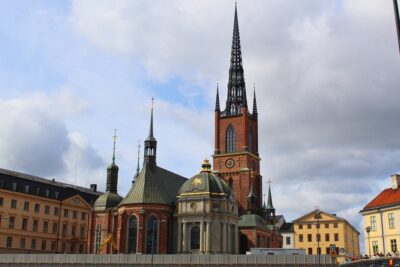
- Riddarholmen Exterior: A Quiet History Stop Without Waiting (10 minutes)
- Royal Palace Exterior: The Flag Detail That People Remember (10 minutes)
- The Metro and the Blue-Line Art Moment
- Price and Value: Is $65.69 Worth It
- Who Should Book This Tour (And Who Might Skip It)
- Tips to Get the Most Out of the Walk
- Should You Book This Unique Walking Tour of Stockholm?
- FAQ
- How long is the Unique Walking Tour Stockholm?
- How many people are in the group?
- Is the tour offered in English?
- Do you enter places like the Stockholm Concert Hall and the Royal Palace?
- Where does the tour start and end?
- Can I cancel for a full refund?
Key takeaways before you go
- Max 15 people keeps the vibe personal and interactive
- Tomas’s local perspective brings culture stories into everyday sights
- Outside touring means you spend time seeing, not waiting in lines
- Public transport segments can add a little logistics, but it helps you cover more ground
- Multiple neighborhoods gives you a real sense of Stockholm’s layout and feel
Meeting Point at Café Opera and How the Tour Flows

You meet at Café Opera, Karl XII:s torg 5, 111 47 Stockholm, and the tour ends near the Castle, Slottsbacken 8, 111 30 Stockholm. That end point choice is smart: it keeps the final stretch tied to the old-town vibe without dragging you back across town.
The timing is built for a 2 to 3 hour experience. Each stop is short, typically 10 to 20 minutes, so you get variety without getting stuck in one spot too long. The pace also makes the tour work well for first-timers who want orientation fast, and for return visitors who want different angles than the usual postcard route.
You’ll be walking and using public transportation at points. That means comfy shoes matter, and it helps to travel light so you can move quickly. Also, since it is an outdoor-heavy format, a light layer helps even when the weather looks calm.
More laps of Gamla Stan and the old town lanes

Why This “Unique” Walk Works Better Than a Standard Sight Loop

This is not just a list of famous buildings. The value is in how the city gets explained.
A big part of what makes this tour click is the guide’s voice. Tomas is a Stockholm local, and you feel that pride in the way he connects street-level details to the bigger story of how Swedes live and think. The tour style is interactive, not a lecture. When you ask questions, you get answers that point you to what to notice next.
Another strong point is the mix of “big name” places and places most people miss. You get stops like Kungsträdgården and the Royal Palace area, plus neighborhood moments such as Södermalm and island/harbor viewpoints like Skeppsholmen and Riddarholmen. That combo helps you understand the city’s structure instead of memorizing isolated photos.
Stop-by-Stop: What You’ll See From Kungsträdgården to the Castle
Here is what to expect at each stop, and why each one matters for your Stockholm mental map.
Kungsträdgården: Trivia and the City’s Central Mood (15 minutes)
You begin in Kungsträdgården, one of the city’s key central parks. The stop is designed for quick setup: trivia, history, and the kind of context that makes later landmarks easier to understand. Even if you think you know Stockholm already, this kind of warm-up can sharpen your sense of where things sit relative to each other.
Why it matters: It gives you a starting point that makes the rest of the walk feel ordered. You are not just moving around randomly; you are building a route.
Berzelii Park: Short Stop, Big Sense of Place (10 minutes)
At Berzelii Park, the tour keeps it tight: 10 minutes of stories and history. This is the kind of stop that works well for people who like context more than waiting around.
Possible drawback: If you prefer longer photo sessions, some stops will feel “blink and you miss it.” That is the trade-off for the full route coverage.






Kungstornen: Modern Landmarks With Context (10 minutes)
Next up is Kungstornen. You’re not going for an interior visit; you’re there to learn how the city’s identity mixes old traditions with more modern structures. The tour keeps it fast but meaningful.
Why it matters: Stockholm often feels like islands of meaning. Stops like this connect the dots.
Stockholm Concert Hall Exterior: Architecture Without the Ticket Lines (10 minutes)
You’ll visit outside the Stockholm Concert Hall for about 10 minutes. The tour format is deliberate: you do not enter. Instead, you tour the exterior and pick up the stories that explain why the building and its location matter.
What you gain: You avoid the slow pace that ticketed entrances can add, and you still get the cultural context.
Olof Palme Memorial Plaque: A Moment That’s Easy to Miss (10 minutes)
At the Olof Palme Memorial Plaque, you get a compact, focused history stop. This is the kind of moment that many casual visitors walk past without noticing. The tour turns that into a real understanding point.
Why it matters: It adds civic depth to a city that can otherwise feel like only water views and royal postcards.
Gallerian Exterior: City Life, Commerce, and Design Signals (10 minutes)
You’ll stop at Gallerian and tour outside for about 10 minutes. Again, no interior requirement. The value here is how Tomas frames the building in the rhythm of everyday Stockholm life.
Practical note: If you’re the type who loves architecture but hates crowds, an outside-only format can be a plus.
Mosebacke Torg: Street-Level Culture and Neighborhood Energy (10 minutes)
At Mosebacke Torg, the tour leans into the vibe. You get 10 minutes of stories that help you read the neighborhood like a local rather than a tourist map.
Why it matters: Neighborhoods are where Stockholm’s personality shows up. This stop supports that shift.
Södermalm: The Neighborhood Stretch You’ll Appreciate (20 minutes)
Södermalm gets the longest stop at about 20 minutes. This is where you get a stronger sense of community life, not just famous monuments. It is also a helpful reset: you’re changing gears from royal/civic zones into a more lived-in feel.
What you gain: A better understanding of how Stockholm’s “old center” and “everyday city” connect.
Skeppsholmen: Island Perspective and Harbor-Edge Thinking (10 minutes)
At Skeppsholmen, the tour stays brief at 10 minutes, but island stops are powerful for orientation. Stockholm’s shape is everything, and this kind of stop helps you “see” why the city is built the way it is.
Riddarholmen Exterior: A Quiet History Stop Without Waiting (10 minutes)
You’ll visit Riddarholmen outside for about 10 minutes. This is another stop where outside access works in your favor: you can take in the atmosphere while moving at a tour pace.
Why it matters: You get a strong look at the city’s layers without the time drain of interior visits.
Royal Palace Exterior: The Flag Detail That People Remember (10 minutes)
The tour includes the Royal Palace area, but again, you tour outside, about 10 minutes. One detail you may enjoy is the flag nuance Tomas mentions: the difference between what people notice and what’s actually correct when the King is in the office. Small accuracy like that sticks in your brain, and it makes you more observant on your own later.
Why it matters: It turns a landmark into a living system of symbols instead of a static photo.
The Metro and the Blue-Line Art Moment
Even though the stops are listed as landmark points, the route is built around moving efficiently through the city. In practice, that often includes public transport, including metro segments.
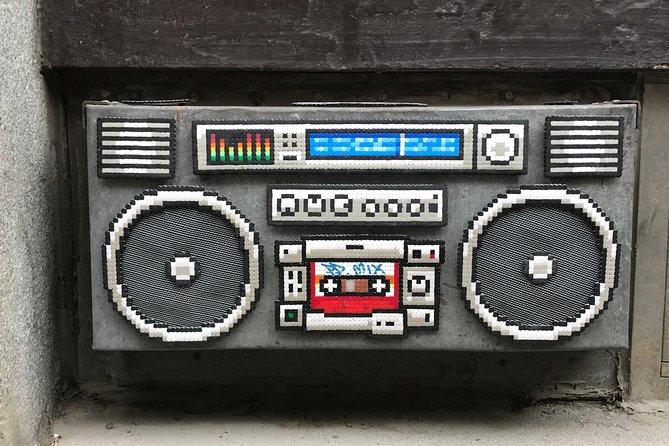
One of the most praised elements is the surprise that shows up on the metro. Tomas points out subway art on the blue line stops, and you’re meant to notice how Stockholm expresses creativity underground, not just above ground. It is a neat reminder that local culture isn’t only in museums.
A small practical consideration: because you’re using public transit, you should plan on having what you need for metro rides. One person specifically noted paying a train ticket to get access to the underground art portion, so budget a little for transit during the tour.
Price and Value: Is $65.69 Worth It
At $65.69 per person for roughly 2 to 3 hours, the price lands in the “serious but not crazy” zone. What makes it worth it for the right person is the structure.
You are paying for:
- a small group (max 15), so your time with the guide is real
- efficient coverage across multiple districts
- a guide who gives context, not just dates
- outside-focused touring that keeps the day moving
If your ideal tour is a long, indoor museum marathon, you might not feel the value. But if you want to get your bearings fast and walk away with a clearer sense of Stockholm’s neighborhoods and culture, this format is one of the better values you can choose in a short window.
Also, the mobile ticket approach helps reduce friction. You’re not messing around with paper receipts mid-walk.
Who Should Book This Tour (And Who Might Skip It)
This tour is a great fit if you:
- want an overview route that still includes off-the-beaten-path moments
- like stories that connect places to Swedish culture and daily life
- enjoy walking but don’t want to spend half the day at entrances and lines
- want a guide who answers questions and uses details you can actually notice later
You might skip it if you:
- need a tour with mostly indoor stops and ticketed entries
- dislike short stop durations (many are 10 minutes)
- feel strongly about having the guide cover every transport cost or entry requirement (some transit segments can need you to have a metro ticket)
Tips to Get the Most Out of the Walk
These are simple things that help without overcomplicating your trip.
- Wear shoes you trust. You’ll be on your feet for a few hours.
- Keep your phone charged enough for quick photo stops.
- Be ready to move. The short stop timing works best if you stay flexible.
- Ask questions early. Tomas’s best moments come when you engage.
If you’re arriving for the first time, I’d treat this as one of your earliest Stockholm activities. It sets you up to explore the rest of the city with better instincts.
Should You Book This Unique Walking Tour of Stockholm?
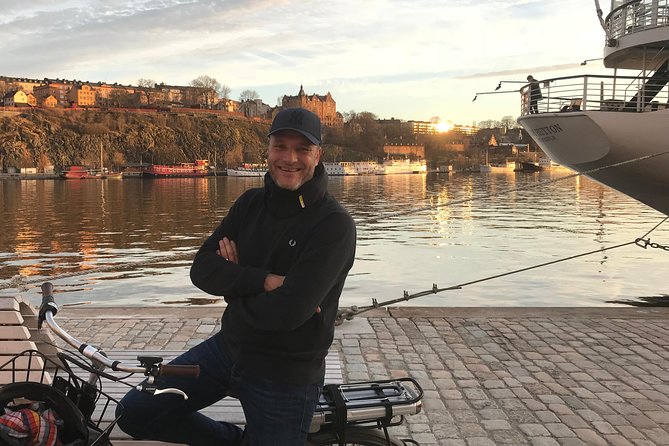
If you want Stockholm to feel human, not just famous, I’d book it. The biggest reason is the combination of small-group attention and a guide who brings the city to life with specific, memorable details. You get major landmarks, yes, but you also get the kind of city reading that helps you move around independently afterward.
For your decision, ask yourself this: do you want quick, high-context stops across multiple neighborhoods in a short time? If yes, this tour is a strong choice. If you want a slow, ticket-heavy day packed with interiors and long stays, you’ll likely prefer a different style of tour.
FAQ
How long is the Unique Walking Tour Stockholm?
The tour runs about 2 to 3 hours.
How many people are in the group?
The group size is limited to a maximum of 15 travelers.
Is the tour offered in English?
Yes, the tour is offered in English.
Do you enter places like the Stockholm Concert Hall and the Royal Palace?
No. The tour states that you tour outside for stops such as the Stockholm Concert Hall, Gallerian, Riddarholmen, and the Royal Palace.
Where does the tour start and end?
It starts at Café Opera (Karl XII:s torg 5, 111 47 Stockholm) and ends near the Castle (Slottsbacken 8, 111 30 Stockholm).
Can I cancel for a full refund?
Yes. You can cancel up to 24 hours in advance for a full refund. Cancellation within 24 hours of the start time is not refunded.
More Tours in Stockholm
More Tour Reviews in Stockholm
More Gamla Stan Walks


Just Added: The Latest Stockholm Reviews











Gamla Stan Old Town Walks, compared.
 ★ 4.7Ghost Walk and Historical TourFrom $312,206 reviews
 ★ 5.0Walking Tour of Stockholm Old TownFrom $241,175 reviews
 ★ 4.5The Original Stockholm Ghost Walk and Historical Tour – Gamla StanFrom $381,165 reviews
 ★ 4.7Old Town Walking Tour with Local GuideFrom $15719 reviews
 ★ 5.0Best of Stockholm Walking Tour-3 Hours, Small Group max 10 peopleFrom $49645 reviews
 ★ 4.5The Nordic Food Walk StockholmFrom $122642 reviews
 ★ 5.0Walking Tour of Stockholm’s Old Town, Gamla StanFrom $13451 reviews
 ★ 4.9Old Town Historical Walking TourFrom $52344 reviews
Browse the lists this tour appears in