
Reviewed · VIKING SIGTUNA & UPPSALA DAY TRIPS
Private Day Tour to Uppsala – Uppsala Cathedral, Viking Burials and countryside
Uppsala feels like time travel. In this private day tour with round-trip transport, I love how it strings together Uppsala Cathedral and Viking-age burial sites into one tight schedule, so you’re not wasting hours figuring out transit. You also get a guide who can keep the story moving, from medieval Sweden to the later Viking world that still shapes how Uppsala is understood.
The main consideration is pacing. Most stops are short, and a couple places depend on whether they’re open that day, so you’ll want to arrive ready to walk a bit and listen closely, especially for the history talk.
In This Review
- Key highlights that make this tour worth your time
- Uppsala Cathedral and Viking mounds in one efficient day
- Price and value: what around $496.65 gets you
- Pickup from hotels and cruise piers (and what to do about Nynäshamn)
- Stop-by-stop: Uppsala Slott, Botaniska, and the 1887 university building
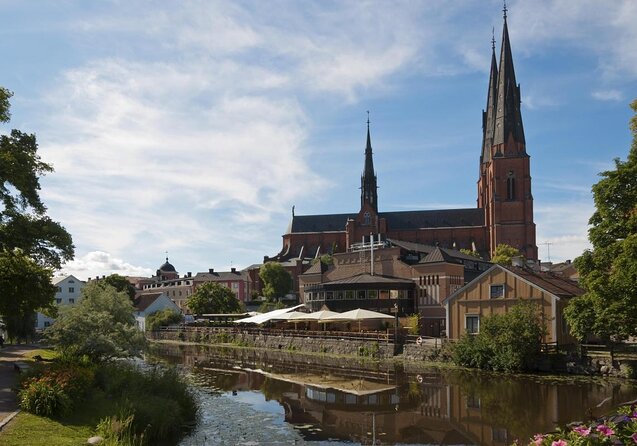
- Uppsala Domkyrka: Scandinavia’s biggest medieval cathedral moment
- Valsgärde and Old Uppsala: boat burial ground to museum interpretation
- Private guiding that adjusts to your group
- Planning tips: walking time, lunch choices, and how to keep the day smooth
- Should you book this private Uppsala day tour?
- FAQ
- What time does the private Uppsala tour start?
- Is this tour private or shared?
- Are admission tickets included for the main sites?
- Where does pickup happen in Stockholm?
- Do I get pickup if my cruise docks at Nynäshamn?
- What if the weather is bad?
Key highlights that make this tour worth your time
- Private pickup and drop-off around central Stockholm, plus cruise-pier meet-ups with clear instructions
- Uppsala Cathedral with the full medieval timeline in the background (construction began in the 1270s, finished in 1435)
- Viking age stops at Valsgärde and Old Uppsala, including a museum visit at Old Uppsala
- Most admissions are free, which keeps your “real cost” lower than you might expect
- Your guide can adjust on the fly for restroom and interest-based changes, which matters on a 7-hour day
Uppsala Cathedral and Viking mounds in one efficient day
If you’re staying in Stockholm, Uppsala is one of the best day trips because it does two jobs well. It gives you a major medieval center with a cathedral that’s on a serious scale, and it also points you toward Sweden’s Viking past through burial sites and museum interpretation.
What makes this tour work is the mix. You’re not only bouncing between one famous building and another. You’ll also get time in the countryside around Old Uppsala, plus a Viking boat burial landscape at Valsgärde. That shift in setting makes the history easier to picture than if you stayed parked in one city block.
And because it’s private, you’re not stuck with the rhythm of a big group bus. Your guide can slow down when a question lands, or speed up when your group wants more time outside. That flexibility is exactly what you want on a day that’s packed but still meant to feel relaxed.
More Viking days out to Sigtuna and Uppsala



Price and value: what around $496.65 gets you
Yes, the price is steep on paper: $496.65 per person for a roughly 7-hour private experience. But here’s the part that matters for your wallet and your expectations: the day includes round-trip transportation plus a professional guide, and it covers all fees and taxes.
Then look at what you’re not paying extra for. Most of the major stops are marked free for visitors here: Uppsala University’s main building (learning the story around it), Uppsala Cathedral, Valsgärde grave field, and the Old Uppsala museum time is included. That means a chunk of your day is covered without surprise ticket costs piling up.
Two costs to keep in mind:
- Uppsala Castle is treated as an outside visit only, and admission is listed as not included.
- Lunch is own expense, so plan for a meal break you control.
So I think the best way to judge the price is this: you’re paying for time, comfort, and guided flow. If you’ve ever tried to do Uppsala alone on a tight schedule, that’s where the money starts to make sense.
Pickup from hotels and cruise piers (and what to do about Nynäshamn)
This tour starts at 9:00 am, and the meeting approach is designed to reduce stress. If you’re in central Stockholm, pickup is offered from hotels and hostels within 3 km of Stockholm Central Station, plus certain harbours: Frihamnen, Stadsgården, and Värtahamnen. If you’re arriving by cruise, you’ll get detailed instructions on where to wait and how to identify your guide.
A few practical tips from the pickup setup:
- The guide will be holding an A4 sign that says Viking Tours.
- For some piers, you’re told to follow specific blue/green lines before stepping out to meet the guide.
- If your cruise docks at the wrong harbour number, you’re instructed to go outside the fenced/guarded areas so the guide can locate you.
One important limit: no pickup is included from Nynäshamn, because it’s about 50 km from Stockholm. If that’s your port, you’ll need to coordinate a central Stockholm meeting spot by train or by cruise bus options into the city.
If you want a low-friction day, take 2 minutes before you go and confirm your exact pier/harbour code.
Stop-by-stop: Uppsala Slott, Botaniska, and the 1887 university building
Your day is built around a simple arc: royal power, learning institutions, and then the medieval center that ties it all together. The time blocks are short, which is great if you like variety, but it also means you should use your moments well.
Uppsala Castle (Uppsala Slott), outside only
You’ll look at the outside of the castle and hear the story of its history. Admission isn’t included because this stop isn’t about going inside. The upside is efficiency. The trade-off is that if you were hoping for rooms or interiors, you won’t get them here.
Botaniska Trädgården (botanical garden), if open
If this is open on your date, you get about 30 minutes at one of Europe’s oldest botanical gardens. That’s a very different kind of Swedish story—less cathedral, more plants and long timelines. If it’s closed, you’ll lose this slot, so keep an eye on timing on the day.
Uppsala University Main Building
You’ll spend around 20 minutes here, focusing on the main building from 1887 in a neoclassical style. You’ll also learn how Sweden’s oldest university dates back to 1477. Even if you’re not a student-at-heart, this stop helps you understand why Uppsala keeps showing up in Sweden’s major history chapters.
What I like about this cluster is that it builds context. By the time you reach the cathedral later, you’ve already seen how Uppsala blends learning, religion, and older power structures.
Uppsala Domkyrka: Scandinavia’s biggest medieval cathedral moment
Uppsala Cathedral is the headline for a reason. It’s described as the largest cathedral in Scandinavia, with construction beginning in the 1270s and ending with an inauguration in 1435. That timeline gives you a way to read the building, even if you’re mostly viewing it and its surroundings.
You’ll get about 50 minutes at the cathedral area. That’s enough time to slow down, take in the scale, and follow the guide’s explanation without feeling rushed through a single photo stop. If your group enjoys architecture, this is one of the best places in the day to do it.
A practical note: the itinerary specifies visiting the place and surroundings. So don’t count on guaranteed time inside specific rooms unless your guide confirms what’s accessible on the day.
If you want to make this stop land emotionally, do one thing: ask your guide how the cathedral’s age connects to the Viking-era stories you’ll hear later. The day has a through-line, and the guide can help you stitch it together.
Keep it to just your group with a private Stockholm tour





Valsgärde and Old Uppsala: boat burial ground to museum interpretation
This is where the tour earns its Viking theme in a real way, not just through names. Instead of only discussing Vikings as far-away characters, you’re standing near the physical evidence of burial practice and landscape memory.
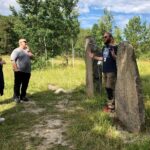
Valsgärde grave field
You’ll visit a Viking-age boat burial grave field for about 30 minutes. A “boat burial” isn’t a casual idea. It suggests beliefs and status that you can feel when you’re told what you’re looking at, and when you see it in its setting rather than in a textbook diagram.
Gamla Uppsala (Old Uppsala) and the mounds
Then you move to Old Uppsala, a Vendel-Viking age archaeological site with gigantic burial mounds. This is the countryside shift I mentioned earlier, and it matters because the space helps you understand how people organized sacred places across generations.
An important perk here: a museum visit is included. That gives your guide time to connect what you see in the landscape with how archaeologists and historians interpret it. It’s also your best chance to ask for clarification, because the museum context tends to make the story easier to follow.
Total time here is about 1 hour 15 minutes, which is generous for a site with both outdoor and museum components. It also means if you’re in a group that likes photos, you’ll have time without holding everyone hostage for constant stops.
Private guiding that adjusts to your group
One of the strongest themes from real experiences with this kind of private tour is personalization. People specifically called out guides by name, and the patterns match what you should look for when you book private history.
You might be guided by people like Christian and Jakob, Olaf, Calle, Carl, Gabriel, or Helen and Kiki. The common thread: they don’t just recite dates. They build the day around what you’re most interested in, and they handle pacing needs like restroom breaks and stopping for drinks.
One booking experience also described guide Carl as taking them to unusual Viking places and tailoring the plan after checking what the group wanted. If you have a specific interest—architecture, daily life in Viking Sweden, or how the university and cathedral relate to each other—ask your guide early. In a private format, those questions often turn into meaningful time changes.
Also, if sound matters to you, don’t be shy about asking for repeat explanations. The tour relies on listening, and you’ll enjoy it more if you can hear every detail.
Planning tips: walking time, lunch choices, and how to keep the day smooth
This day is short enough to feel doable, but it’s still packed. Most stops are around 20 to 50 minutes, and you’ll be moving between city areas and archaeological sites.
A few practical ideas:
- Wear comfortable shoes. You’ll likely do a mix of paved walkways and uneven outdoor areas.
- Plan lunch as a flexible break. Lunch is your own expense, so pick something that fits your timing and energy level.
- Use downtime strategically. The guide’s story work is the payoff, so don’t treat every minute as a sprint for pictures.
And if a site is closed, it will affect how the day feels. In situations like that, the advantage of a private guide is that you can usually redirect time to something adjacent or adjust the emphasis of the remaining stops. The itinerary is structured, but private guiding gives you room to keep the day from feeling like a checklist.
Finally, there’s a weather note: the experience requires good weather. If conditions are rough, the operator may offer a different date or a full refund, so don’t plan anything tightly afterward.
Should you book this private Uppsala day tour?
I’d book it if you want a guided Uppsala day that feels coherent: cathedral scale in the morning-to-midday, then Viking burial landscapes and museum context in a way that makes the past feel physical.
I’d think twice if you’re hoping for lots of indoor time at every stop. Uppsala Castle here is outside-only, and the itinerary emphasizes short visits across several sites. Also, if you’re sensitive to quiet audio or if your group needs long museum pacing, ask how your guide runs the day before you commit.
For most people coming from Stockholm who want history with real structure and minimal logistics stress, this is strong value. You’re paying for smooth transport, a professional guide, and a day that strings together Uppsala’s biggest storylines without dragging the trip into separate ticket hunts.
FAQ
What time does the private Uppsala tour start?
It starts at 9:00 am and runs for about 7 hours.
Is this tour private or shared?
It’s private. Only your group participates.
Are admission tickets included for the main sites?
Uppsala Cathedral, Valsgärde grave field, and the Old Uppsala museum visit are listed as free/included. Botaniska Trädgården is free if it’s open. Uppsala Castle is an outside visit and admission is not included. Lunch is not included.
Where does pickup happen in Stockholm?
Pickup is offered at all hotels, hostels, and other accommodations in central Stockholm within 3 km from Stockholm Central Station, plus certain harbour areas (Frihamnen, Stadsgården, and Värtahamnen).
Do I get pickup if my cruise docks at Nynäshamn?
No. No pickup is included from Nynäshamn because it’s about 50 km away. You’ll need to arrange a meeting place in central Stockholm.
What if the weather is bad?
The tour requires good weather. If it’s canceled due to poor weather, you’ll be offered a different date or a full refund.
More Tours in Stockholm



More Tour Reviews in Stockholm



More Viking Day Trips to Sigtuna & Uppsala
Just Added: The Latest Stockholm Reviews












Viking Sigtuna & Uppsala Day Trips, compared.
 ★ 4.5The Viking Museum Exhibition and Viking RideFrom $22667 reviews
 ★ 4.0Entrance ticket to The Viking MuseumFrom $22301 reviews
 ★ 4.5Viking History, Runes & Countryside 9h Tour to Sigtuna & UppsalaFrom $298283 reviews
 ★ 4.5Viking History and Swedish Countryside Tour to Sigtuna & UppsalaFrom $274162 reviews
 ★ 4.7From Stockholm: Uppsala and Sigtuna Viking Sites TourFrom $235157 reviews
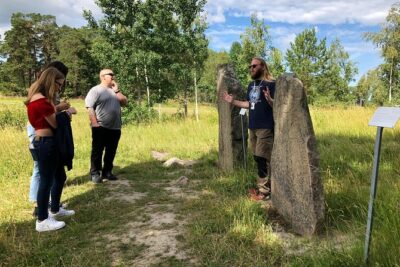 ★ 4.5Viking History Small Group Tour from Stockholm: Half Day Including SigtunaFrom $193111 reviews
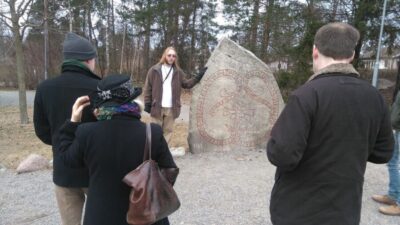 ★ 4.5From Stockholm: Viking Culture Guided Tour with TransferFrom $19381 reviews
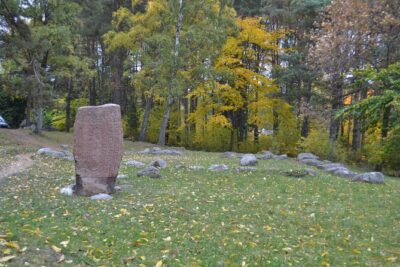 ★ 4.5Full Day Viking Tour with Fika Swedish Coffee BreakFrom $24181 reviews
Browse the lists this tour appears in