
Reviewed · VIKING SIGTUNA & UPPSALA DAY TRIPS
Private Half Day Tour: Viking History Trip from Stockholm Including Sigtuna
One morning and you’re already reading the Viking past. This private half-day route strings together runestones, a grave field, a preserved Thing-site, and Sigtuna’s church ruins with hotel pickup, so you spend less time figuring out transit and more time asking questions. I especially like how the stops are picked for their meaning, not just their age (Estrid, Jarlabanke, and the local law-culture angle), and I love the small-group feel that makes a long list of details actually make sense. The only thing to watch: lunch is on your own dime, and you’ll feel the pace if you want long breaks.
You’re looking at about 5 hours total, starting 9:30 am, with a return to your hotel in the early afternoon. In practice, this works best if you want a concentrated hit of Viking-era sites around Stockholm without spending the whole day commuting and hunting down facts.
In This Review
- Key things that make this tour worth your time
- Why this half-day Viking route is so effective
- Pickup, timing, and how the private vehicle changes the day
- Broby Bro: the grave field and runestones tied to Estrid
- Täby’s Jarlabanke Runestones and what Viking lords were doing
- Arkils tingstad: the preserved Thing-site and Viking law culture
- Sigtuna’s wooden town vibe, Mariakyrkan, and church ruins
- St Olof’s Church Ruins: the biggest ruin and the holy well story
- Guides make or break the Viking stories: Olof, Jakob, Gustav, and more
- Value check: what $532.19 per person buys you (and when it might not)
- Who should book this tour, and who should consider a longer option
- Should you book this Viking History Trip with Sigtuna?
- FAQ
- What time does the tour start?
- How long is the tour?
- Is hotel pickup included?
- Is lunch included in the price?
- What language is the tour offered in?
- Is the tour private?
- Are there entrance fees at the stops?
- Do I need a minimum number of travelers?
- What is the cancellation policy?
Key things that make this tour worth your time
- Hotel pickup + door-to-door convenience: less stress, more time at the sites
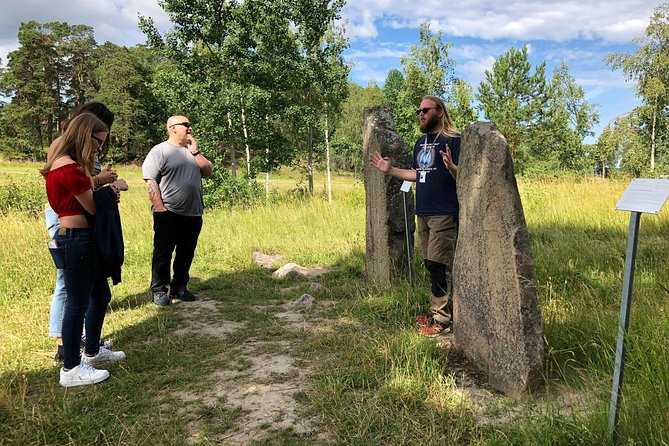
- Broby Bro’s grave field and runestones: including stones tied to Estrid
- A real Thing-site stop at Arkils tingstad: one of the best preserved in Europe
- Sigtuna’s wooden-town feel and church ruins: including Mariakyrkan if open
- English-guided storytelling in a private setting: guides can adapt to your questions
- Free admission at each listed Viking/church stop: you pay for lunch only
Why this half-day Viking route is so effective
This tour is built for people who want the “Vikings in Sweden” story without the scattered feeling you get when you DIY it. You’re not just looking at old stones. You’re hearing what they were for: memorials, power markers, and community decision-making tied to the places you’re standing in.
The half-day format also helps. You get enough time outdoors to absorb what you’re seeing, but the whole thing stays short enough that you’re not exhausted before the good parts. Then you’re back in Stockholm in time for lunch plans or a later museum visit.
More Viking days out to Sigtuna and Uppsala


Pickup, timing, and how the private vehicle changes the day
The day starts with morning pickup from your Stockholm hotel (within the stated radius of Stockholm Central Station). You’ll meet your guide and head out in a private vehicle with round-trip transit handled for you, so you’re not bouncing between trains and buses while trying to keep track of runestone lore.
A few practical notes that matter:
- The tour is private, with a maximum group size of 16.
- It’s offered in English, and you’ll receive a mobile ticket.
- If you’re coming by cruise, meeting points depend on the pier. Your guide uses a sign with Viking Tours and you follow the posted lines in the harbor areas.
That pickup convenience is one of the biggest “value levers” here. In places like Sigtuna and the runestone areas east/northeast of Stockholm, public transport can be workable, but it’s rarely elegant. Paying for this service saves time and reduces friction.
Broby Bro: the grave field and runestones tied to Estrid
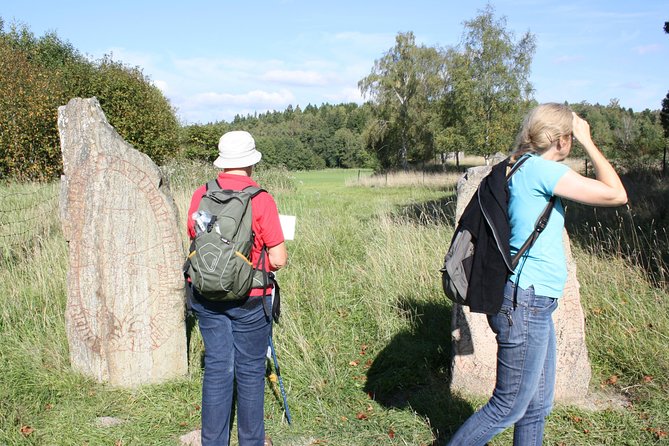
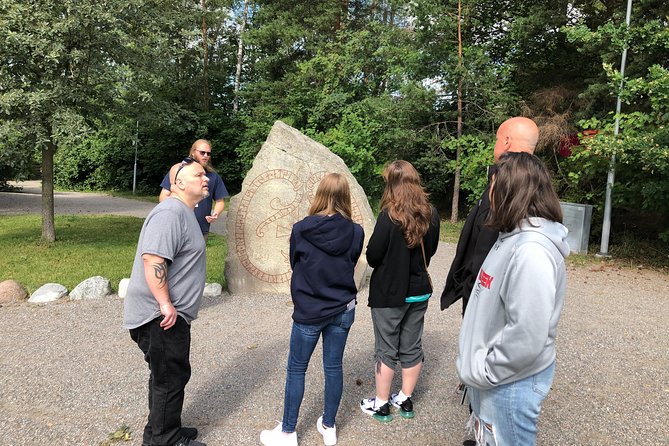
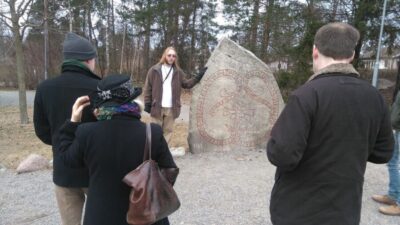
Broby Bro is where the tour gets personal in a way that’s easy to remember later. You’ll visit a Viking grave field and see three runestones, including stones connected to Jesuralem and a notable mention involving women and Estrid.
This is the kind of stop where a guide makes a real difference. A runestone is just stone if you don’t know how to read the message style, the memorial purpose, and why certain names mattered. With a good guide, you start noticing patterns: how memorials anchor identity, how geography ties communities together, and how everyday life in Scandinavia is reconstructed from what’s left behind.
You’ll have about 55 minutes here. That’s enough time to walk, look closely, and still hear the story without feeling rushed.
Täby’s Jarlabanke Runestones and what Viking lords were doing
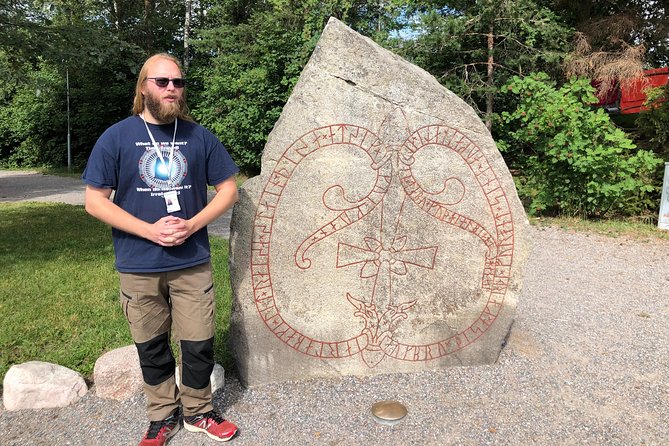
Next comes the Jarlabanke Runestones in Täby, plus a walk over to a reconstructed Viking causeway. This isn’t just a “photo stop.” It’s designed to explain how a leader like Jarlabanke left proof of status and influence in stone, and how Viking-era roads and trade networks helped connect power to place.
You’ll spend about 20 minutes at this stop, which is short on purpose. The goal is to focus attention: listen, look, then move on while the story is still fresh.
If you’re the type who likes family names, power systems, and the practical side of rule (who had authority, how it worked, and how communities organized themselves), this section tends to land well.
Arkils tingstad: the preserved Thing-site and Viking law culture
Arkils tingstad is one of those stops that quietly changes how you picture the Viking world. You’ll visit a Thing-site—a community assembly—with runestones and the feeling of a place where decisions happened.
This is framed as one of the best preserved assembly places in Europe, and the guide explains the people involved, including references to the Skålhamra family and the social power linked with creating an assembly place. You’ll also hear about Viking-era laws and customs, including mentions of society structures such as kingrop society (as covered on the tour).
Why I like this stop: it gives you more than “raid and ship” stereotypes. You’re seeing the civic side of Viking life, where rules and collective agreement mattered. Even if the ruins are modest, the concept is big.
Plan for about 55 minutes here, which is the right length to connect the stones to the idea of community governance.
Keep it to just your group with a private Stockholm tour





Sigtuna’s wooden town vibe, Mariakyrkan, and church ruins
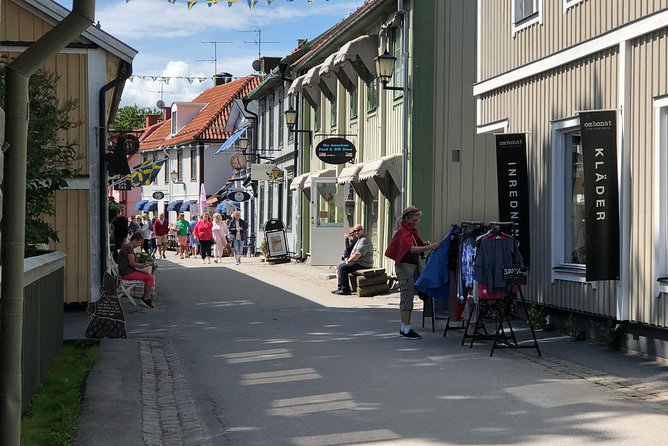
Then you head to Sigtuna, often described as the first capital of Sweden in popular history—and today it still feels like a small town with a strong sense of old routes and built heritage.
You’ll get a lunch stop on your own expense (about 40 minutes). Lunch is the one part you control, and that’s not necessarily a bad thing. It lets you choose: quick and simple, or a longer sit-down meal if your schedule allows within the time window. In Sigtuna, you might end up with classic Swedish options like meatballs, depending on where you go.
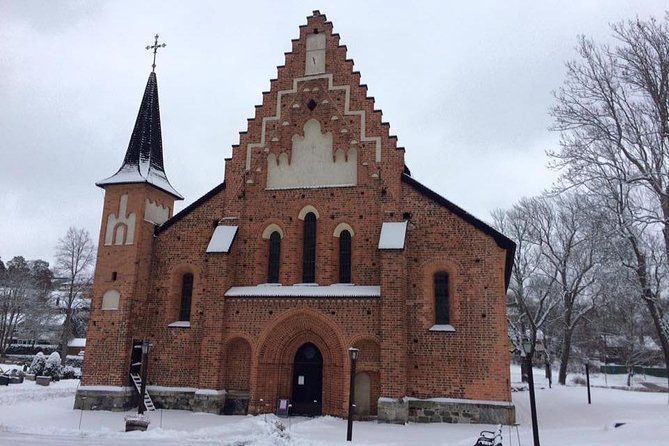
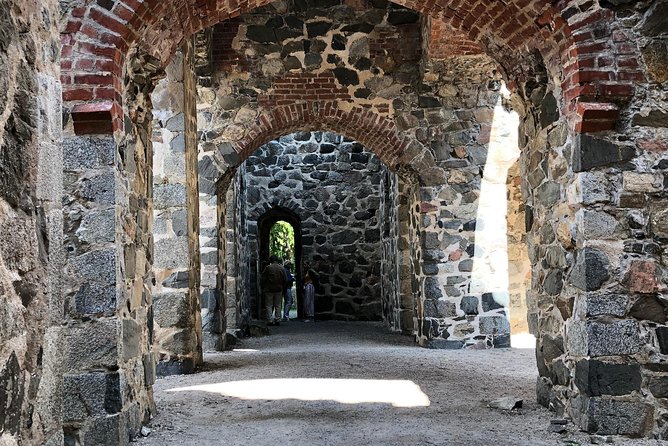
After lunch, you’ll spend about 40 minutes walking the town’s main street area, shaped by Viking-era street lines that remain visible today. You’ll also visit church ruins and stop at Mariakyrkan if it’s open. The tour frames Mariakyrkan as the only remembrance of a powerful monastery just outside the city.
If you like small-town wandering, this is where the day becomes more than “stones in a field.” You’re mixing history with atmosphere.
St Olof’s Church Ruins: the biggest ruin and the holy well story
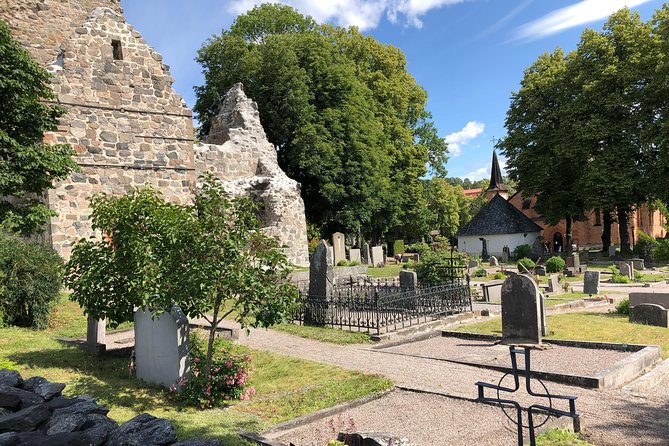
You finish with S:t Olofs Church Ruins, described as the largest and best-preserved church ruin of the three around Sigtuna. The tour notes it’s among the earlier ones built around 1080–1120, and it’s tied to a holy well.
This last stop is short—about 10 minutes—but it works as a contrast. You started in Viking-era material tied to memorials and assemblies. Here you see how Christian-era sites layer on top of earlier landscapes and beliefs.
If you’re curious about how religion shifted over time in Scandinavia, this ending gives you a clean “then-and-now” feeling.
Guides make or break the Viking stories: Olof, Jakob, Gustav, and more
This kind of tour depends heavily on narration. With the right guide, you stop seeing runes as mystery and start seeing them as messages built for specific people and purposes.
In the past, guides such as Olof have been praised for turning the Viking period into something you can picture, including explanations tied to grave stones and how Sweden’s Viking life shows up in excavations. Jakob has been noted for passion for the Viking era and for answering questions without acting like you’re slowing things down. Gustav has also been called out for bringing Swedish history to life with broad knowledge.
There’s one practical consideration: communication can vary. One review described a situation where a strong accent combined with hearing difficulty made parts harder to follow, even though the guide repeated information when asked. If you need clear audio, consider requesting a guide with very straightforward English-style delivery (and don’t be shy about asking for repetition early).
Value check: what $532.19 per person buys you (and when it might not)
At $532.19 per person, this is not a “cheap day trip.” You’re paying for:
- Private transport and pickup/drop-off
- A dedicated guide during multiple stops
- A tight route that covers several Viking sites near Stockholm in one morning
This makes the price easier to justify when you’re traveling as a couple or small group who really wants a guide-led experience rather than independent route planning. It’s also easier to justify if you care about understanding meaning—runestones, memorial culture, and assembly traditions—because those details need interpretation.
It’s harder to justify if you expected lots of time at each site or a longer stop-and-browse pace. One not-so-positive take centered on feeling there wasn’t enough Viking explanation for the money. You can protect yourself from that by coming in with questions (What did runestones represent? How did Thing-sites function? What do names like Estrid and Jarlabanke tell us?) so you get more out of the time you’re paying for.
Who should book this tour, and who should consider a longer option
You’ll love this if you:
- Want a focused Viking hit around Stockholm without self-driving or complicated transfers
- Prefer guided storytelling over reading placards
- Enjoy runestones and cultural context more than “grand monuments”
You might think twice if you:
- Need long lunch breaks or lots of downtime between stops
- Want a slower pace with extended time in museums (this is mostly outdoor ruins, stones, and walk-through history)
Also, if you like the concept enough to want more, there’s a hint that a longer tour format exists. A longer day tends to work better if you’re prone to question-bombing your guide (in a good way).
Should you book this Viking History Trip with Sigtuna?
I’d book it if your goal is simple: get out of Stockholm and see the Viking world close to the city, with interpretation that makes the stones matter. The combination of Broby Bro’s grave field and Estrid-linked runestones, a Thing-site stop at Arkils tingstad, and Sigtuna’s church ruins is a strong mix for a half day.
Skip it if you’re mainly looking for time to relax or for big-city museum-style artifacts. This tour rewards attention and questions.
If you do book, go in with curiosity and plan your lunch to match your energy level. Then you’ll come back to Stockholm with more than photos—you’ll have a clear mental map of what these sites meant.
FAQ
What time does the tour start?
The tour starts at 9:30 am.
How long is the tour?
It’s about 5 hours total, including travel time between stops.
Is hotel pickup included?
Pickup is included for hotels within the stated range of Stockholm Central Station. The tour notes no pickup in Nynäshamn.
Is lunch included in the price?
No. Lunch is not included, and you’ll have a lunch stop where you pay on your own.
What language is the tour offered in?
The tour is offered in English.
Is the tour private?
Yes. It’s a private tour/activity with a maximum of 16 persons.
Are there entrance fees at the stops?
The listed stop admissions are marked as free on the tour details provided.
Do I need a minimum number of travelers?
Yes. The tour requires a minimum of 2 people per booking.
What is the cancellation policy?
Cancellation is free up to 24 hours in advance of the experience start time for a full refund. Changes inside that window aren’t accepted.
More Tours in Stockholm




More Tour Reviews in Stockholm



More Viking Day Trips to Sigtuna & Uppsala

Just Added: The Latest Stockholm Reviews












Viking Sigtuna & Uppsala Day Trips, compared.
 ★ 4.5The Viking Museum Exhibition and Viking RideFrom $22667 reviews
 ★ 4.0Entrance ticket to The Viking MuseumFrom $22301 reviews
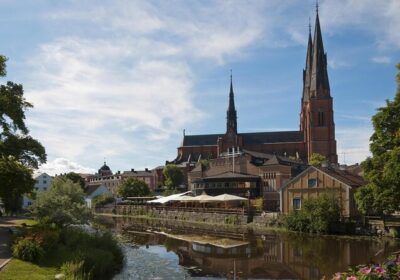 ★ 4.5Viking History, Runes & Countryside 9h Tour to Sigtuna & UppsalaFrom $298283 reviews
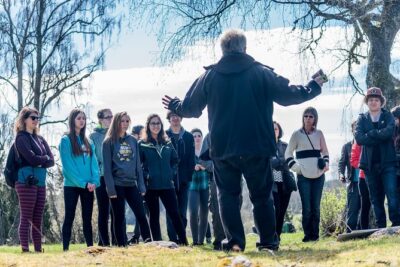 ★ 4.5Viking History and Swedish Countryside Tour to Sigtuna & UppsalaFrom $274162 reviews
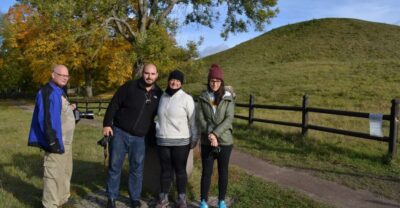 ★ 4.7From Stockholm: Uppsala and Sigtuna Viking Sites TourFrom $235157 reviews
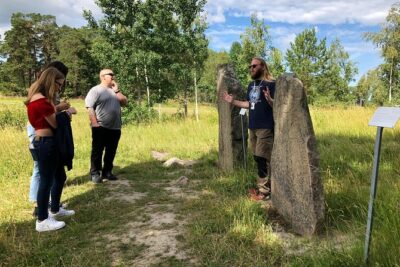 ★ 4.5Viking History Small Group Tour from Stockholm: Half Day Including SigtunaFrom $193111 reviews
 ★ 4.5From Stockholm: Viking Culture Guided Tour with TransferFrom $19381 reviews
 ★ 4.5Full Day Viking Tour with Fika Swedish Coffee BreakFrom $24181 reviews
Browse the lists this tour appears in