
Reviewed · VIKING SIGTUNA & UPPSALA DAY TRIPS
Private Tour: 3h Viking History from Stockholm to Runic Kingdom
Rune stones make Stockholm feel ancient. This private 3-hour outing turns a normal city morning into a slow walk through Viking memory and rune-stone storytelling. You’ll get picked up in central Stockholm and guided out to preserved sites around the countryside, where laws, funerals, and famous names like Estrid show up in stone.
I especially like the private guide format, because you can ask real questions instead of rushing through answers. I also like the way the tour links people and ideas, moving from women’s memorial stones to the message on Jarlabanke’s bridge to a Viking ting place for law and order.
One thing to consider: it’s a focused sprint. In about three hours you’ll hit four specific stops, with travel time out of the city, so this isn’t for you if you want lots of extra add-on sights or a big variety of different eras.
In This Review
- Key highlights worth your time
- How this private Runic Kingdom day actually feels
- Price and value: what $431.94 buys you
- Timing and routing: getting out of Stockholm without wasting your day
- Stop 1 in Täby: Estrid, rune stones, and the gravefield context
- Stop 2 at Jarlabanke’s Runestones: the 150-meter bridge and leadership
- Stop 3 at Arkils tingstad: law, divorce, and insults
- Stop 4 in Vallentuna church: a 13th-century setting tied to rune stones
- The guide factor: why named hosts matter on this route
- Transportation and meeting points: what you should plan for
- Who should book this private Viking history to Runic Kingdom?
- Should you book it?
- FAQ
- FAQ
- What time does the tour start?
- How long is the Viking history tour?
- Is pickup included?
- Does the tour include pickup from Nynäshamn harbour?
- Is this tour private?
- Are admission tickets included for the stops?
- What’s included in the price?
- What language is the guide?
- Where does the guide meet you at cruise ports?
- What’s the cancellation policy?
Key highlights worth your time
- Private pickup and round-trip transport from central Stockholm or your cruise pier meeting point
- Estrid’s legacy: rune stones raised in remembrance, plus a gravefield context for early Viking life
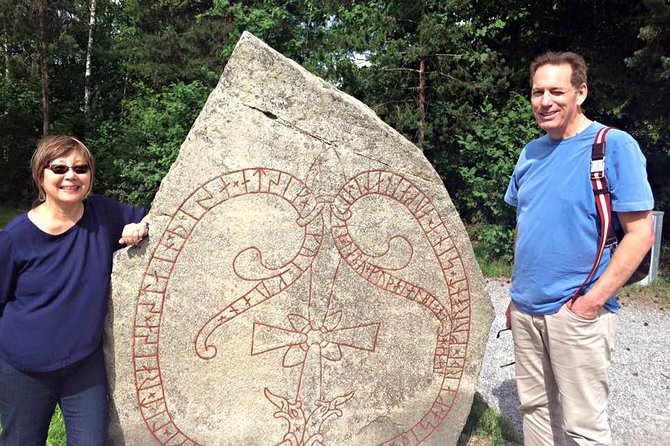
- Jarlabanke’s bridge (c. 1030): a 150-meter causeway tied directly to rune-stone messages
- Arkils tingstad: a Viking assembly place where law and social order were handled
- Vallentuna church: a 13th-century setting connected to local rune stones and a noted Swedish rhyme
- English-language guide with time to ask questions and keep a steady pace
How this private Runic Kingdom day actually feels
This tour is built for people who want Viking history in its original setting, not in a crowded room with blurry text. You’ll spend your time outside Stockholm at a cluster of sites tied to rune stones, burial landscapes, and places where society ran on rules.
What makes it work is the rhythm. You start with the kind of stone markers that tell you who mattered and why, then you move to architecture and public space, and finally you end at a church that anchors the story in later centuries. It’s not just mythology for entertainment; it’s the practical side of the Viking world—family memory, authority, and law.
For me, the best part of a private format is the “pause button.” If something clicks for you—Estrid’s family, rune wording, divorce laws, even how Jarlabanke’s bridge connects to leadership—you can ask and steer the conversation a bit. Guides you might meet on this route (Olof, Charlotte, Karl, Erik, Angus, Quentin, or Calle) are consistently praised for bringing the topic down to earth and keeping the day moving without feeling rushed.
More Viking days out to Sigtuna and Uppsala

Price and value: what $431.94 buys you
At $431.94 per person for a 3-hour private tour, this is priced for travelers who care more about quality time with a guide than squeezing in maximum stops. The math gets easier to stomach if you’re traveling in a small group and want pick-up and drop-off without navigating trains, taxis, and transfers on your own.
You’re paying for three concrete things:
- A private guide who can tailor answers to your questions
- Round-trip private transportation from your central location
- Time spent on four specific sites, with walking that’s manageable and tied to the story at each stop
If you’re the type who likes to take photos, read inscriptions, and ask “why would they write that?” this can feel like good value. If you’re mainly looking for a quick scenic drive and a casual look at a couple of stones, you might feel the price more than the content.
Timing and routing: getting out of Stockholm without wasting your day
The start time is 9:30 a.m., with hotel or cruise port pickup offered for central locations (pickup isn’t included for Nynäshamn harbour). Expect roughly 3 hours total, and an extra amount of time in the car is part of the deal since the key Viking sites sit outside the city.
The tour stays efficient by keeping each stop short and focused, with built-in walking time and guided explanation. You’ll go from an area with rune stones and a gravefield context, to a bridge and rune-message focus, to a lakeside assembly setting, and then to Vallentuna church.
A practical note: this is a private tour, but it’s still designed around comfort and pacing, not long hikes. Wear comfortable walking shoes, because you’ll be moving between points, and at least one stop involves walking onto and along a causeway-style bridge.
Stop 1 in Täby: Estrid, rune stones, and the gravefield context
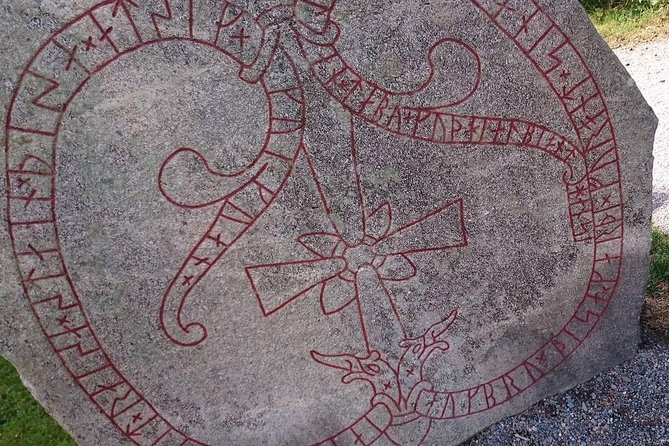
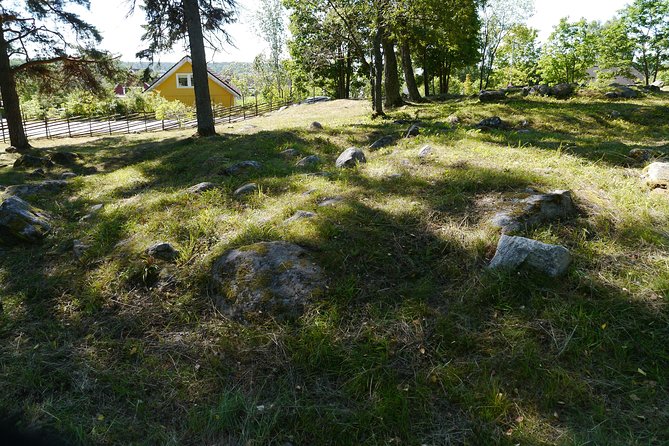
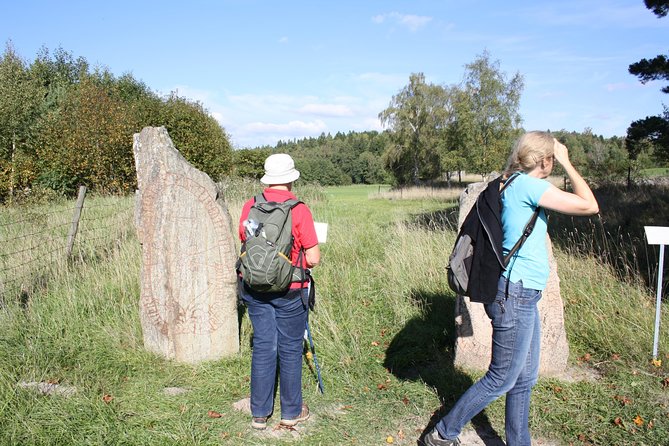
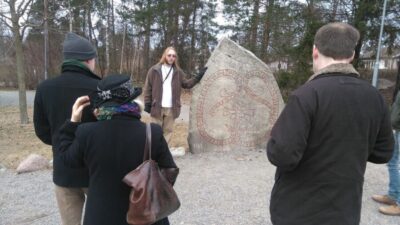
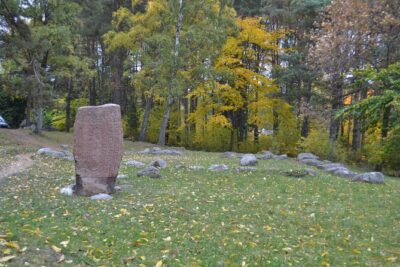
Your day starts in Täby, where you’ll find several rune stones from the Viking Age. This stop matters because it gives you a human anchor early on. Instead of treating rune stones as random relics, you learn how people used them to keep relationships, memory, and identity alive.
The tour spotlights Estrid, a famous Viking woman tied to memorial stones. You’ll hear about the runestones she raised in remembrance of her dead family, plus the idea that she may have lived on a functioning farm nearby. That’s a strong setup for understanding why rune stones weren’t just markers for passing travelers; they were statements about family and status meant to last.
You’ll also look at a gravefield and nearby Viking monuments, including a context of an early Viking Age Christian grave field with over 20 skeletons. Even if you’re not a genealogy nerd, this mix of burial realities helps you picture the transition period when belief, burial practice, and social life were changing.
On the ground, you’ll also learn everyday details—how people dressed, what daily life might have looked like, and why particular stones were raised. It’s the kind of stop where questions come fast, especially if you start noticing how names and relationships show up in the stone text.
Stop 2 at Jarlabanke’s Runestones: the 150-meter bridge and leadership
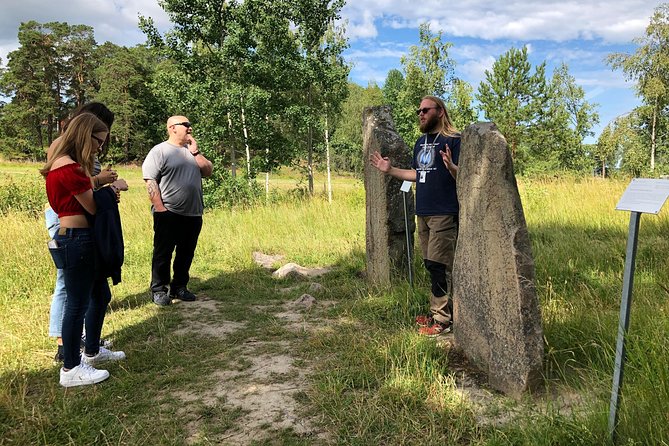
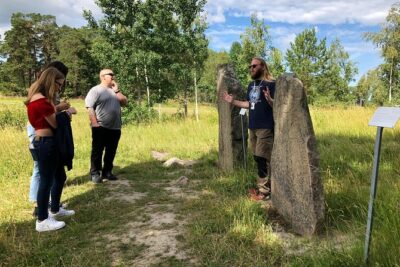
Next comes Jarlabanke Runestones, paired with a walk over to Jarlabanki’s bridge, built around 1030. This is one of those rare historical moments where infrastructure and inscription are connected. The guide explains the bridge and then connects it to what the rune stones are saying.
The causeway is about 150 meters long, which turns the experience from “look at a stone” into “feel what it was like to cross something built by power.” It’s also long enough to slow you down. You can stand, look, and let the meaning land without the day feeling hectic.
The key theme here is authority. You’ll hear about Jarlabanke as a self-confident leader and about the “message” on the rune stones—monuments of dead Vikings, but also a record of influence meant to outlast the people who commissioned them.
If you enjoy reading symbols and connecting them to real-world control—roads, bridges, and who pays for them—this will likely be your favorite stop. If you don’t care about inscriptions, you may still appreciate the sheer physical scale of the bridge and the idea that leadership expressed itself in stone-built infrastructure.
Keep it to just your group with a private Stockholm tour




Stop 3 at Arkils tingstad: law, divorce, and insults
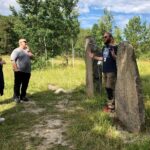
Then you shift from commemorating the dead to how society worked while the living were in charge. Arkils tingstad is described as a uniquely preserved Viking assembly place—basically a setting where law and order were enforced.
What makes this stop compelling is the tour’s focus on rules that sound strikingly personal: you’ll hear about laws of divorce and laws about killing others related to insults. That’s not “Vikings were dramatic” fluff. It’s a reminder that Viking-age communities dealt with conflict through structure, not just swords.
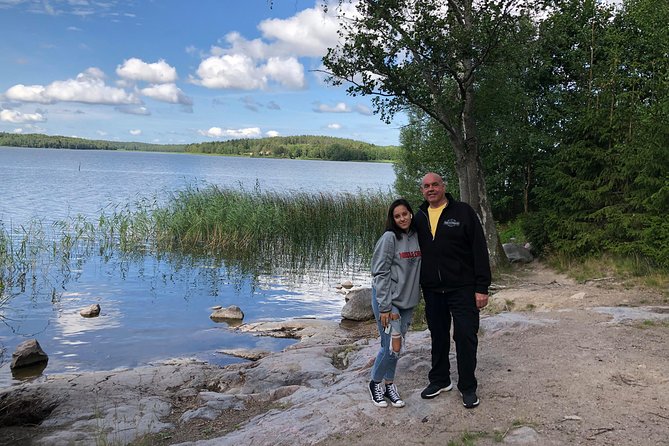
You’ll also learn how their tribal system shaped life and what decisions would’ve been made in a space like this. And because Arkils tingstad sits by a lake, you get a calmer sense of the setting than you might expect. The water and open space help you imagine people gathering, hearing decisions, and returning to daily life with clear expectations.
One possible drawback here: if you expected only rune stones and battle stories, this is more about governance and social order. But if you like history that explains how communities ran, this stop is a big win.
Stop 4 in Vallentuna church: a 13th-century setting tied to rune stones
The final stop brings you to Vallentuna church, a 13th-century church where you can see connections to the Jarlabanke-related rune stone story. You’ll also get a contrast lesson: the church rooms are described as reformation-era and bare compared to earlier Catholic-painted church rooms.
This is the “history layering” part of the day. You go from Viking Age memorials and assembly places into a later Christian setting that still holds local connections to Viking names and inscriptions. It’s a reminder that the Vikings weren’t living in isolation from later changes; people reused meanings, inherited places, and left traces that later generations kept.
A standout detail here is that the church is noted for having the first known written down Swedish ending rhyme. The guide also points out stone-master signatures from when the church was built. So even though the building is medieval, it still feels like an inscription-heavy world where authorship and identity show up in physical form.
The guide factor: why named hosts matter on this route
For a tour like this, the guide isn’t a nice-to-have. It’s the difference between seeing stones and actually understanding what you’re looking at.
On this specific route, guides such as Olof, Charlotte, Karl, Erik, Angus, Quentin, and Calle are repeatedly praised for taking questions seriously and explaining how the sites fit together. You’ll notice a common thread: they connect the scenery to human decisions—who built bridges, who commissioned stones, who gathered for law, and how later church spaces kept local identity.
If you want an easy test for choosing this tour, aim for the experience where you can speak with the guide in a natural way. Private format makes that realistic. So if you like to ask why a phrase is written the way it is, or what a rune message would mean to a local community, this is set up to support that.
Transportation and meeting points: what you should plan for
Pickup is offered for central hotels, ports, and accommodations within 5 km of Stockholm central station. You won’t get pickup from Nynäshamn harbour, and the tour recommends arranging a central meeting point instead.
If you’re arriving by cruise ship, you’ll be directed to a very specific area at your pier, and the guide meets you holding a sign that says Viking Tours on an A4 paper. The meeting point varies by pier number, so it’s worth checking your ship’s assigned terminal within STADSGÅRDEN or FRIHAMNEN or VÄRTAHAMNEN rather than guessing.
The key practical takeaway: confirm your exact pickup time and place after reconfirmation. The tour notes that hotel pickup time will be communicated before you go, and if your hotel is far from the city center, you may get a simpler meeting point.
Who should book this private Viking history to Runic Kingdom?
I think this tour fits best if you’re one of these types:
- You want Viking Age sites in real outdoor settings, not museum-only history
- You like a guide who can explain rune stones, memorials, and public spaces in plain language
- You’re traveling as a couple or small group and want private transport to avoid logistical stress
- You’re curious about how Viking society handled family memory, authority, and conflict
If you’re only loosely interested in Vikings, you may still enjoy it for the fresh air and countryside feel. But the itinerary is tightly focused on Viking-linked places, so you’ll get the most out of it if rune stones and local stories are your thing.
It’s also a solid “time-efficient” day. You’ll get countryside context without losing your whole afternoon, and the tour ends back at your hotel after about three hours.
Should you book it?
Yes, I’d book it if your idea of a great day is a calm walk on a historic bridge, a clear explanation of what rune stones were doing in daily life, and a Viking law setting where people settled disputes. The private format makes the explanations easier to follow and makes your questions feel welcome, not inconvenient.
I’d hesitate only if you’re expecting a long list of different sights or a broad survey of multiple time periods. This is a focused Viking route, and it delivers best when you’re ready to think about how names, laws, and memorial choices shaped a society.
FAQ
FAQ
What time does the tour start?
The tour starts at 9:30 a.m.
How long is the Viking history tour?
The experience lasts about 3 hours.
Is pickup included?
Yes. Pickup and drop-off are offered for central hotels, ports, and accommodations within 5 km of Stockholm central station.
Does the tour include pickup from Nynäshamn harbour?
No. Pickup is not included from Nynäshamn harbour because it’s about 50 km from Stockholm central station. The tour recommends arranging a central Stockholm meeting place.
Is this tour private?
Yes. It’s listed as a private tour/activity, and only your group participates.
Are admission tickets included for the stops?
The itinerary lists each stop with admission ticket marked as free, including the Täby rune stone/gravefield area, Jarlabanke Runestones and bridge area, Arkils tingstad, and Vallentuna church.
What’s included in the price?
Included items are a local guide, driver/vehicle with round-trip private transportation, all taxes and surcharges, and hotel/cruise port pickup and drop-off (excluding Nynäshamn harbour).
What language is the guide?
The tour is offered in English.
Where does the guide meet you at cruise ports?
The meeting point depends on your cruise terminal number. The guide waits in the specified area holding an A4 sign that says Viking Tours, and you’re instructed to walk outside fences/guards if needed for the correct terminal.
What’s the cancellation policy?
You can cancel for a full refund up to 24 hours before the experience’s start time. Free cancellation is available up to that point.
More Tours in Stockholm


More Tour Reviews in Stockholm



More Viking Day Trips to Sigtuna & Uppsala

Just Added: The Latest Stockholm Reviews











Viking Sigtuna & Uppsala Day Trips, compared.
 ★ 4.5The Viking Museum Exhibition and Viking RideFrom $22667 reviews
 ★ 4.0Entrance ticket to The Viking MuseumFrom $22301 reviews
 ★ 4.5Viking History, Runes & Countryside 9h Tour to Sigtuna & UppsalaFrom $298283 reviews
 ★ 4.5Viking History and Swedish Countryside Tour to Sigtuna & UppsalaFrom $274162 reviews
 ★ 4.7From Stockholm: Uppsala and Sigtuna Viking Sites TourFrom $235157 reviews
 ★ 4.5Viking History Small Group Tour from Stockholm: Half Day Including SigtunaFrom $193111 reviews
 ★ 4.5From Stockholm: Viking Culture Guided Tour with TransferFrom $19381 reviews
 ★ 4.5Full Day Viking Tour with Fika Swedish Coffee BreakFrom $24181 reviews
Browse the lists this tour appears in