
Reviewed · GAMLA STAN OLD TOWN WALKS
Stockholm: Old Town Self-Guided Tour Learn and solve Puzzles
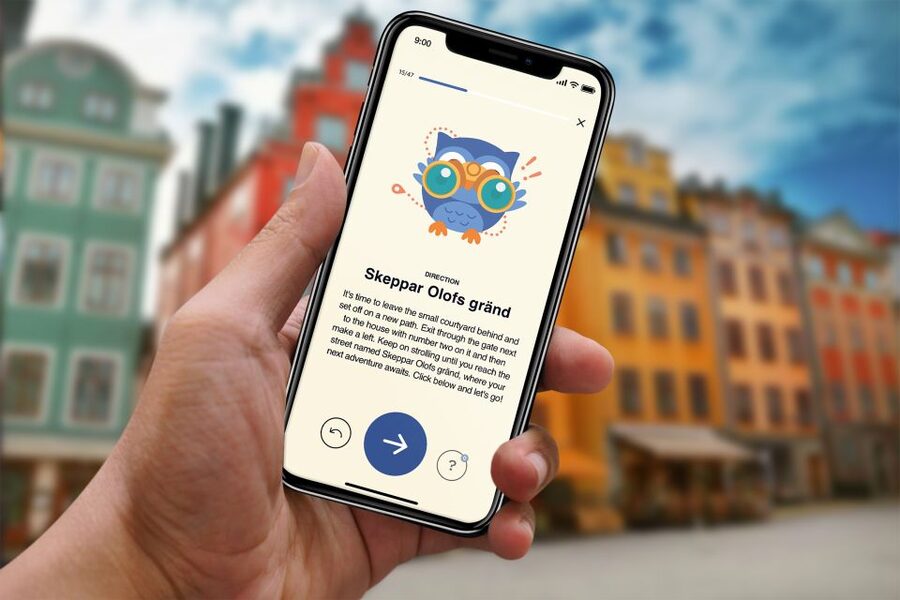
Old Town Stockholm becomes a puzzle trail. I like that this self-paced walk turns famous sights into a phone-led game with puzzle challenges and short historical tales, starting right at the Royal Palace outer courtyard. It is the kind of sightseeing that keeps you looking up and reading the little details, not just drifting from photo spot to photo spot.
Two things really sell it for me: you can control the pace, and the challenges make the landmarks feel connected instead of like a checklist. My one main caution is that the puzzles can get fairly complex, and if you decide to move on, you might not get an immediate answer that helps the story click fully.
In This Review
- Key things to know before you start
- How the Curiosa puzzle-walk feels in Stockholm
- Starting in the Royal Palace outer courtyard: where the story begins
- Stortorget and the Grand Square: history you can read with your eyes
- Saint George and the Dragon: the moment the Old Town turns specific
- Royal Palace stories plus the weird details: cannonball and runestone
- Pacing in real life: how long 1.5-2 hours turns into your day
- Using the Curiosa app: what to expect on iOS and Android
- What the puzzles actually add to Old Town sightseeing
- Price and value: why $11 can be a good deal here
- Who should book this (and who should skip it)
- Should you book the Stockholm Old Town puzzle tour?
- FAQ
- Where does the self-guided tour start?
- How long does the walking part take?
- How do I activate the tour in the Curiosa app?
- Which languages are available?
- Can I start and pause whenever I want?
- Is it suitable for wheelchair users?
Key things to know before you start
- Start at the Outer Courtyard of the Royal Palace, so you begin with context instead of guessing where to go first.
- A 1.5-2 hour walking adventure that mixes landmark stories with fun, game-style tasks.
- You’ll run into signature Old Town stops like Stortorget and the area of Saint George and the Dragon.
- You learn the weird, specific details too, like a cannonball stuck in a wall and a runestone set into a building base.
- Your phone is the guide: the app works on iOS/Android and you use your confirmation code to activate it.
- Multiple languages are offered (Swedish, English, German, French), which makes it easier to match your comfort level.
How the Curiosa puzzle-walk feels in Stockholm
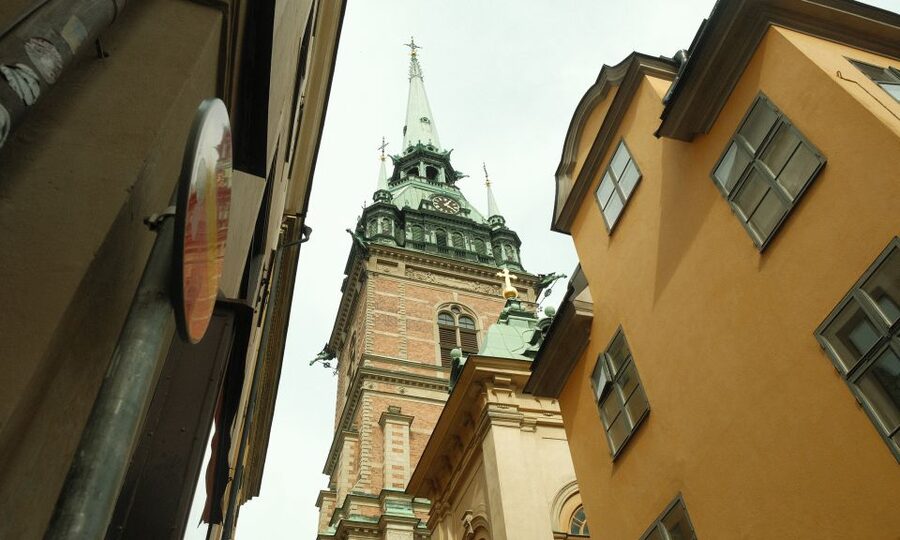
This is not a classic guided tour where you follow a person and hope you hear every word. Curiosa is more like a story-driven scavenger hunt along a walk through Old Town. You set the pace, stop when you want, and keep moving when you feel ready. For Stockholm, that matters because Old Town is all about side streets, small courtyards, and signs you can easily miss if you are rushing.
The “tour voice” is delivered by your phone, and the experience is built around short segments: you walk a bit, you read or listen, and then you solve a challenge. That structure nudges you to pay attention in a way that normal sightseeing rarely does. Even if you skip a puzzle, the path still tends to push you toward the most historically relevant corners of the district.
One practical note: it helps to have a fully charged smartphone before you start. This is the whole point of the experience—no device, no story, no puzzles.
More laps of Gamla Stan and the old town lanes



Starting in the Royal Palace outer courtyard: where the story begins
Your route kicks off in the outer courtyard of the Royal Palace, right in the Old Town area. Beginning here is smart. The palace is big, obvious, and historically loaded, so you get immediate grounding for the rest of what you’ll see. You are also in a place where the architecture and sightlines make it easy to orient yourself before the walk turns into narrower streets and more “look closer” stops.
From here, the game style starts doing its job. Instead of only pointing out what is in front of you, it frames why it matters. You start learning and solving, then you carry that context with you as you head toward smaller landmarks and story-heavy sites.
Stortorget and the Grand Square: history you can read with your eyes

Old Town’s best sightseeing often lives around squares, and Stortorget is one of the anchors. In the Curiosa route, the Grand Square shows up as one of the key “you are here” moments where the walking tour slows your brain down and makes you notice the surroundings.
What I like about placing a square mid-route is that it gives you a natural break. You can pause, take in the layout, and then continue with a stronger sense of what direction you are heading. And because the experience is built to test attention, squares are where you tend to spot the background details that the story is referencing.
If you like “small clues” sightseeing—inscriptions, building edges, and the way streets line up—you’ll get extra value here. If you are more into quick landmark photos, you can still use the app like a guide, but you’ll probably want to move efficiently once you’ve gathered the basics.
Saint George and the Dragon: the moment the Old Town turns specific
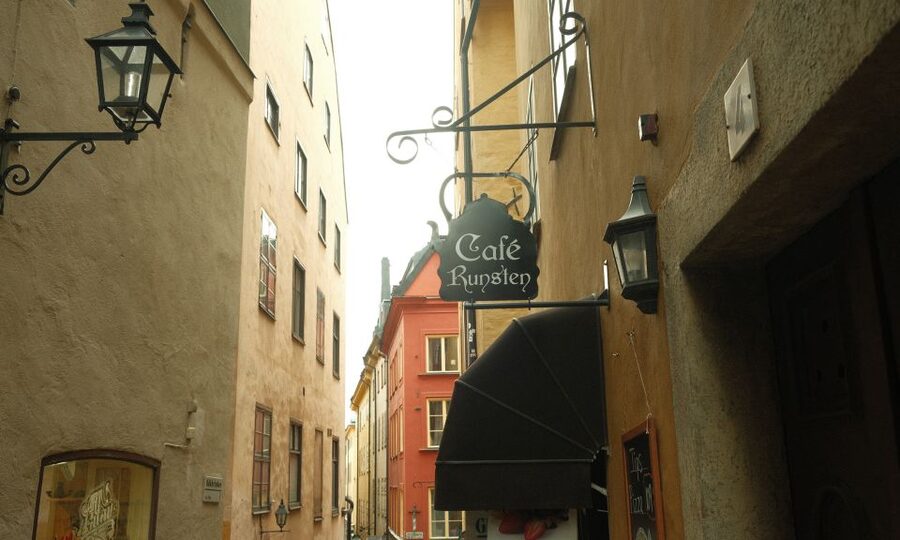
One of the named highlights is Saint George and the Dragon. That title usually gets your attention because it’s not generic. It signals that the walk is going past big-site atmosphere and into something more focused and symbolic.
In practice, this kind of stop is where a self-guided, puzzle-and-tale format can shine. You get a prompt, you look for the relevant visual or location cues, and suddenly what you are seeing stops being just a statue or a church facade. The app nudges you to connect the image to the story, which is the exact opposite of “walk by and forget.”
This is also a good place to slow down if you tend to rush. The more you let the street scene settle, the easier the challenge mechanics tend to feel.
Royal Palace stories plus the weird details: cannonball and runestone
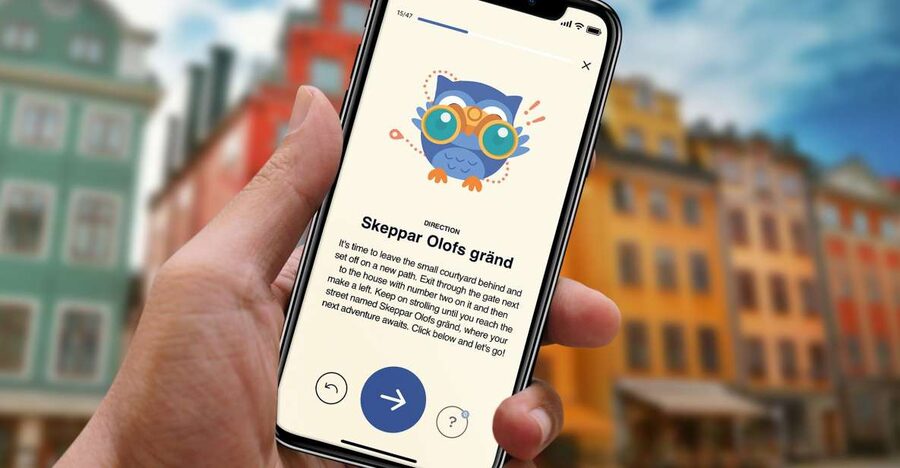
What makes this tour feel different is that it doesn’t only highlight the obvious. It also brings in the oddball items that make Old Town feel lived-in and stranger-than-a-brochure.
Two examples explicitly called out in the experience:
- A cannonball stuck in a wall
- A runestone lodged into the base of a building
That combo is great for your curiosity. Cannonball-in-a-wall details are the kind of thing that would be easy to walk right past. A runestone set into a building base is even more likely to be overlooked because your eyes might assume it is just a structural element. By weaving them into the walking game, Curiosa forces you to search for meaning in places you would otherwise ignore.
Also, these details give your photos more story. Instead of repeating the same wide shots, you’ll come away with images that make sense even to someone who wasn’t there.
Let a Stockholm local lead the way






Pacing in real life: how long 1.5-2 hours turns into your day
The walking tour itself is designed for about 1.5-2 hours. That time window is flexible, but it is also long enough that you can do it properly without turning it into a full-morning commitment.
Here is the key reality: puzzle timing varies. If you glide through challenges, you may finish on the faster end. If you prefer to take your time reading prompts and looking around, you’ll naturally stretch it closer to two hours.
One more small tip: if you hit a puzzle and you are stuck, decide quickly whether you want to keep working or move on. The experience can feel less fun if you spend too long grinding for an answer. A few users have noted the challenges can be complex and that the experience may not immediately show the final solution when you move past an unsolved item. So treat it like a walking game, not an escape room with a guarantee of closure.
Using the Curiosa app: what to expect on iOS and Android
Once you purchase the self-guided tour, you download the Curiosa app on iOS or Android and activate it using your GetYourGuide confirmation code. The flow is straightforward: open the app, get through the intro slides, then use the option to enter your code to start the experience.
After activation, you can start and pause the tour at any point. The code validity is 90 days from purchase, which is handy if you are traveling over a wider window and want to pick the best day or time.
Supported languages are Swedish, English, German, and French. That’s a real value in Stockholm because Old Town can be full of signage and architectural details in a mix of languages. If you’re comfortable in English, you can probably keep everything in English. If you want a deeper experience, using German or French can sometimes make prompts feel more natural and less “translation effort.”
One practical mindset: expect to interact with your phone. Even if you are the type who prefers to look around, you’ll still have moments where you must stop, read, or listen to prompts to keep the game moving.
What the puzzles actually add to Old Town sightseeing
Puzzles are the heart of why this feels more engaging than a standard audio tour. They help you slow down just enough to spot what matters: visual cues, location hints, and the kind of historical details that are normally buried in plaques.
Several people also highlight that the puzzles are a fun part of the walk, though not always mandatory in the way you might expect. If you prefer a lighter touch, you can treat the challenges like optional seasoning. If you enjoy problem-solving, you’ll probably have a blast trying to connect the story prompt with what you see in the street.
There is also one caution if you are sensitive to how instructions appear: some users have found the experience can feel confusing if you expect spoken audio rather than reading prompts. So when you start, take 30 seconds to see how the app delivers information. Then you’ll know whether you need to read carefully or whether audio plays more of a role on your device and language settings.
Price and value: why $11 can be a good deal here
At around $11 per person, this sits in the budget-friendly zone for Stockholm. A guided walking tour often costs more, especially when it includes a human guide and extended group time. Here you are paying for two things:
1) a curated Old Town route
2) a structured puzzle/story format delivered through your phone
That value is strongest if you like flexibility. You are not stuck with a fixed departure time or a pace set by the group. You can also pause for coffee, duck into a museum you didn’t plan, or linger where you like the details. If your travel style includes spontaneous detours, this kind of self-guided format can feel like it pays you back.
It may be weaker value if you strongly prefer spoken, passive audio while you walk, with no reading and no puzzles. If that’s your ideal, you might find the interactive approach less satisfying.
Who should book this (and who should skip it)
I’d steer you toward this experience if you:
- enjoy self-guided tours where you control the pace
- like history that includes quirky specifics (like the cannonball and runestone)
- want Old Town to feel like a challenge, not a checklist
- are traveling with mixed attention spans and want an activity that can keep momentum
I’d be more hesitant if you:
- want mostly audio narration with minimal screen interaction
- need guaranteed answers to every puzzle, on demand
- prefer a fully guided format with a person to ask questions to
There’s also an accessibility contradiction in the provided info: one part says wheelchair accessible, while another note says it is not suitable for wheelchair users. If mobility access matters for you, you’ll want to verify details before relying on it.
Should you book the Stockholm Old Town puzzle tour?
Book it if you want Old Town Stockholm to feel like play with a purpose. The route focus—Royal Palace area, Stortorget, and the Saint George and the Dragon stop—keeps you oriented in the right places. The standout bonus is how it highlights specific odd details that most sightseeing plans ignore, like a cannonball embedded in a wall and a runestone set into a building base.
Skip it if your travel style is strictly passive. If you don’t want puzzles, or if reading prompts on your phone will annoy you, you may feel friction instead of fun.
If you do book it, plan for about 1.5-2 hours, charge your phone fully, and start with enough patience to let the game mechanics guide your eyes. When it clicks, it turns Stockholm’s Old Town from scenery into a story you can actually follow.
FAQ
Where does the self-guided tour start?
It starts in the Outer Courtyard of the Royal Palace in Stockholm Old Town.
How long does the walking part take?
The digital walking tour is designed to take about 1.5-2 hours.
How do I activate the tour in the Curiosa app?
After downloading the Curiosa app, open it, go through the intro slides to reach the start page, then select I have a code and enter your GetYourGuide confirmation code.
Which languages are available?
The tour is available in Swedish, English, German, and French.
Can I start and pause whenever I want?
Yes. After receiving the confirmation mail and activating the experience, you can start and pause at any time.
Is it suitable for wheelchair users?
The information provided includes both statements: it says wheelchair accessible, and it also says it is not suitable for wheelchair users. If wheelchair access matters for you, you should verify the exact on-the-ground conditions before going.
More Tours in Stockholm


More Tour Reviews in Stockholm


More Gamla Stan Walks


Just Added: The Latest Stockholm Reviews












Gamla Stan Old Town Walks, compared.
 ★ 4.7Ghost Walk and Historical TourFrom $312,206 reviews
 ★ 5.0Walking Tour of Stockholm Old TownFrom $241,175 reviews
 ★ 4.5The Original Stockholm Ghost Walk and Historical Tour – Gamla StanFrom $381,165 reviews
 ★ 4.7Old Town Walking Tour with Local GuideFrom $15719 reviews
 ★ 5.0Best of Stockholm Walking Tour-3 Hours, Small Group max 10 peopleFrom $49645 reviews
 ★ 4.5The Nordic Food Walk StockholmFrom $122642 reviews
 ★ 5.0Walking Tour of Stockholm’s Old Town, Gamla StanFrom $13451 reviews
 ★ 4.9Old Town Historical Walking TourFrom $52344 reviews
Browse the lists this tour appears in