
Reviewed · GAMLA STAN OLD TOWN WALKS
Walking Tour of Stockholm’s City Center
Stockholm’s center tells its story on foot. You’ll get a guided loop that hits major landmarks while keeping things street-level and practical, not museum-y, and it’s offered as a public tour with a limited group size. I especially like that the guide setup works well as a first-day orientation, and the explanations tend to mix building facts with real-world city structure and daily life.
The main thing to consider is that this is still a walking tour through busy streets, and a few guests noted sound or pace issues at certain times, so come prepared with comfortable shoes and the mindset that you’ll be on the move for the full two hours.
In This Review
- Key highlights worth planning for
- Where it starts: Centralplan 15 and a smart way to orient fast
- Nils Ericson Statue: progress stories right outside the station
- Stockholm City Hall: red brick, the Three Crowns, and what to watch for
- Drottninggatan: the pedestrian-shopping spine between old and new
- Parliament House (Riksdagshuset): neo-Gothic power on Helgeandsholmen
- Gustav II Adolf Statue: the Lion of the North in stone
- Opera houses and culture stretch: Royal Swedish Opera to Kungsträdgården
- S:t Jacobs Kyrka and Berzelii Park: a red façade pause and a green reset
- Royal Stables, Karl XII statue, and Dramaten: ending on a cultural high
- Guides, pace, and hearing: what to expect from the live narration
- Price and value: $3.55 in Sweden is not a normal deal
- Who should book this walking tour
- Should you book Nordic Freedom Tours Stockholm City?
- FAQ
- What time does the tour start, and how long is it?
- Is this a private tour?
- Is the tour indoors or outdoors?
- What’s the price, and what’s included?
- Where do I meet, and where does the tour end?
- Can I cancel for a refund?
Key highlights worth planning for
- A bargain price for a full central-city loop: $3.55 per person for about 2 hours with a real guide.
- Small-enough group for questions: max 27 travelers, so you’re not yelling over a huge crowd.
- Outside-focused stops: the tour is designed to stay outdoors, so you get the city vibe without indoor ticket juggling.
- Iconic architecture in quick hits: Stockholm City Hall, Parliament House, major opera venues, and several landmark squares.
- Guides can be interactive: names you may get include Stefan, Sophia, Amon, Cim, and Karl, and many tours allow time to ask questions.
Where it starts: Centralplan 15 and a smart way to orient fast
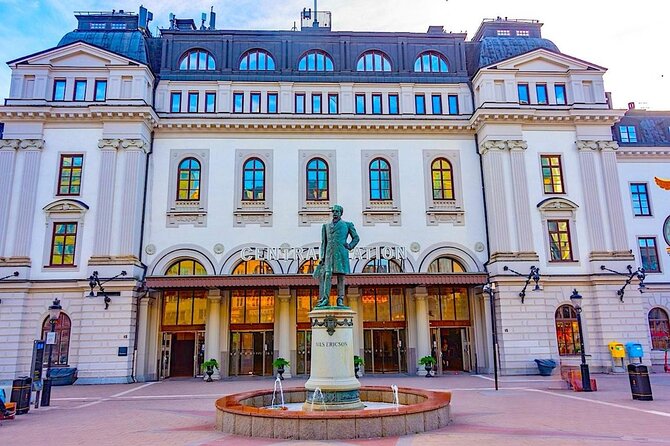
This tour is built for getting your bearings. You begin at Centralplan 15 (near Stockholm Central Station) at 11:00 am, which is ideal if you’re arriving by train or want to kick off sightseeing without complicated transfers. The end point is near the Royal Dramatic Theatre (Dramaten) on Nybroplan, so it naturally feeds into more exploring afterward.
You don’t need to think about indoor admissions for most of the day, because the format is a walk with stops. It also helps that the tour uses a mobile ticket, so you’re not hunting for paper vouchers at your meetup spot.
One practical note: it’s public, not private. That means you’ll share the route with other people, and that can affect how close you are to the guide during the noisiest street segments.
More laps of Gamla Stan and the old town lanes

Nils Ericson Statue: progress stories right outside the station
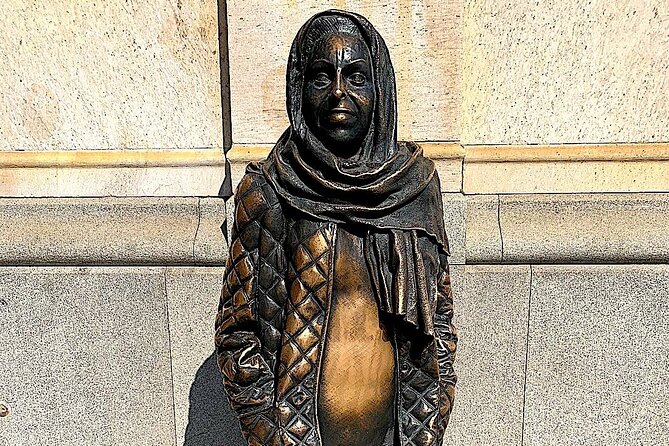
The first stop is the statue of Nils Ericson outside Stockholm Central Station. It honors the Swedish engineer linked to modernizing Sweden’s railways and canals, and the bronze work (by John Börjeson from 1893) gives you an early theme for the day: Stockholm’s growth wasn’t only about old monuments—it was also about systems, transport, and engineering.
What I like about starting here is that it anchors you right where you are. From the station area, you can quickly understand how Stockholm moves people and how the city’s infrastructure shaped where buildings and districts ended up.
You’ll also learn the kind of context that’s easy to miss when you’re just taking photos—like why this person matters and how his work connects to the city’s later image.
Stockholm City Hall: red brick, the Three Crowns, and what to watch for
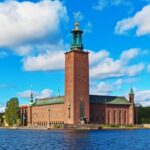
Next you hit Stockholm City Hall, the famous red-brick landmark with the golden Three Crowns spire. Completed in 1923 and designed by Ragnar Östberg, it’s known for hosting the Nobel Prize banquet as well as official events. Even if you’re not going inside, the building is worth your attention because the outside design is distinctive and photogenic.
The tower is also part of the conversation here, since panoramic views are associated with the building. The tour keeps the visit brief—about ten minutes—so you’re not stuck waiting in a long line, and you’re still moving while the city is fresh in your head.
A small tip: if it’s sunny, use the time to get your angles quickly. Some parts of the walk mention the guide using an iPad for visuals, and one common issue is glare or visibility in bright light—so rely on the live talk and your own view as much as possible.
Drottninggatan: the pedestrian-shopping spine between old and new
From the official-landmark zone, you shift into Drottninggatan, Stockholm’s well-known pedestrian shopping street. It runs from Gamla Stan toward Observatorielunden and mixes boutiques, cafes, and restaurants with both historic building shapes and modern storefronts.
This stop works as a palate cleanser. Instead of another single monument, you’re seeing how everyday Stockholm looks: foot traffic, street energy, and the kind of spaces locals actually walk through.
If you want to shop, this is the moment. If you don’t, you still benefit because you’re getting a sense of the city’s rhythm—how central Stockholm functions as a daily place, not only a museum corridor.
Parliament House (Riksdagshuset): neo-Gothic power on Helgeandsholmen
The walk then brings you to the Parliament Building, the Riksdagshuset on Helgeandsholmen Island in the center of Stockholm. It’s described as neo-Gothic, built between 1897 and 1905, and designed by Aron Johansson. The stop is longer (about fifteen minutes) than some others, which suggests it’s meant to be a main story point.
You’ll hear how Sweden’s democratic values show up in the architecture and how the site serves as the seat of the Swedish Parliament. The key detail for you: admission here is not included, so expect this to be mainly about exterior viewing and explanation rather than a full indoor visit.
If you’re the type who likes to connect buildings to politics—rather than just facts—this is a good anchor stop. And since the tour is staying outside, you won’t lose the momentum of the day to indoor routing.
See the best of Stockholm in one go




Gustav II Adolf Statue: the Lion of the North in stone
Another quick photo-and-story moment follows: the Gustav II Adolfs Statue in Gustav Adolfs Torg. You’ll learn it honors Sweden’s “Lion of the North,” linked to the Thirty Years’ War and described as a pioneer of modern warfare. Unveiled in 1796, the king is shown in a commanding pose.
This is where the tour adds historical depth without turning into a history lecture. It also helps that the statue sits in a public square—easy to pause and regroup—rather than tucked away behind complicated entrances.
If you’re wondering why this matters in a city-center walk, it’s because Stockholm’s modern identity is layered over older political and military narratives. You don’t have to agree with the old story to recognize how it shaped the city’s monuments.
Opera houses and culture stretch: Royal Swedish Opera to Kungsträdgården
The route then lands in the cultural belt, and it’s one of the best sections for architecture lovers. You’ll stop at the Royal Swedish Opera, the country’s premier opera stage, founded in 1773, with the current building inaugurated in 1898. It’s neo-classical with French Baroque influences, which makes it feel formal and cinematic as you walk past.
After that, you move into Kungsträdgården, a historic opera area in the 18th-century tradition of Swedish performance culture. The design here matters because it shows how the city threads arts and public space together.
One thing to know: some stops list admission as not included, so plan on appreciating from the outside and through guide narration. That’s consistent with the overall outside-focused structure.
Also, keep in mind that street noise can be real here. A few guests noted it could be hard to hear the guide over traffic and general sound. If you want the best experience, stay close to the guide’s position when they’re talking, especially on open street corners.
S:t Jacobs Kyrka and Berzelii Park: a red façade pause and a green reset
Then the tour shifts tone. S:t Jacobs Kyrka (Saint James’s Church) has a striking red façade near Kungsträdgården, and it blends Gothic and Renaissance styles. Dedicated to Saint James, patron saint of pilgrims, it dates back to the 1600s and is described as known for its interior organ and cultural history.
Because the tour is generally outdoors, you’re mostly taking in the church façade and learning the context. Still, this stop is a great moment to breathe, regroup, and reset your eyes after the heavier architecture and squares.
Next comes Berzelii Park, established in 1853 and named after chemist Jöns Jacob Berzelius. It’s a smaller urban oasis with greenery, statues, and the Berzelius monument unveiled in 1858. This is the kind of pause that makes the whole walking loop feel more human. You’re not just moving from monument to monument—you’re getting an actual break in the middle of central Stockholm.
If you’re visiting in warm weather, this park stop is especially helpful. A few guests mentioned hot, sunny conditions, and even a short green pause can help your energy for the last stretch.
Royal Stables, Karl XII statue, and Dramaten: ending on a cultural high
You’ll also see the Royal Stables (H.M. Konungens Hovstall), located near Östermalm. It preserves Sweden’s royal equestrian traditions and is described as housing royal carriages, ceremonial harnesses, and horses used for state occasions. It can also offer a view into how horse-drawn transport fits into royal ceremony.
Then the route continues to Kungsträdgården Opera area and Karl XII’s Square, where the central statue of Charles XII (erected in 1868) marks the king’s military prowess. The square acts as a meeting point and a place for public events, so you’re seeing how people actually use the space—not just how it looks in a guidebook.
Finally, you end near the Royal Dramatic Theatre (Kungliga Dramatiska Teatern), known as Sweden’s premier stage for spoken drama. Established in 1788 and housed in an Art Nouveau building completed in 1908, it’s linked to major acting careers and an ongoing cultural presence.
Ending here is smart because it gives you options. You can keep wandering into nearby districts or pivot into a museum, cafe break, or evening plans. If you want a simple sightseeing strategy: use this tour to set your bearings, then choose your next activity based on what you’re most drawn to—opera-world architecture, political landmarks, or just the daily street energy.
Guides, pace, and hearing: what to expect from the live narration
The tour runs with an English-speaking guide tailored for the group, and that matters because the storytelling is the whole point. Based on guide names you may get—Stefan, Sophia, Amon, Cim, and Karl—there’s a pattern of professional, friendly guiding with chances to ask questions during the walk.
That said, quality can feel uneven depending on the guide setup and the street conditions. Some guests pointed out mic issues (words getting lost at certain moments), and others said iPad visuals were hard to see in bright sunlight. There was also feedback that certain stretches felt long, especially early on after the Central Station area.
Here’s how you protect your experience:
- Wear comfortable shoes and accept that some parts feel like moving between clusters of landmarks.
- Stand closer to the guide when they’re speaking; don’t drift and assume you’ll catch everything later.
- If the guide uses an iPad, focus on the spoken explanation first and treat visuals as a bonus.
- If you have physical limitations, ask yourself honestly whether a continuous two-hour walk is your style, since it’s not described as a fully seated or stop-and-go ride.
Price and value: $3.55 in Sweden is not a normal deal
Let’s talk about money, because this tour’s price is the headline for many people. At $3.55 per person for about two hours with a guide, it’s priced far below what you’d usually expect for guided sightseeing in Scandinavia.
Value comes from what you’re actually getting: a guided overview of central Stockholm’s key architecture and public spaces, plus context that helps you understand what you’re looking at later. It’s also useful because it’s a quick, logical route. You’re not spending your first day struggling with where to go next; you’re learning the city’s layout and themes.
The trade-off is that it’s a public group and it’s not aiming for private pacing. You might not get slow, linger-long moments at every stop. If you love deep, long museum-style experiences, this is more of a “get oriented and keep moving” tour than a deep-dive day.
Still, as a first-day plan, it’s hard to beat.
Who should book this walking tour
This works best if you want:
- A quick orientation to central Stockholm in a manageable time window.
- A guided route that connects buildings to the city’s bigger story.
- Outdoor sightseeing without planning indoor tickets at every stop.
It may be less ideal if:
- You want a quieter, private-style experience.
- You struggle with longer walking stretches.
- You’re very sensitive to hearing the guide over street noise, unless you’re comfortable staying close to the guide.
Should you book Nordic Freedom Tours Stockholm City?
If your goal is to get oriented fast and see central Stockholm’s biggest signposts on foot, I’d book it. For the price, you’re paying for a guide-led map of the city’s landmarks, plus practical context that helps you plan the rest of your stay.
Just go in with clear expectations: it’s a shared walking tour, outside-focused, and street conditions can affect how easy it is to hear. If you’re okay with that, you’ll finish the loop with a much better sense of where everything sits—and what Stockholm is trying to show you with its architecture.
FAQ
What time does the tour start, and how long is it?
The tour starts at 11:00 am and lasts about 2 hours.
Is this a private tour?
No. It’s a public walking tour, so there are other participants besides you. The group size is limited, with a maximum of 27 travelers.
Is the tour indoors or outdoors?
The tour is designed to be outside-focused and does not include indoor visits.
What’s the price, and what’s included?
The price is $3.55 per person. An English-speaking guide tailored for your group is included.
Where do I meet, and where does the tour end?
Meet at Centralplan 15, 111 20 Stockholm, Sweden, and the tour usually ends close to the Royal Dramatic Theatre (Dramaten), Nybroplan, 111 47 Stockholm, Sweden.
Can I cancel for a refund?
You can cancel up to 24 hours in advance for a full refund. If you cancel less than 24 hours before the experience starts, the amount you paid is not refunded.
More Tours in Stockholm

More Tour Reviews in Stockholm


More Gamla Stan Walks

Just Added: The Latest Stockholm Reviews










Gamla Stan Old Town Walks, compared.
 ★ 4.7Ghost Walk and Historical TourFrom $312,206 reviews
 ★ 5.0Walking Tour of Stockholm Old TownFrom $241,175 reviews
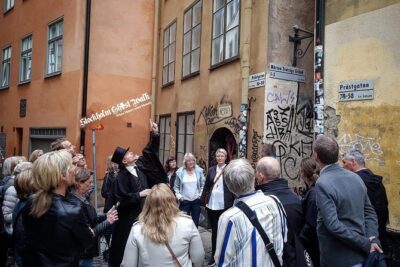 ★ 4.5The Original Stockholm Ghost Walk and Historical Tour – Gamla StanFrom $381,165 reviews
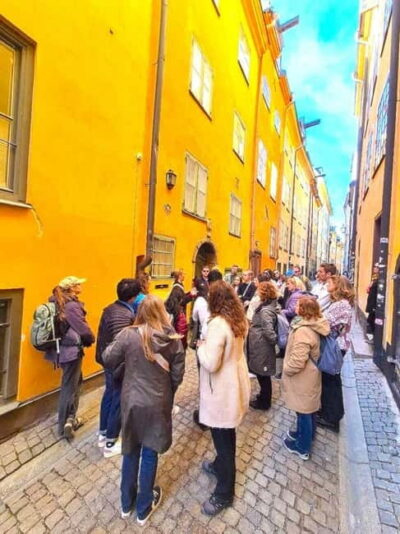 ★ 4.7Old Town Walking Tour with Local GuideFrom $15719 reviews
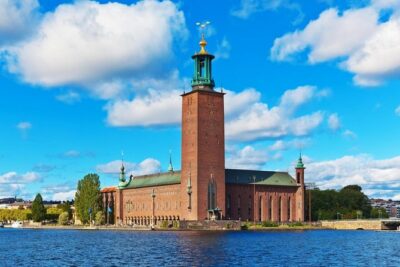 ★ 5.0Best of Stockholm Walking Tour-3 Hours, Small Group max 10 peopleFrom $49645 reviews
 ★ 4.5The Nordic Food Walk StockholmFrom $122642 reviews
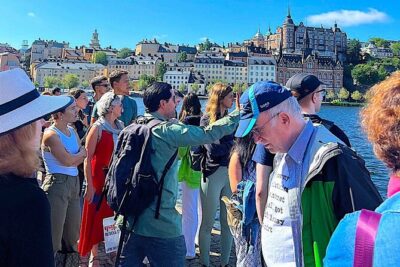 ★ 5.0Walking Tour of Stockholm’s Old Town, Gamla StanFrom $13451 reviews
 ★ 4.9Old Town Historical Walking TourFrom $52344 reviews
Browse the lists this tour appears in