

Reviewed · STOCKHOLM GHOST & FOLKLORE WALKS
CityQuest in Stockholm – To See Stockholm and Die
A murder case in downtown Stockholm. This CityQuest lets you treat central Stockholm like a living crime scene, with a story-led app and a mission you can play at your own pace over about 2.5 hours. You start with a bundle of evidence and simple instructions, then your detective work carries you through a planned loop of famous-but-doable sights.
My favorite part is the criminal journal you can access in the web app as you investigate, so you are not just sightseeing—you are constantly cross-checking what you think you know. The one drawback to plan around: you’ll need your own smartphone and an internet connection, and a couple of past players reported problems when instructions or links did not arrive on time.
In This Review
- Key things that make this CityQuest work
- CityQuest Stockholm: a phone-led detective walk, not a sit-down tour
- Price and value: why $20.31 can make sense for 2.5 hours
- Route overview: from Central Station to the Royal Opera in one playable loop
- Stop-by-stop clues: what each landmark area is doing in the game
- 1) Royal Swedish Opera: where the case starts to feel real
- 2) Royal Academy of Fine Arts: a checkpoint that keeps the route tidy
- 3) Kungsträdgården: the puzzle zone where you’ll likely slow down
- 4) Karl XII statue in Kungsträdgården: a specific point, not a vague area
- 5) Statue of Nils Ericson: a mid-quest momentum check
- 6) Sergels torg: where the pressure of time usually hits
- The app and criminal journal: how to play without getting stuck
- Team experience and pacing: private groups, real collaboration, lagom-level challenge
- What could go wrong: technical delivery, support speed, and service hiccups
- Logistics that matter on the ground: phone needs, meeting point, and transport
- Who should book this CityQuest and who should skip it
- Should you book CityQuest in Stockholm?
- FAQ
- How long is the CityQuest in Stockholm?
- How much does the tour cost?
- Where do you start and where do you finish?
- What sights are included on the route?
- What do I need to play on my phone?
- Can I cancel for a refund?
Key things that make this CityQuest work
- Central Stockholm route built for a tight 2.5-hour puzzle sprint, starting near Central Station and finishing by the Royal Opera area
- Evidence + instructions at the start so you begin the case with momentum, not confusion
- Phone app + criminal journal to keep the story moving and your answers grounded
- Checkpoint-style stops at landmark areas like Kungsträdgården and Sergels torg, which makes the city feel like part of the game
- Private group format means your friends or team can actually collaborate without strangers
CityQuest Stockholm: a phone-led detective walk, not a sit-down tour
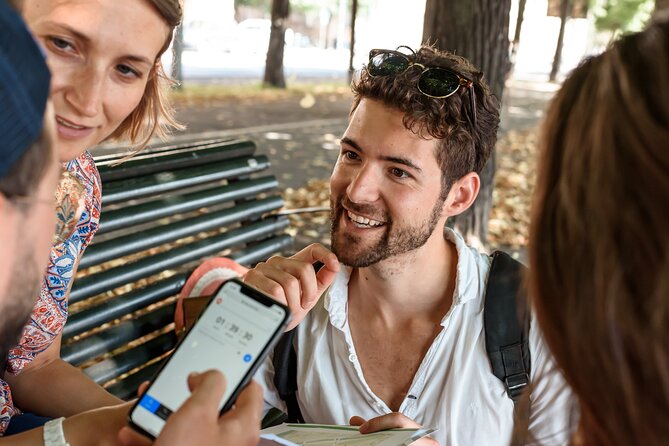
This is a city quest that plays like a detective case. You’re not just receiving directions and seeing monuments. You’re getting evidence, answering questions, and trying to solve a mystery about a Russian scientist visiting Stockholm—did he stumble into trouble, or was it planned?
That story format matters because it gives your eyes a job. When you are looking for clues, you tend to notice details you usually skip while walking between sights. In this case, the game is designed to keep you moving through central areas rather than sending you out to far-flung corners.
It also helps that the quest is structured as a timed challenge. The goal is to answer as many questions as possible before time runs out. That pressure is light—more like a friendly puzzle timer than a stressful race—but it does help the experience feel like a real activity, not a wandering walk you hope will turn interesting.
If you like city challenges such as escape rooms, scavenger hunts, or puzzle-driven walking days, this fits neatly. If you want a long, commentary-heavy guided history lesson, this is not that kind of experience.
More ghosts, folklore and dark corners after dark



Price and value: why $20.31 can make sense for 2.5 hours

At $20.31 per person for roughly 2 hours 30 minutes, the value depends on what you personally get out of a smartphone activity.
Here’s what you’re paying for:
- A designed city route with named stop areas (so you’re not guessing where the game wants you to go)
- A set of evidence provided at the start
- A web application access point for the criminal journal
- A timed question goal that turns the whole walk into a game
You’re not paying for guide time standing in one place explaining things. The cost is closer to an activity fee for an interactive storyline. For many people, that’s a sweet spot in Stockholm, where you can spend a day hopping between sights anyway. This basically piggybacks on that same walking time and adds a plot plus puzzles.
One cost consideration: your phone is not included, and neither is internet connection. So the real “effective” budget is your willingness and ability to use your own device and data or Wi-Fi. If you don’t want to think about tech, this might feel like extra mental load.
Route overview: from Central Station to the Royal Opera in one playable loop
The quest is built to start at Centralplan 15 (near Stockholm Centralstation) and finish next to the Royal Opera area. Even though the story’s endpoint is by the Royal Opera, the organizer also notes that the activity ends back at the meeting point. In practice, that means you’ll likely wind up back in the same general core after the final clue zone.
The named stops give you a clear sense of the route:
- The Royal Swedish Opera
- Royal Academy of Fine Arts
- Kungsträdgården
- Karl XII statue in Kungsträdgården
- Statue of Nils Ericson
- Sergels torg
Why this is valuable for your day: Stockholm’s center is walkable, and this route keeps you in it. You can slot a quest like this into an afternoon without feeling like you are crisscrossing the whole city for one activity.
It’s also flexible enough for different group energies. If your group likes puzzles, the app will keep you focused. If your group prefers wandering, the checkpoints at those stop areas prevent the walk from becoming random.
Stop-by-stop clues: what each landmark area is doing in the game
The game’s structure is checkpoint-based. At each stop area, the app is guiding you toward the next part of the case, using that environment as a clue context. You should expect the questions to connect to what you see and what you collected earlier in your evidence set.
1) Royal Swedish Opera: where the case starts to feel real
You begin the investigation at the Central Station area, but the first named landmark stop is the Royal Swedish Opera. This tends to be the kind of opening checkpoint that helps you orient fast: you’re settling into the plot and moving from instruction mode into clue-hunting mode.
Practical tip: when a city quest starts, teams sometimes overthink the first task. Don’t. Move with the instructions you receive at the start, then let the game’s rhythm train your brain.






2) Royal Academy of Fine Arts: a checkpoint that keeps the route tidy
The Royal Academy of Fine Arts is the second stop area. In quest design, that early second checkpoint is often there to prevent long gaps between tasks. It keeps you from drifting and helps your group stay engaged.
Drawback to keep in mind: if your team is slow at puzzle-solving, early checkpoints can feel like the game is moving fast. That’s not a problem with the route—it’s just the timed format doing its job.
3) Kungsträdgården: the puzzle zone where you’ll likely slow down
Kungsträdgården appears next, and it’s also where you reach the Karl XII statue checkpoint. This part of the route tends to encourage more careful looking. City quests often place clues where there’s a lot of visual structure, so you can compare what the app hints at with what you actually see.
Best approach: work together. If one person tries to brute-force it alone, you’ll waste time. Split tasks naturally: one watches for app prompts while others cross-check evidence or read the criminal journal entries.
4) Karl XII statue in Kungsträdgården: a specific point, not a vague area
This stop being a specific statue name is helpful because it reduces ambiguity. Instead of a general district, you can aim at a target and work from there.
Consideration: if your group is traveling with kids, or if some people have limited mobility, make sure you move as a team rather than letting people drift during checkpoint transitions.
5) Statue of Nils Ericson: a mid-quest momentum check
After Kungsträdgården, the route continues toward the statue of Nils Ericson and then to Sergels torg. Mid-quest checkpoints are usually where the game starts testing whether you’re tracking details, not just following directions.
I like this kind of structure because it usually rewards attention. You’re already learning the flow of the story, and then the game asks questions that depend on what you previously collected.
6) Sergels torg: where the pressure of time usually hits
Sergels torg is the final major stop area in the list. That placement makes sense for a timed quest: by the time you’re here, you’re likely balancing remaining time with remaining questions.
If your group runs short on time, prioritize the questions you can answer quickly using evidence and the criminal journal. Don’t get stuck trying to perfect every detail.
The app and criminal journal: how to play without getting stuck

This experience leans on your phone. You’ll use a cellphone app to access a criminal journal, and you’ll get a web application pathway as part of the setup. The included materials at the start help you navigate the city and solve the final mystery, but your device is what actually delivers the next step.
Here are the practical realities to plan for:
- Bring a charged smartphone. If you run low, the game stops being fun fast.
- Have internet access available. The experience notes that internet connection is not included, and the web journal access implies you’ll need it.
- Read the start instructions carefully. Your evidence set is meant to be the foundation for the questions.
One helpful theme from past feedback: the app experience is often described as user-friendly, with clue content that keeps the story engaging. People also mention that the timing feels manageable—hard enough to think, but not so hard that you freeze.
Also, you may receive simple instructions on paper at the start. One person specifically praised getting instructions from a representative in paper form, which can be a lifesaver if you’re tired, jet-lagged, or just want a quick checklist.
Team experience and pacing: private groups, real collaboration, lagom-level challenge

This is sold as a private tour/activity, meaning only your group participates. That matters because the game design rewards teamwork: people can discuss evidence, argue about what a clue means, and converge on answers together.
In the feedback, one team-building use case is clear: working in a group made different reactions show up, and it felt like everyone’s input mattered. Another recurring positive point is that the difficulty lands in a good middle zone. There’s a comment about the game being on a lagom level—challenging without melting your brain.
What you should do with a group:
- Assign roles loosely: one person checks the app prompts, one watches the street clues, one pulls info from the journal or evidence.
- Agree on a rule: if you are stuck for a couple of minutes, move on and come back when the journal context updates.
- Keep your pace. The goal is to answer as many questions as possible before time runs out.
If you’re traveling solo, you can still join, but this kind of puzzle-walk is usually more enjoyable with at least 2–3 people. You get more clue-checking and less time pressure from one person trying to decode everything.
What could go wrong: technical delivery, support speed, and service hiccups
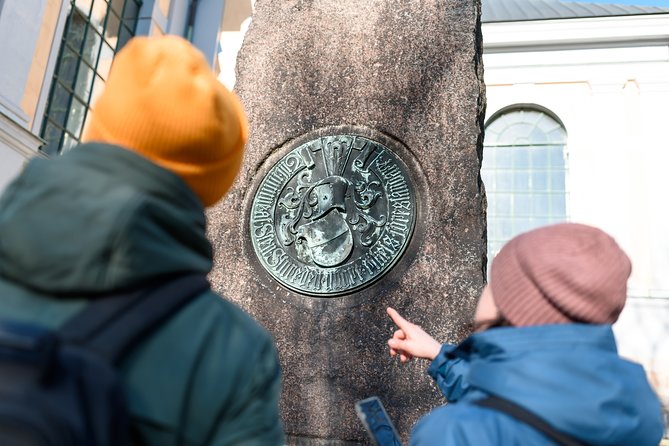
The big risk with any app-based quest is start-up reliability. The general plan is straightforward—book online, get instant confirmation, start playing with evidence and instructions—but a couple of negative experiences mention technical failure.
Examples of issues reported:
- A no-show scenario tied to a missing follow-up email/instructions and disconnected contact number, causing lost time.
- A technical issue where the game link was not sent, followed by an offer to reschedule.
- One complaint about rude behavior from a manager named Chloe.
None of these negate the fact that many players report smooth play, a friendly approach, and responsive support. But if your schedule is tight, treat this as an activity where you should be ready to problem-solve.
Practical safeguards you can take:
- Double-check your booking confirmation right away.
- Plan extra buffer time before you start, especially if it’s part of a birthday, team event, or your only afternoon.
- If you rely on data, confirm you can get online where you’ll be starting.
Weather matters too. The experience notes it requires good weather. So if you’re planning in rainy season, keep a backup idea for your day.
Logistics that matter on the ground: phone needs, meeting point, and transport
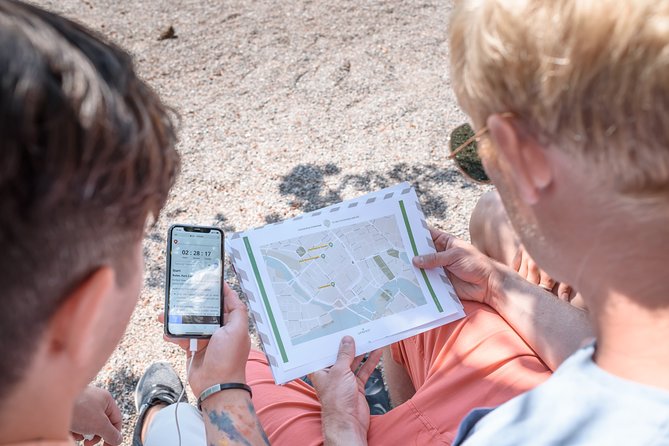
Your meeting point is Centralplan 15, 111 20 Stockholm. The experience is listed as near public transportation, which is exactly what you want for a quest start—easy to reach, easy to regroup if someone needs a bathroom break or a quick charge hunt.
You should also know that mobile phone and internet connection are not included. That sounds obvious, but it’s the make-or-break detail for this particular game.
If you’re bringing your own device, also bring practical extras that help in cold-weather cities:
- A battery pack if you’re out for hours
- A way to keep your screen usable in wind and cold
- A quick screen brightness adjustment so you can read prompts while walking
Service animals are allowed, and the experience is marked as suitable for most travelers, so this is generally built to be approachable.
Who should book this CityQuest and who should skip it
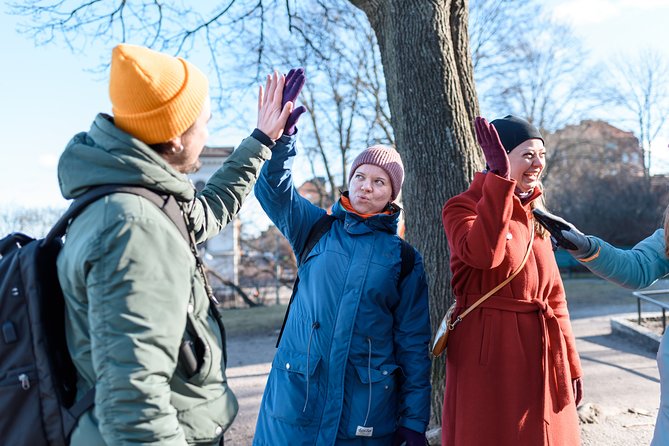
Book it if:
- You want to see central Stockholm while doing puzzles, not while passively listening
- You like mystery storylines and question-solving
- You’ll have a group of friends, family, or teammates who enjoy collaborating
- You’re comfortable using your smartphone during a walk
Skip it if:
- You hate reliance on apps and internet connections
- You need a traditional guided tour with lots of explanation
- You dislike timed challenges, even friendly ones
- Your day can’t absorb a start-up problem, because a few past players reported technical delivery issues
This is best for people who like the city as a game board. Stockholm becomes more fun when you’re actively looking, checking, and arguing about clues.
Should you book CityQuest in Stockholm?
I’d book it if your idea of a great Stockholm afternoon is walking through iconic central areas while solving a structured case. The route is tight, the story is built around evidence and a criminal journal, and the timed question flow gives it energy.
I would also book it with one realistic mindset: tech-dependent quests can fail at the start, even when most sessions go smoothly. If you can spare buffer time, you bring a charged phone, and you’re okay using your own data or Wi-Fi, the odds are strong you’ll have a fun, challenging way to see Stockholm.
If you want pure history narration, choose a guided walking tour instead. If you want a puzzle-driven detective day that makes you look at the city differently, this is a strong match.
FAQ
How long is the CityQuest in Stockholm?
The game is listed as about 2 hours 30 minutes.
How much does the tour cost?
The price is $20.31 per person.
Where do you start and where do you finish?
The meeting point is Centralplan 15, 111 20 Stockholm. The quest is designed to finish next to the Royal Opera area, and the activity information also notes it ends back at the meeting point.
What sights are included on the route?
The stops listed are the Royal Swedish Opera, Royal Academy of Fine Arts, Kungsträdgården, Karl XII statue in Kungsträdgården, Statue of Nils Ericson, and Sergels torg.
What do I need to play on my phone?
A mobile phone and an internet connection are not included. The experience includes a set of evidence to start and access to an investigation web application for the criminal journal.
Can I cancel for a refund?
Yes. Free cancellation is available if you cancel at least 24 hours in advance for a full refund. The experience also requires good weather, and if it’s canceled due to poor weather you’ll be offered a different date or a full refund.
More Tour Reviews in Stockholm
More Stockholm Ghost & Folklore Walks




Just Added: The Latest Stockholm Reviews












Stockholm Ghost & Folklore Walks, compared.
 ★ 4.7Ghost Walk and Historical TourFrom $312,206 reviews
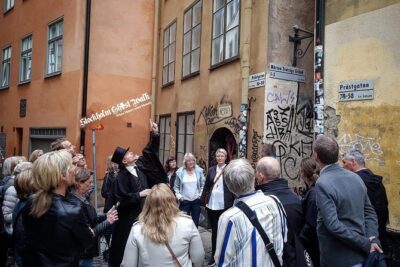 ★ 4.5The Original Stockholm Ghost Walk and Historical Tour – Gamla StanFrom $381,165 reviews
 ★ 4.0Stockholm Troll Hunt: Self-Guided Old Town AdventureFrom $714 reviews
 ★ 5.0Bloody Stockholm 2h – ghosts, horror and Dark Folklore Tour14 reviews
 ★ 4.8Bloody Stockholm: ghosts, horror and dark folklore 2hFrom $8912 reviews
 ★ 4.5Guided Ghost Tours with Actors From StockholmFrom $378 reviews
 ★ 5.0Stockholm Syndrome Private Walking TourFrom $4188 reviews
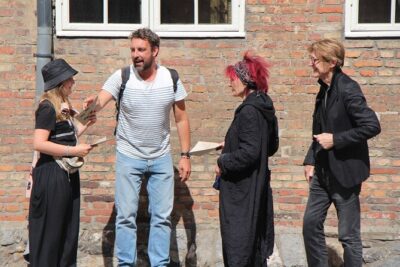 ★ 4.5Stockholm Self-Guided Murder Mystery Tour by the Royal PalaceFrom $216 reviews
Browse the lists this tour appears in