
Reviewed · GAMLA STAN OLD TOWN WALKS
Stockholm Syndrome Private Walking Tour
A robbery turned street history into a lesson. This 3-hour private walk in Stockholm starts at Norrmalmstorg, the place where the term Stockholm Syndrome got its name from a 1970s robbery and hostage situation—and your guide turns it into a story you’ll actually remember.
I also like how the tour balances set-piece sights with time for questions and practical recs, and you get a sweet break with fika along the way. One drawback to plan for: it’s about three hours of walking, sometimes over cobblestones, and a couple of key spots (like the Royal Palace and Storkyrkan) aren’t covered by included admission.
In This Review
- Key highlights to expect on this Stockholm walk
- Norrmalmstorg: start with the Stockholm Syndrome story
- City-center landmarks: Royal Dramatic Theater, Kungsträdgården, Parliament
- The Royal Palace exterior and Storkyrkan statue: monarchy plus symbolism
- Gamla Stan without stress: Stortorget, Iron Boy, St George, and Mårten Trotzig
- Slussen: the lock idea and why water levels matter
- Götgatsbacken and Katarinahissen: Södermalm’s everyday culture and viewpoints
- Fiskargatan, Katarina Kyrka, and Anna Lindh’s burial site
- Master Mikaels Gata and ending at Cornelisparken: wooden houses and views
- Price and value: what $418.80 buys you in a private tour
- Who should book this walk (and who should adjust expectations)
- Should you book the Stockholm Syndrome Private Walking Tour?
- FAQ
- Where is the meeting point for the Stockholm tour?
- How long is the tour?
- Is this a private tour?
- What language is the tour offered in?
- What is included in the price?
- Are entrance tickets included for the Royal Palace or Storkyrkan?
- What kinds of walking conditions should I expect?
- Can the tour route be customized?
- Where does the tour end?
- What is the cancellation policy?
Key highlights to expect on this Stockholm walk
- Norrmalmstorg’s origin story: why that famous term is tied to this specific street square
- A truly private pace: you can steer the route toward your interests and ask questions
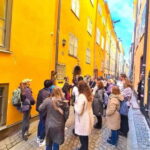
- Old Town without the rush: Gamla Stan stops that help you understand the city fast
- Photo-and-character stops: the Iron Boy, the 90 cm Mårten Trotzig alley, and royal/medieval symbols
- Södermalm’s alternative side: viewpoints, pedestrian streets, and local culture breaks
- Fika included, not optional: coffee/tea plus a pastry gives your feet a reset
Norrmalmstorg: start with the Stockholm Syndrome story
The tour meets at Norrmalmstorg, in central Stockholm’s town-square area. You’ll start with the story that gave the phrase its punchline: a 1970s bank robbery and hostage situation tied to this neighborhood, which is why your guide starts here instead of saving it for later.
It’s a smart opening. If it’s your first time in Stockholm, you’ll want context fast—and this is context with a reason. You’re not just ticking off a landmark; you’re learning how one moment shaped how people talk about fear, power, and strange bonds.
A practical note: the first segment is also where you’ll get your bearings for the rest of the walk. Once you’ve got Norrmalmstorg in your head, Parliament, the Royal Palace area, and Old Town start to feel like part of one connected route instead of separate islands.
More laps of Gamla Stan and the old town lanes

City-center landmarks: Royal Dramatic Theater, Kungsträdgården, Parliament
From Norrmalmstorg, you’ll move toward Stockholm’s most “this is the capital” scenes.
Royal Dramatic Theater (Kungliga Dramatiska Teatern) is your next quick stop at Nybroplan. It’s Sweden’s national stage for spoken drama, and your guide can connect the building to the Swedish acting world—from Bergman to more recent names (you’ll hear those cultural links out loud, which makes it land better than reading a plaque).
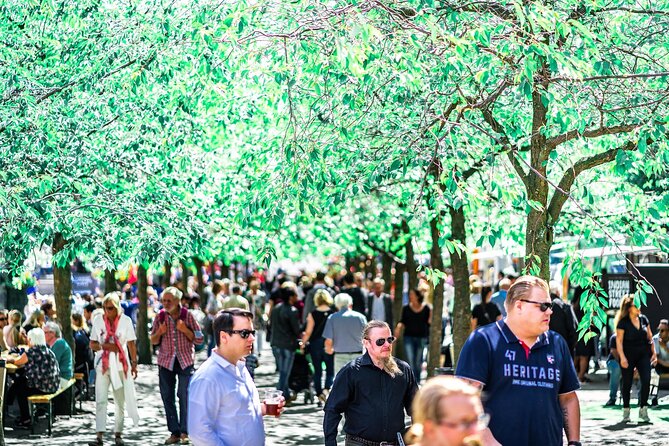
Then comes Kungsträdgården (The King’s Garden), better known as Kungsan. This park has a long timeline: it dates back to the 1400s, started as the king’s kitchen garden, and was handed over to the people in the 1700s. It also works as a mood switch—history wrapped in a place where locals actually meet.
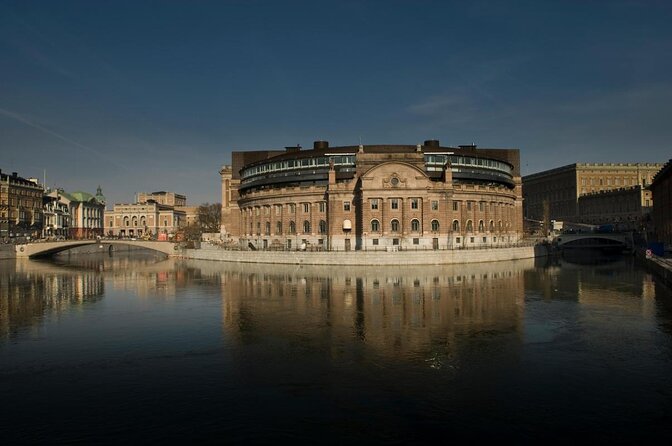
Finally, you’ll hit the Parliament Building (Riksdagshuset) on Helgeandsholmen. You’ll learn how the Swedish Parliament is set up (one chamber since 1971, 349 members elected every four years). Even if you don’t care about politics, this stop helps you understand how Stockholm’s city geography is built around power centers.
Value for you: you’ll see the “official” Stockholm early, so your later Old Town and Södermalm contrasts feel intentional.
The Royal Palace exterior and Storkyrkan statue: monarchy plus symbolism
Next, the route pivots from civic buildings to the monarchy zone.
At the Royal Palace, you’ll see it from outside. The palace is described as one of Europe’s largest royal residences and it’s the King’s official home, with key parts of monarchy representation happening here. Your guide’s commentary matters at this stop because it explains why Stockholm’s royal residence feels different from other European capitals—you’re looking at architecture and tradition, not just taking a picture.
Then you’ll go to Storkyrkan (Stockholm Cathedral), where King Carl XVI Gustav and Queen Silvia said I do. This is one of those stops that’s worth visiting year-round. Services are free, and the church is open to visitors, but there is a small entrance fee to go in. Inside, you can see the wooden statue of St. George and the Dragon, dating back to the 1470s, made after the first battle between Denmark and Sweden during the Kalmar Union.
The drawback here is simple: if you planned to walk in and spend time inside both the palace and cathedral, this route may not fully match that goal because admission isn’t included for those stops. You’ll still get the story and the context, but you might choose later add-on time for interiors.
Gamla Stan without stress: Stortorget, Iron Boy, St George, and Mårten Trotzig
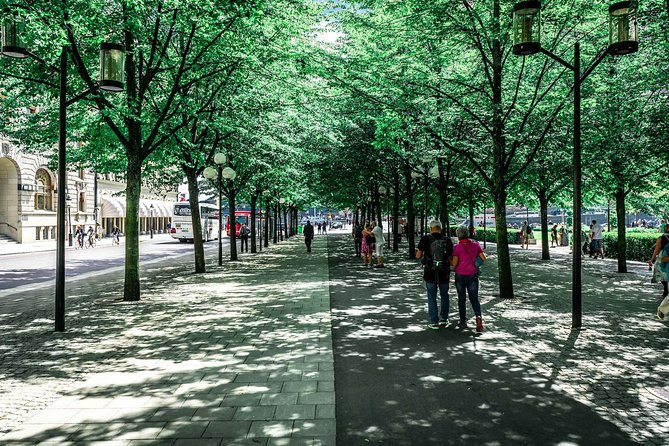
After the royal-and-government area, you’ll transition into Old Town, and that’s where the walking tour really pays off for first-timers.
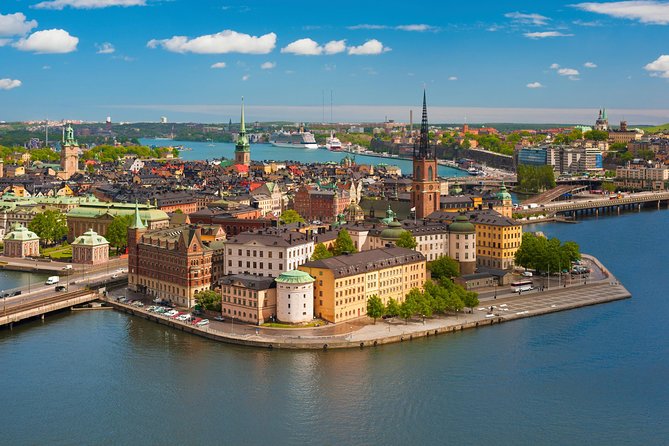
At Stortorget, you’re standing on Stockholm’s main square in Old Town. It’s one of the best starting points for exploring further because so many key moments are tied to it. Your guide points out landmarks here like the first Town Hall and the Stockholm Bloodbath. You’ll also hear about the Nobel Museum’s presence today (with a note that it will move shortly), which helps you understand what’s here now versus what’s coming next.
Then comes the whimsical stop that always gets people to slow down: Iron Boy (Jarnpojken), also called the Boy looking at the Moon. The statue is linked to Liss Eriksson, who as a child couldn’t sleep and would sit looking through the window at the moon. It’s an easy stop, but it turns the neighborhood into something personal instead of purely historical.
From there, you’ll see the Statue of St. George, which your guide connects to symbolism. In this story, St. George represents Sweden, while the dragon points to Denmark. The same symbol also connects to King Kristian I and Sten Sture the elder.
Next is one of Stockholm’s most famous walking “gimmicks,” but it’s a good one: Mårten Trotzig’s grand. This is the narrowest alley in Stockholm at about 90 cm at its tightest point. Some guidebooks claim it’s the narrowest alley in Europe, but it’s not. There’s a narrower one in Prague at 60 cm. Either way, you’ll feel the squeeze of standing in a place built for feet inches apart.
Value for you: Old Town can be confusing if you wander without a plan. This sequence gives you the best anchors—square, symbol statues, then a dramatic alley—so you can navigate your own extra time later.
Slussen: the lock idea and why water levels matter
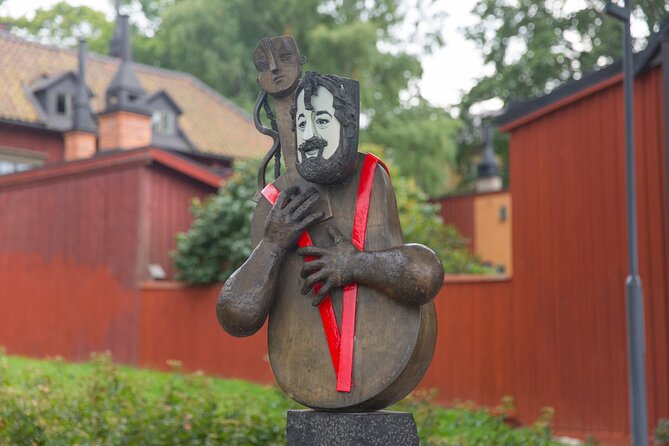
After Gamla Stan, you’ll move toward Slussen, translated as the lock. This stop is short but interesting because Stockholm’s water geography is part of the city’s identity.
Your guide explains why: Lake Mälaren and the Baltic Sea sit at different levels—about 70 cm apart. Standing near Slussen, you understand why bridges, waterways, and engineering show up everywhere in Stockholm. It’s not just a view stop; it’s a “how the city works” stop.
If you’re taking pictures, it’s also a good place to pause and regroup before the walk shifts into Södermalm’s more everyday, alternative-feeling streets.
More ghosts, folklore and dark corners after dark





Götgatsbacken and Katarinahissen: Södermalm’s everyday culture and viewpoints
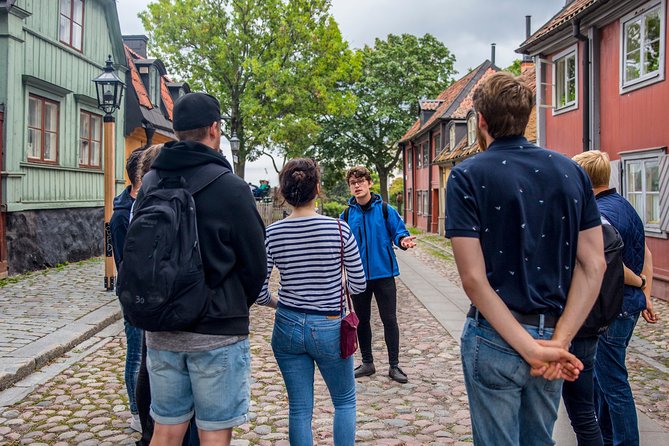
Now you head into Södermalm with a totally different vibe than Old Town. This is where Stockholm starts to feel lived-in.
You’ll pass Götgatsbacken, part of the Götgatan corridor. This is pedestrian territory with a mix of modern brands like H&M, Filippa K, and Cheap Monday, plus places for vintage browsing and thrift-style shopping. If you like walking past storefronts and seeing how people actually spend time, this stop does that job well. You’ll also hear about bars and pubs that are more relaxed than tourist-heavy areas.
Next is Katarinahissen, the cliff-side elevator. It used to replace stairs up the slope of Södermalm, and today it’s mostly a picture-and-view stop. Your guide points out why it’s worth stopping: the viewpoint framing makes Stockholm’s layout feel easy to grasp.
Then comes Mosebacke Torg, a quieter square near Södra Teatern. In summer, it’s where the most popular Biergarten in Stockholm is found. You’ll also notice the sculpture The Sisters, which gives the square something characterful without needing you to memorize art history.
Drawback to remember: this part of the tour can include uneven footing. The tour notes that some areas include cobblestones, so wear shoes you’d be comfortable walking in for a few more hours after the tour ends.
Fiskargatan, Katarina Kyrka, and Anna Lindh’s burial site
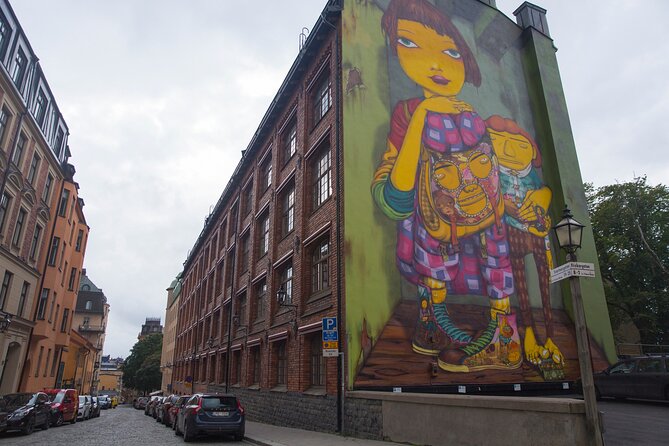
As the route continues deeper into Södermalm, you’ll get a more literary and personal kind of history.
At Fiskargatan, your guide shares a pop-cultural link: this is where Stieg Larsson pictured Lisbeth Salander living, in the Millennium Trilogy. In the second book, she bought an apartment after stealing a significant sum of money—details like that make the street feel connected to modern storytelling, not sealed inside the past.
Then comes Katarina Kyrka, plus the cemetery around it. Here’s a heavy, real-world stop: among those buried there is the assassinated Foreign Minister Mrs. Anna Lindh. Your guide also mentions other Swedes buried in the area, including author Per Anders Fogelström (City of My Dreams) and troubadour Cornelis Vreeswijk.
If you want your tour to be more than scenery, this section is where it turns reflective. The route keeps moving, but these anchors make you slow down and pay attention to what you’re walking past.
Master Mikaels Gata and ending at Cornelisparken: wooden houses and views
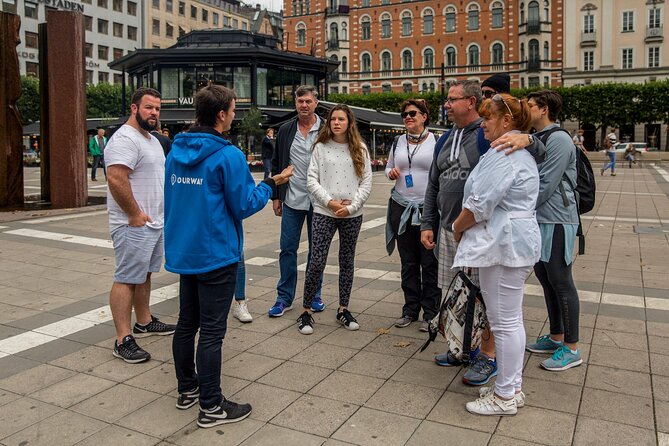
Near the end, the tour shifts into charming street details and a strong finish point.
Master Mikaels Gata is known for old, colorful wooden houses. The street name comes from Mikael Reissuer, an executor of the city of Stockholm for 15 years in the 1600s, with the name assigned in 1939. Today, many of the wooden houses are owned by AB Stadsholmen, a real estate company owned by the government that manages buildings of cultural heritage. That’s the kind of practical tidbit that helps you understand why old architecture is still here instead of replaced.
Finally, you end at Cornelisparken. The park was inaugurated in 2000 and is dedicated to Cornelis Vreeswijk, described as the Swedish equivalent of Bob Dylan. It also offers some of the best “wrap-up” views of Stockholm. This is where you finish your guided time and can keep exploring on your own.
One planning consideration: ending in Södermalm means your return route might not line up with where you started. In one past experience, the tour ending point created a long walk back. So if you want an easy return, figure out transit before you arrive—or plan a short taxi/ride option.
Price and value: what $418.80 buys you in a private tour
At $418.80 per person, this is not a bargain-basement walking tour. The value is in the format: it’s private, it’s in English, and it’s built around discussion.
Here’s what you’re paying for:
- A professional guide who can customize the route to your interests (you’re asked about what you want to see)
- A focused walking route over about 3 hours that covers a lot of visual anchors
- A included fika (coffee/tea plus pastry), so the tour gives you both history and a reset
- The ability to ask your guide follow-up questions as you walk, not just get a one-way script
If you’re the kind of traveler who wants to choose what to prioritize, private works better than a big-group bus of stops. If you’re trying to maximize museum interiors or want ticketed access to palace/church interiors on day one, you may still need separate planning—because some admissions aren’t included.
Also, note that this tour averages being booked about 9 days in advance. That’s not a must, but it does suggest it’s a popular way to start a Stockholm trip, especially for first-timers.
Who should book this walk (and who should adjust expectations)
This tour fits best if you:
- Are visiting Stockholm for the first time and want a fast orientation that feels specific
- Like stories that connect a place to an event or a person (Stockholm Syndrome, royal marriages, Kalmar Union symbols)
- Want Old Town plus Södermalm in one route, including quirky stops like Iron Boy and the 90 cm alley
- Appreciate a guide with good pacing and practical recommendations (you’ll have time to ask what to do next)
You might want to adjust expectations if you:
- Want long interior time inside the Royal Palace or inside Storkyrkan. The Royal Palace and Storkyrkan involve extra admission (not included for the palace; Storkyrkan has a small entrance fee).
- Have limited time for walking. The tour asks for moderate physical fitness level and mentions cobblestones in parts.
Should you book the Stockholm Syndrome Private Walking Tour?
If you want Stockholm in one morning/early day without feeling rushed, I think this is a strong choice. The best reason to book isn’t the phrase itself; it’s the way the route links big landmarks with human stories, then ends where the city feels more local.
Book it if you’re planning to explore after the tour. You’ll leave with a map in your head: where Old Town begins, where the symbolic statues live, and what Södermalm feels like beyond the postcards. Just do two things to get the best outcome: wear good shoes for cobblestones, and plan how you’ll get back (because the finish in Södermalm can turn into a long return walk).
If you’re unsure, ask yourself: do you want a guided storyline and a fika break over solo wandering? If yes, this tour is an easy yes.
FAQ
Where is the meeting point for the Stockholm tour?
You meet your guide in Norrmalmstorg, Stockholm, Sweden, in the central town square area.
How long is the tour?
The walking tour lasts about 3 hours.
Is this a private tour?
Yes. It’s a private tour/activity, and only your group participates.
What language is the tour offered in?
The tour is offered in English.
What is included in the price?
The tour includes a professional guide plus coffee and/or tea fika (coffee/tea with a pastry).
Are entrance tickets included for the Royal Palace or Storkyrkan?
No. The Royal Palace admission is not included, and Storkyrkan has a small entrance fee.
What kinds of walking conditions should I expect?
The tour has a moderate physical fitness level requirement, includes walking on cobblestones in some areas, and operates in all weather conditions. Dress comfortably and appropriately.
Can the tour route be customized?
Yes. You can tell the guide what interests you or what destinations you want, and the tour can be adjusted to accommodate preferences. You can also agree with your guide on where to end depending on weather, walking comfort, and interests.
Where does the tour end?
It ends in the heart of Södermalm, at Cornelis park, 116 20 Stockholm, Sweden.
What is the cancellation policy?
You can cancel for free up to 24 hours in advance for a full refund. If you cancel less than 24 hours before the start time, the amount paid is not refunded.
More Tour Reviews in Stockholm




More Stockholm Ghost & Folklore Walks
More Gamla Stan Walks

Just Added: The Latest Stockholm Reviews










Gamla Stan Old Town Walks, compared.
 ★ 4.7Ghost Walk and Historical TourFrom $312,206 reviews
 ★ 5.0Walking Tour of Stockholm Old TownFrom $241,175 reviews
 ★ 4.5The Original Stockholm Ghost Walk and Historical Tour – Gamla StanFrom $381,165 reviews
 ★ 4.7Old Town Walking Tour with Local GuideFrom $15719 reviews
 ★ 5.0Best of Stockholm Walking Tour-3 Hours, Small Group max 10 peopleFrom $49645 reviews
 ★ 4.5The Nordic Food Walk StockholmFrom $122642 reviews
 ★ 5.0Walking Tour of Stockholm’s Old Town, Gamla StanFrom $13451 reviews
 ★ 4.9Old Town Historical Walking TourFrom $52344 reviews
Browse the lists this tour appears in