
Reviewed · GAMLA STAN OLD TOWN WALKS
Stockholm Troll Hunt: Self-Guided Old Town Adventure
Gamla Stan becomes a puzzle trail. This self-guided Stockholm Troll Hunt is built around legends and real Old Town landmarks, with you answering challenges as you walk.
I especially like the private group setup (it’s just you and your friends) and the fact that it’s fully virtual, so you can pause and resume at your own pace. One thing to watch: the mobile setup and English translation clarity can make or break a tight schedule, so give yourself buffer time before you start.
In This Review
- Key things to know before you go
- How the self-guided Troll Hunt works in Gamla Stan
- Price and timing: fitting a 50–75 minute quest into your day
- Start at Royal Swedish Opera: the first clue behind the Old Town story
- From the first parliament in Arboga to Sweden’s Four Estates
- A baroque palace and the Royal Armoury: when power leaves fingerprints
- Storkyrkan (St. Nicholas): Gamla Stan’s oldest church as your puzzle hub
- Squares that explain life: Järntorget and the market streets vibe
- The Golden Peace stop: Den Gyldene Freden’s 300-year staying power
- Sculpture and a battle victory: finding meaning behind small spaces
- Sankta Gertrud and the traveler’s patron detail
- Palace of the Purse, Nobel Museum area, and the walk to Stortorget finish
- Should you book the Stockholm Troll Hunt?
- FAQ
- How long is the Stockholm Troll Hunt?
- Where does the quest start and end?
- Is it a guided tour with a person?
- What do I get for the price?
- Can I pause and resume?
- What language is it offered in?
- Do I need to book far in advance?
- Is there free cancellation?
Key things to know before you go
- Private by default: only your group participates, so the pace stays yours.
- Fully virtual quest: no physical guide needed, and you can pause/resume anytime.
- 12 interactive puzzle challenges: each stop pushes you to notice a specific detail.
- Old Town storyline tied to legends/history: you’re not just sightseeing—you’re solving.
- Family-friendly format: the game approach makes history feel less like homework.
- Plan for setup time: start when you have enough time to install and read answers comfortably.
How the self-guided Troll Hunt works in Gamla Stan
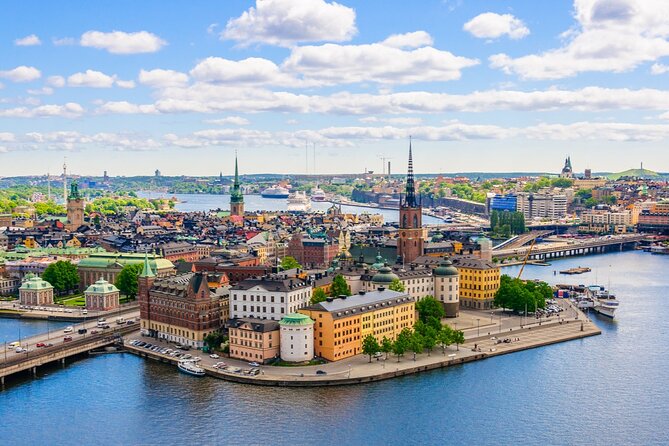
This is not a live walking tour where a person talks at you for an hour. Instead, it’s a mobile quest with a storyline inspired by Stockholm’s legends and history. You get a mobile access code, then the experience guides you through a sequence of Old Town stops via 12 interactive puzzle challenges.
The “troll hunt” part is all about the format: you look around, find the clue, then answer the challenge to move forward and learn what’s going on at each place. Because it’s fully virtual, you can go slower (or stop entirely) if you’re reading plaques, taking photos, or just wandering off for a coffee.
Also, the experience is designed for your route pace, not a tour-clock. That matters in Gamla Stan, where streets are narrow, crowds can change block to block, and one detour can turn a quick stop into a 20-minute detour. Here, you control that rhythm.
One practical note: the experience includes an English option, but puzzle questions and prompts rely on your phone reading them clearly. If your device setup takes longer than expected, you’ll feel it—especially if you planned a short sightseeing window.
More laps of Gamla Stan and the old town lanes

Price and timing: fitting a 50–75 minute quest into your day
At $7.21 per person, this is priced like a “few stops plus a game” activity rather than a premium guided tour. The value comes from two things you get for that price: a self-contained experience (mobile code + puzzle content) and a built-in way to “anchor” your walking around major Old Town sites.
Typical duration is about 50 minutes to 1 hour 15 minutes. That range is realistic if you’re comfortable scanning details quickly and answering as you go. If you like to read more, you’ll still finish, but you may land closer to the upper end—especially if you stop for photos at places like Storkyrkan and the Stockholm palace area.
The experience opening hours list Monday–Sunday, 5:00 AM to 9:00 PM, which gives you a wide window for starting. In practice, I’d treat it like this: pick a time when you have enough attention to solve puzzles, not just “when you’re passing by.” Early morning works well if you want quieter streets; late evening works if you enjoy the Old Town glow and don’t mind lower light for reading details.
If you’re traveling with kids, this time flexibility is a big deal. A family can pause for snacks, and nobody has to pretend they understand the story on a strict schedule.
Start at Royal Swedish Opera: the first clue behind the Old Town story
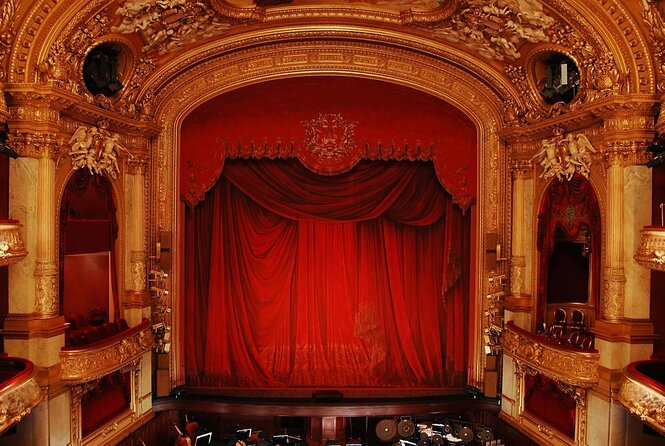
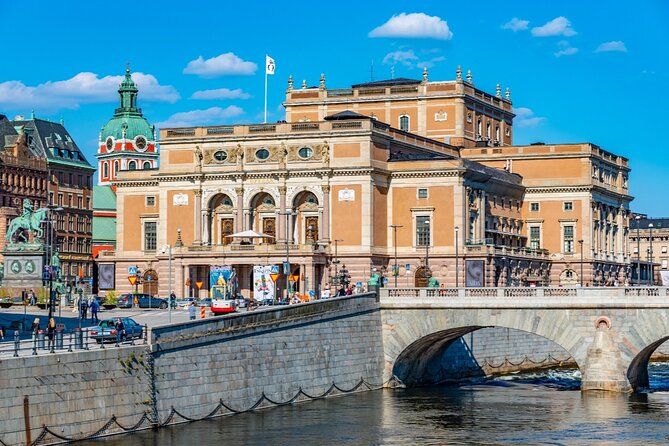
The quest starts at Kungliga Operan (Royal Swedish Opera), Gustav Adolfs torg 2. It’s a great beginning point because it’s both a landmark and a natural “start line” for Gamla Stan wandering.
Your first puzzle focuses on why this opera world matters to Swedish cultural history. You’ll learn that the Royal Swedish Opera has served as Sweden’s national theatre for opera and ballet since January 18, 1773, when the first performance happened at the Royal Opera. And the backstory gets interesting fast: in 1771, King Gustav III fired the French opera troupe that had been performing at Bollhuset by Slottsbacken for about 20 years. The reason? He wanted to form a Swedish ensemble capable of putting on Swedish operas.
Then you reach a “look around to advance” moment linked to the opera’s role and timeline—using the area as more than a photo stop. The goal is to connect what you see with why the building exists in the first place.
If you’re the kind of traveler who normally skims historical blurbs, the puzzle format is a smart workaround. It makes you slow down just enough to understand the “why,” not just the “what.”
From the first parliament in Arboga to Sweden’s Four Estates

Next comes a political history clue tied to Sweden’s earliest parliamentary story. The experience notes that the first parliament is often viewed as a meeting in Arboga in 1435. It also frames what happened after: government shifted over time, and parliament became represented through the Four Estates—nobility, clergy, burghers, and peasants.
This is one of those moments where the quest earns its keep. Instead of giving you a lecture about political structure, the puzzle forces you to locate answers in the Old Town environment. That’s how you remember details later, when you’re not staring at your phone.
Possible drawback: if you prefer pure architectural sightseeing, this stop may feel more “text-and-logic” than “look-and-feel.” But if you enjoy history that connects to real power systems, this is a strong anchor point for understanding how Sweden organized society centuries ago.
A baroque palace and the Royal Armoury: when power leaves fingerprints
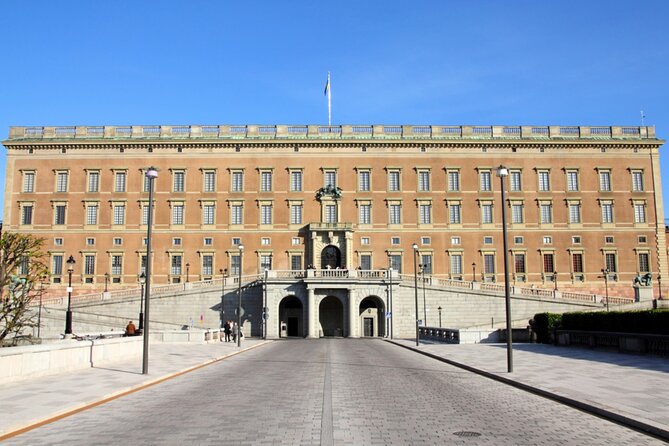
The quest continues into the world of elite buildings and elite objects—where Swedish history shows its theatrical side.
One stop highlights an 18th-century palace that created a stir in Europe and is now considered emblematic of the Baroque era. Baroque usually means drama: strong lines, big presence, and a building that tries to impress even from the street. Here, the puzzle encourages you to connect that “stir in Europe” idea to what you’re seeing today.
Then comes a particularly memorable clue area: the Royal Armoury and its oldest artefacts. You’ll learn that the oldest items are sets of royal state and ceremonial weapons stored in the old Three Crowns Palace during the 16th century. It also touches on a grim-but-fascinating Gustavus Adolphus detail: in the 1620s, he wanted his blood-spattered clothes saved as a perpetual memoria.
Even if you’re not a museum person, that kind of “human consequence” makes history stick. The quest turns it into a reason to keep moving and paying attention, rather than letting the story slide into background noise.
More ghosts, folklore and dark corners after dark





Storkyrkan (St. Nicholas): Gamla Stan’s oldest church as your puzzle hub
When the quest reaches Storkyrkan, it’s time for a classic Gamla Stan landmark. Storkyrkan is the oldest church in Gamla Stan, Stockholm’s old town area. It’s officially Church of St. Nicholas, first mentioned in 1279, and tradition credits its original building to Birger Jarl, who founded the city.
This is a stop that works on multiple levels:
- For puzzle solvers: there’s a sense of age and continuity—perfect for an answer you can hunt in your surroundings.
- For sightseers: it’s an actual focal point in the old town landscape.
- For families: the church context makes it easy to understand you’re exploring something that predates a lot of the city’s other institutions.
Drawback to consider: old churches can be visually complex. If your phone’s brightness isn’t great or the detail you’re searching for is small, you may find yourself squinting. For that reason, it helps to bring a charged phone and give yourself time to slow down.
Squares that explain life: Järntorget and the market streets vibe
After Storkyrkan, you shift from religious history to city-life history—still framed as puzzle progress.
One stop is Järntorget, described as the second oldest square in Stockholm, slightly younger than Stortorget, dating back to around 1300. The square remained the city’s most important trade centre for centuries, and the description paints it as a place where goods were transported from shore to shore and up and down the attics of nearby buildings. It’s also described as constantly busy, with scents and noise intermixing.
The key idea for your experience: you’re not just learning dates. You’re learning how a city functioned day to day. That’s what makes a quest-style approach feel more “real” than reading a brochure in one gulp.
Nearby, the quest also references an elongated open space/street area where you’ll find the public library and Storkyrkoskolan (School of the Great Church). The stop description hints that the space is sometimes treated as a street even if it’s named a square. That’s a fun detail to notice because it reinforces that Stockholm’s old town was built for movement, not for perfect modern categories.
The Golden Peace stop: Den Gyldene Freden’s 300-year staying power
One of the most enjoyable parts of the route is the culinary-history angle.
You’ll reach Den Gyldene Freden, translated as The Golden Peace, which first opened in 1722. It’s been delighting Stockholmers for nearly 300 years, including members of the Royal Academy, and it has not moved from its original location since then.
This stop is a smart break in tone. The quest shifts from institutions (opera, parliament, armory, church) into a place where people eat and meet—exactly what “everyday history” looks like. Even if you don’t stop for a meal, the puzzle structure encourages you to think about why a place staying in the same spot for so long is itself part of the story.
Sculpture and a battle victory: finding meaning behind small spaces
The quest includes a stop tied to a sculpture created by Swedish artist Liss Eriksson. It was created in 1954, but inaugurated at this point in 1967. You’re also told it sits behind the Finnish Church, only a few meters from the Stockholm palace—yet it can be hard to find due to the secluded location.
That’s a very “Old Town” kind of challenge. You don’t always see what’s there because the city’s geometry and sightlines hide details. The puzzle makes you work for it, which turns a quick walk into an actual discovery moment.
Then you get another major figure: a statue commissioned by Sten Sture the Elder after his victory over the Danish army in the Battle of Brunkeberg in 1471. The story says Sten Sture placed his army under the protection of Saint George. The sculpture is widely attributed to the workshop of Bernt Notke (even though it isn’t signed by Sten Sture himself).
This battle-and-symbolism stop is great for history lovers, because it shows how public art can carry political meaning. It also fits the quest style: the puzzle is pushing you to connect a visible monument to an event that changed power in the region.
Sankta Gertrud and the traveler’s patron detail
Next, the quest heads into a church stop tied to medieval neighborhood identity and travel symbolism.
The stop explains that the church is located between Tyska Brinken, Kindstugatan, Svartmangatan, and Prästgatan, and that it’s named for standing in the centre of a neighborhood that in the Middle Ages was dominated by Germans. The official name is Sankta Gertrud, dedicated to Saint Gertrude (626–659), abbess of the Benedictine monastery of Nivelles in present-day Belgium, and patron saint of travellers.
This is exactly the kind of detail that most self-guided sightseeing misses. The quest nudges you to connect the church’s role (patron of travelers) with its location in a mixed, trade-oriented part of medieval Stockholm.
If you’re traveling with kids, this is a nice moment to ask a simple question: why would a town choose a patron saint of travelers for this area? You’ll likely come up with answers—then the puzzle adds the facts.
Palace of the Purse, Nobel Museum area, and the walk to Stortorget finish
Near the end, the quest points you to one of the most recognizable “Old Town modern prestige” transitions: institutional Sweden.
The palace of the purse is described as built between 1773 and 1776 by Erik Palmsted in the French rococo style. Today it is the seat of the Swedish Academy and the Nobel Museum. The stop also notes that the square’s fountain was built by the same architect.
This works as a fitting finale because it connects Stockholm’s older story-telling (opera, parliament, armory, church) to the Sweden many people associate with modern cultural and scientific prestige. The puzzle format also keeps you from just “passing by” this area without noticing why it matters.
The experience ends at Stortorget 7. Stortorget is a natural place to wrap up because it’s a central square where it’s easy to keep exploring right away—whether you’re continuing on foot or catching transport.
Should you book the Stockholm Troll Hunt?
If you want a low-cost, self-paced way to connect Gamla Stan landmarks to stories, I think this is worth booking. The structure—12 puzzles tied to specific places—turns “look around” into an actual mission, and that’s a fun change from plain audio guides or museum ticket browsing.
I’d be a little careful if you have a tight schedule or you know your phone setup can be slow. The one real risk here is spending too much time getting started and losing the chance to finish smoothly, especially with translation clarity affecting how quickly you can answer.
Best fit:
- families who want history with a game layer
- independent walkers who like to go at their own pace
- couples or small groups who don’t want to share a guide’s tempo
If that sounds like your travel style, book it and treat it like a stroll with purpose. You’ll come away not just with photos, but with details you’ll still remember.
FAQ
How long is the Stockholm Troll Hunt?
It takes about 50 minutes to 1 hour 15 minutes.
Where does the quest start and end?
It starts at Royal Swedish Opera (Kungliga Operan), Gustav Adolfs torg 2 and ends at Stortorget 7 in Stockholm.
Is it a guided tour with a person?
No. It’s a self-guided, fully virtual quest. A physical tour guide is not included.
What do I get for the price?
You get a mobile access code and 12 interactive puzzle challenges, plus storyline content inspired by Stockholm’s legends and history.
Can I pause and resume?
Yes. The experience is designed with flexibility to pause and resume anytime.
What language is it offered in?
It’s offered in English.
Do I need to book far in advance?
On average, it’s booked about 19 days in advance, but confirmation is received at booking time.
Is there free cancellation?
Yes—there is free cancellation. You can cancel up to 24 hours in advance for a full refund.
More Tour Reviews in Stockholm




More Stockholm Ghost & Folklore Walks
More Gamla Stan Walks

Just Added: The Latest Stockholm Reviews










Gamla Stan Old Town Walks, compared.
 ★ 4.7Ghost Walk and Historical TourFrom $312,206 reviews
 ★ 5.0Walking Tour of Stockholm Old TownFrom $241,175 reviews
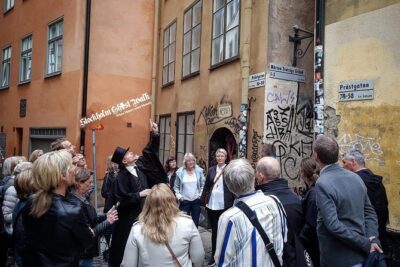 ★ 4.5The Original Stockholm Ghost Walk and Historical Tour – Gamla StanFrom $381,165 reviews
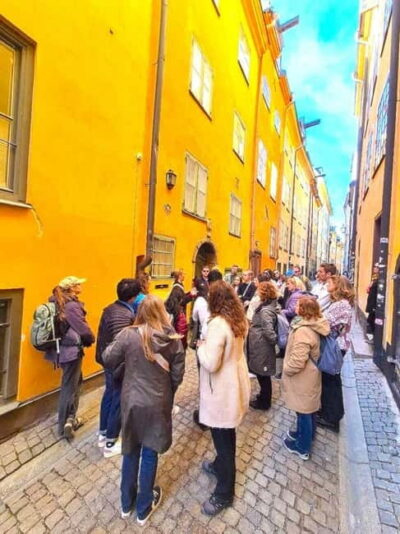 ★ 4.7Old Town Walking Tour with Local GuideFrom $15719 reviews
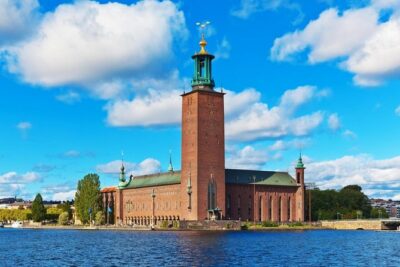 ★ 5.0Best of Stockholm Walking Tour-3 Hours, Small Group max 10 peopleFrom $49645 reviews
 ★ 4.5The Nordic Food Walk StockholmFrom $122642 reviews
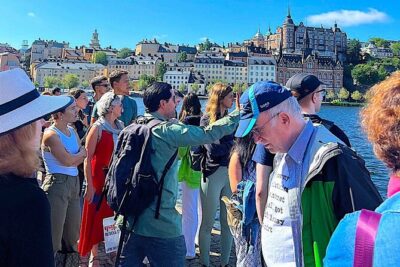 ★ 5.0Walking Tour of Stockholm’s Old Town, Gamla StanFrom $13451 reviews
 ★ 4.9Old Town Historical Walking TourFrom $52344 reviews
Browse the lists this tour appears in