
Reviewed · GAMLA STAN OLD TOWN WALKS
Classic Stockholm Small Group Walking Tour | 3 Hours
A great Stockholm tour is more than landmarks. This 3-hour walk threads Gamla Stan and the political core together, and I like how the guide keeps the pace light while explaining why each place matters. I also love the practical side: you get local restaurant ideas to use right after the tour. The one catch is that you’re mostly outside—attractions aren’t entered, so if you want museum time or palace interiors, you’ll need to plan those separately.
You’ll cover a lot without feeling rushed. Expect cobblestones underfoot and a few steep bits, including a stair climb at Mårten Trotzigs Gränd. (Good news: the stops are timed in short bursts, so you get frequent “look, listen, move” breaks.)
In This Review
- Key Things That Make This Stockholm Walking Tour Worth It
- Why This 3-Hour Walk Works on a First Stockholm Day
- Meeting at Götgatan: How the Tour Starts Smoothly
- Södermalm to Slussen: Where Stockholm Shows Its Development Timeline
- Iron Square to Mårten Trotzigs Gränd: Narrow Streets, Steeper Meaning
- German Church, Finnish Church, and a Viking Runestone
- Stortorget and the Nobel Prize Museum Building: Power, Ideas, and a Big Square
- Saint George, the Iron Boy, and the Small-Scale Traditions
- Royal Palace Views and Riddarholmen: Monarchy Shifts Into Administration
- Nobility, Courts, and Parliament: The Civic Stockholm Walk
- Rosenbad to Stockholm City Hall: A Finish With Real Momentum
- Price and Value: What $66.52 Gets You
- Footwear, Pace, and Comfort: Small Details That Matter
- Who Should Book This Walking Tour
- Should You Book This Classic Stockholm Small Group Walking Tour?
- FAQ
- How long is the Classic Stockholm Small Group Walking Tour?
- Where is the meeting point?
- Is the tour in English?
- Are museum tickets included?
- What’s the walking like?
- How big is the group?
- Can I cancel for a full refund?
Key Things That Make This Stockholm Walking Tour Worth It

- A route with real variety: waterfront development at Slussen, old-town alleys, then modern government buildings
- Frequent story stops: short scenes like Stortorget and the Stockholm Cathedral sculpture keep the walk moving
- Guides who answer on the spot: you can ask questions as you go, not only at the end
- Local food and cafe advice: helpful recommendations so your first day doesn’t end with guesswork
- Ends at City Hall: a strong finish that’s easy to turn into lunch or evening plans
Why This 3-Hour Walk Works on a First Stockholm Day
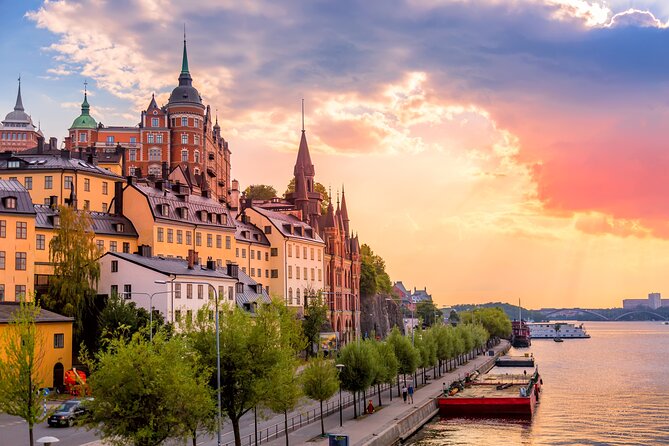
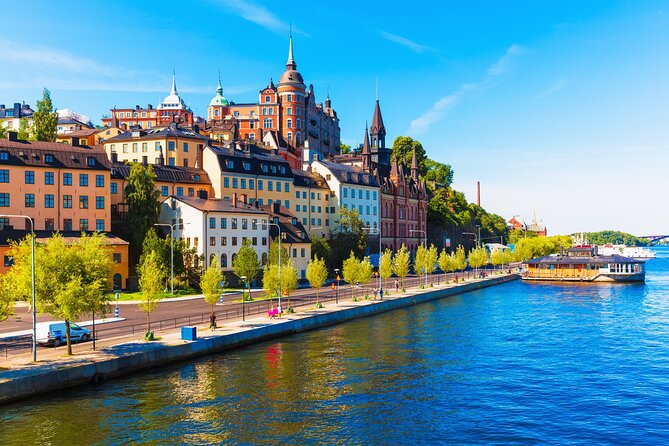
Stockholm can feel like a puzzle at first: islands, bridges, neighborhoods that look similar until you know what to notice. This tour helps you learn the board quickly. You start in the Södermalm side of the city, pass through classic Old Town streets, and finish at the seat of Swedish civic life near Stockholm City Hall.
The value is in the mix. In about three hours you get:
- the “why” behind major places, not just their postcard face
- a feel for how neighborhoods connect
- an easy set of next stops for your own exploring
It’s also a smart option if you don’t want to buy multiple museum tickets on Day 1. Many big sights on the route are viewable from the street, so you’re not stuck choosing between paying for entry or missing the story.
More laps of Gamla Stan and the old town lanes

Meeting at Götgatan: How the Tour Starts Smoothly
The tour meets at the east entrance of the Stockholm City Museum, with the meeting point listed at Götgatan 1 (116 46 Stockholm). Before you go, you’ll receive an email with detailed directions and a contact number if you get stuck.
This matters more than you’d think. A walking tour lives and dies on timing. With a clear meet-up point and a phone number to reach the office, you’re less likely to lose the first 10–15 minutes. You’ll also have a mobile ticket, and you’ll be able to find your guide and get rolling without a lot of back-and-forth.
One more practical note: the tour is designed for visitors with moderate physical fitness, and it includes cobblestones and stairs.
Södermalm to Slussen: Where Stockholm Shows Its Development Timeline
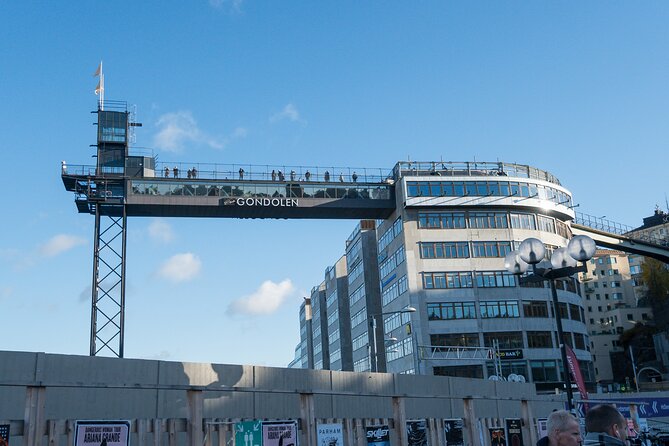
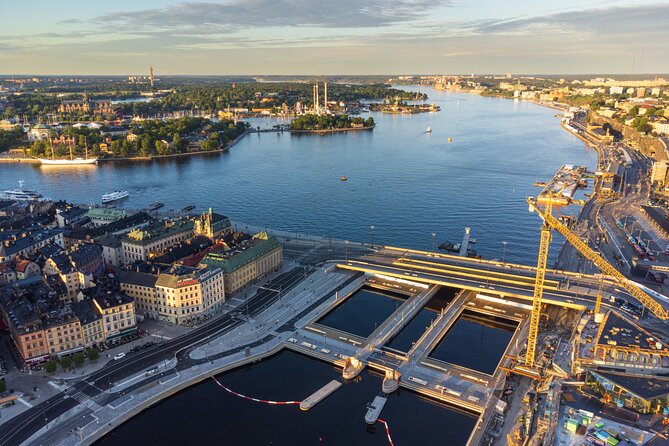
You begin near Södermalmstorg and then head toward Slussen, a key junction where the city’s past and current plans collide.
What I like here is that your guide doesn’t treat Slussen like a scenic overlook. You get a historical overview of why this area has been central to Stockholm’s movement and growth. Then you also get the present-day picture through project Slussen (2016–2025).
That combination helps you read the city later. When you see construction, changes to streets, or altered pedestrian routes, you’ll understand it as an ongoing chapter, not random chaos.
It’s also a good “warm-up” section: the walk starts at a leisurely pace, and the stories are heavy enough to matter but not so detailed that you miss the views around you.
Iron Square to Mårten Trotzigs Gränd: Narrow Streets, Steeper Meaning
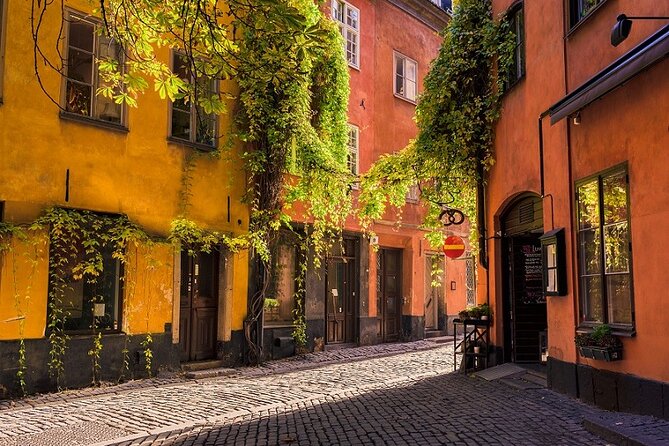
From Slussen you move toward Järntorget, literally Iron Square. The name isn’t just trivia. It points you to how trade and industry shaped where people gathered, built wealth, and later how banking and culture took over the same kinds of spaces.
Your guide also introduces you to an important poet connected to the area. Even if you don’t know Scandinavian literature, you’ll come away with a clearer sense of how culture sits inside everyday city squares.
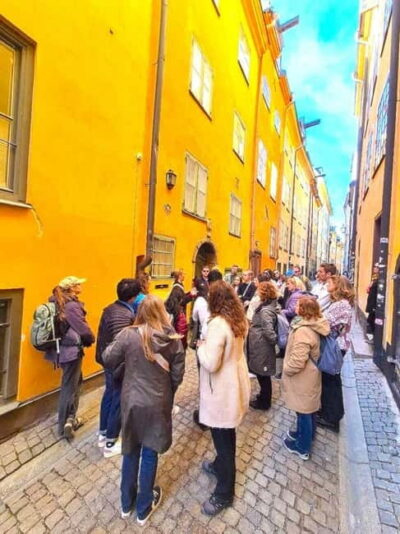
Then comes the star for many people: Mårten Trotzigs Gränd. This alley is famous for being narrow and for the climb—about 36 steps as part of the experience. The story is vivid: it began as a narrow passage tied to a German merchant in the 1500s and was later revived and preserved in the 1900s.
Practical tip: bring shoes with grip. The alley is short, but cobblestones plus steps make it feel longer.
German Church, Finnish Church, and a Viking Runestone
After the alley, the tour shifts from street-level character to religious and historical layers.
You’ll pass S:ta Gertrud (Tyska kyrkan), tied to the German-speaking community in Stockholm. This is the kind of stop that turns a building into a timeline:
- In 1571, King Johan III allowed Germans to form their own congregation
- By 1607, they received exclusive rights to an original church cottage that had been shared earlier with the Finnish-speaking parish
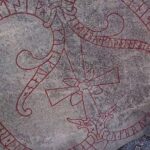
Next is Runsten U 53, a preserved rune stone that connects modern Stockholm to Viking roots. It’s a quick stop—only a few minutes—but it works because it changes your mental map. You stop looking at the city as only “old buildings.” You start seeing it as a place where traces of earlier eras are still cared for and visible.
Later on, you’ll also see Finnish Church (Finska kyrkan), with a story about adaptation—going from a royal tennis court to a place of worship. It isn’t presented as a grand rival to the German church, but it carries its own meaning: communities carving out space for faith and fellowship.
More Stockholm trips we have been out on and rated


Stortorget and the Nobel Prize Museum Building: Power, Ideas, and a Big Square
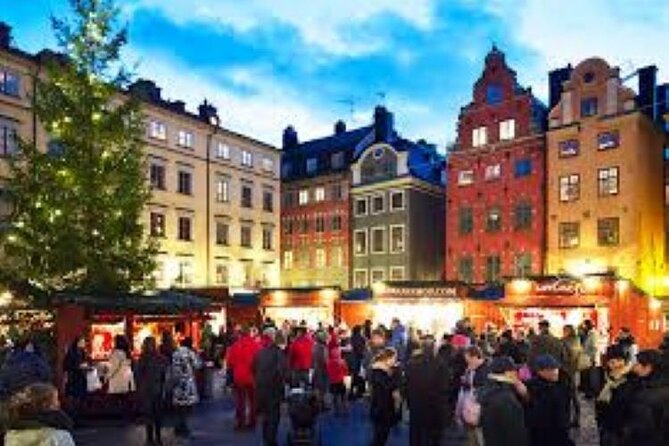
One of the best learning moments in Old Town is Stortorget, Stockholm’s oldest square. You’ll learn how the city’s original growth centered around this spot, and you’ll hear about the Stockholm Bloodbath (November 7 to 9, 1520).
This is also where the architecture turns into “readable history.” You get pointers to buildings in and around the square, including the Stock Exchange building and multiple historic houses. If you’re the type who likes spotting details, this is one of the stops where you’ll feel rewarded for looking up.
Then you’ll be linked with the Nobel Prize Museum, located in the historic Stock Exchange Building, inaugurated in 2001. Even though the tour doesn’t include entering the museum, seeing its setting gives you context for why it belongs in this specific part of the city.
If you’re planning your day, this stop makes it easy to choose what to do next. You can either treat the Nobel Museum as a future museum visit, or you can keep moving and use the walk as your “orientation + architecture reading” day.
Saint George, the Iron Boy, and the Small-Scale Traditions
You’ll spend time at Storkyrkan (Stockholm Cathedral), home to Saint George and the Dragon. The key story here is the symbolism: courage and triumph. Your guide connects it to a historical victory, with the original wooden sculpture dated to 1489, and art historians widely associating the commission with Sten Sture the Elder after the victory over Christian I at the Battle of Brunkeberg (1471).
Even if you’ve seen medieval art before, the connection between art and political moment is what makes this stop click.
Then you’ll find Järnpojken (the Iron Boy), a tiny statue with a big routine. People leave coins, pat its head, and knit winter garments. It’s the kind of tradition that’s easy to miss if you’re only focused on big buildings. Here, it becomes a reminder that Stockholm’s culture also lives in small gestures.
Royal Palace Views and Riddarholmen: Monarchy Shifts Into Administration
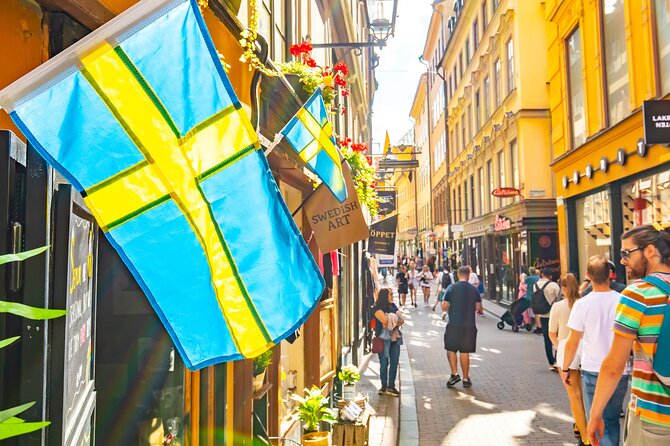
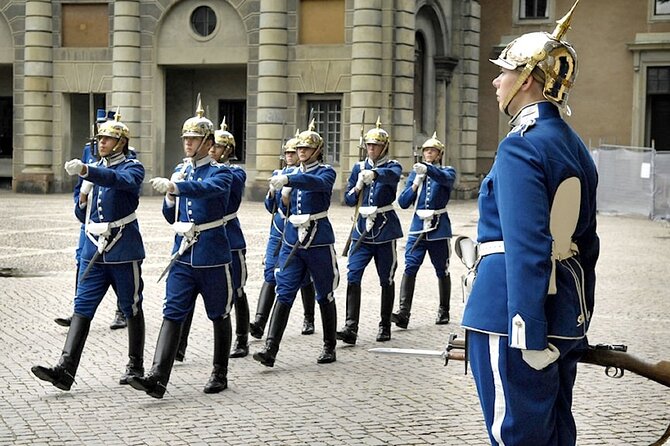
Next comes the Royal Palace area. You’ll get the palace’s long timeline—dating back to the medieval complex called Tre Kronor—and a sense of what’s inside without needing entry. Your guide highlights the Hall of State, the Royal Chapel, and Gustav III’s Museum of Antiquities.
You’ll also hear about notable statues, including Karl XIV Johan, Gustav III, Olaus Petri (Master Olof), and Kristina Gyllenstjerna. The palace section is short, but it helps you understand how royal power is represented in public space.
From there, you shift to Riddarholmen, where the tone changes again. You’ll learn about the Grey Friars Monastery built in the 1200s and how, after the Tre Kronor castle fire in 1697, state agencies and courts gradually took over the island.
This is where the tour does something smart: it shows you how Sweden’s leadership systems moved around the city. The monarchy isn’t the only story; courts and administration have their own physical home.
Nobility, Courts, and Parliament: The Civic Stockholm Walk
Once you get past the Old Town feel, the tour moves into the legal and political heart of the city.
You’ll see the House of Nobility (Riddarhuset), built between 1641 and 1674. It’s tied to the knighthood and nobility and continues as a symbol of that heritage. The visual impact is partly the scale, and partly the message: Sweden’s old structures are still present in today’s civic life.
Then you’ll pass Bonde Palace (Bondeska Palace), which houses the Supreme Court. This stop is brief, but it gives you a concrete example of how buildings become institutions, not just scenery.
Finally, you’ll reach the Parliament Building (Riksdagshuset), constructed between 1895 and 1904. You’ll also hear key political timeline notes:
- In 1971, the system changed from bicameral to unicameral
- The former bank section was transformed to accommodate the new plenary
- The Homeless Fox statue is part of the grounds
You’ll also hear that since 1995, the Prime Minister’s official residence is Sagerska Palace (Sergerska Palatset), and you’ll get a mention of Greta Thunberg in connection with the building.
It can feel like a lot for one afternoon, but it works because the guide keeps linking architecture to how people actually govern.
Rosenbad to Stockholm City Hall: A Finish With Real Momentum
Rounding out the tour, you’ll reach Rosenbad, which serves as the seat of Swedish government. It’s described as the place where policy is crafted and decisions get made, and even from the outside, it helps you connect what you learned about Parliament to day-to-day governance.
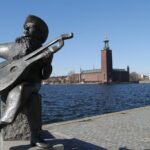
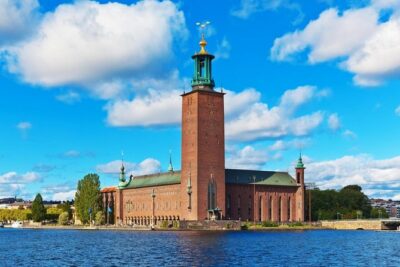
Then you end at Stockholm City Hall. This is a great way to wrap up because it’s both dramatic and functional in the city’s image. You’ll learn that the building blends Italian Renaissance and Nordic Gothic influences, plus National Romantic style touches. Your guide points out the famous halls, like the Blue Hall and Golden Hall, and you’ll hear that these host major events such as the Nobel Banquet.
End your walk here, then you’re in a perfect spot to keep exploring. City Hall is an easy anchor for deciding what to do next.
Price and Value: What $66.52 Gets You
At $66.52 per person for about 3 hours, this isn’t a budget-only deal, but it also isn’t “pay for entry tickets” pricing. The big value is the guide.
You pay for:
- an in-person English guide (and the listing also notes Swedish alongside English)
- local advice on good cafes and restaurants
- a route that packs in several different Stockholm “modes” (Old Town, churches, civic buildings) without you guessing
What you don’t pay for (and this is important): admission fees are not included, and the tour description notes that the attractions are not being entered. So think of it as an orientation walk plus story time. If you want museum access, you’ll pay separately.
If you’re visiting Stockholm for the first time, this is the kind of tour that can save you time later. It helps you decide which neighborhoods deserve a second pass.
Footwear, Pace, and Comfort: Small Details That Matter
This walk has a few built-in physical challenges:
- cobblestones underfoot
- some stairs (Mårten Trotzigs Gränd includes about 36 steps)
- several short stops spread over a tight timeline
If you have knee issues, take the steps section seriously. Wear supportive shoes and plan to move slowly through the steeper parts. One review-style tip that fits this exact route is simple: keep your footwear grippy and don’t wear slippery soles.
Also, you’re walking for three hours. Bring water. If you’re cold (Stockholm weather can be sharp even outside winter), layer up. The tour keeps moving, even when the weather doesn’t feel like cooperating.
Who Should Book This Walking Tour
This fits best if you:
- want a first-day Stockholm overview that connects neighborhoods
- like history explained in context, not in a lecture style
- prefer walking views over museum ticket lines
- want practical restaurant guidance for after the tour
It’s especially good if you enjoy mixing “big names” with small details. You’ll see things like the Nobel Prize Museum building setting, Parliament, and City Hall, but you’ll also get the human-scale stories of alleyways, rune stones, and the Iron Boy.
If you want a full museum day or palace interior tickets, you’ll need extra plans. But as a walking primer, it’s strong.
Should You Book This Classic Stockholm Small Group Walking Tour?
Yes, if you want your time to feel efficient without feeling rushed. This tour is a smart way to learn Stockholm’s layout and power centers in one afternoon, with guide storytelling that makes landmarks easier to remember.
I would skip it only if you strongly prefer inside-the-building experiences and don’t want to do most stops from the street. In that case, you might get more value from separate museum or palace ticket plans.
FAQ
How long is the Classic Stockholm Small Group Walking Tour?
It’s approximately 3 hours.
Where is the meeting point?
The tour meets at the east entrance of the Stockholm City Museum, with the meeting point listed as Götgatan 1, 116 46 Stockholm, Sweden.
Is the tour in English?
Yes. The tour is offered in English, and the guide is listed as in-person English and Swedish.
Are museum tickets included?
No. Tickets for attractions and venues are not included, and the tour description says the attractions are not being entered.
What’s the walking like?
It’s a walking tour with a moderate physical fitness level recommended. You should be ready for cobblestones, and the route includes stair climbing at Mårten Trotzigs Gränd.
How big is the group?
The maximum number of travelers is listed as 100.
Can I cancel for a full refund?
Yes. You can cancel for free up to 24 hours in advance for a full refund. If you cancel less than 24 hours before the start time, the amount paid is not refunded.
If you tell me your travel dates and whether you’re visiting in summer or winter, I can suggest the best day plan to pair this walk with the next sights you’ll care about most.
More Tours in Stockholm

More Tour Reviews in Stockholm



More Gamla Stan Walks

Just Added: The Latest Stockholm Reviews










Gamla Stan Old Town Walks, compared.
 ★ 4.7Ghost Walk and Historical TourFrom $312,206 reviews
 ★ 5.0Walking Tour of Stockholm Old TownFrom $241,175 reviews
 ★ 4.5The Original Stockholm Ghost Walk and Historical Tour – Gamla StanFrom $381,165 reviews
 ★ 4.7Old Town Walking Tour with Local GuideFrom $15719 reviews
 ★ 5.0Best of Stockholm Walking Tour-3 Hours, Small Group max 10 peopleFrom $49645 reviews
 ★ 4.5The Nordic Food Walk StockholmFrom $122642 reviews
 ★ 5.0Walking Tour of Stockholm’s Old Town, Gamla StanFrom $13451 reviews
 ★ 4.9Old Town Historical Walking TourFrom $52344 reviews
Browse the lists this tour appears in