
Reviewed · GAMLA STAN OLD TOWN WALKS
Stockholm Old Town and the Viking Museum, a Small Group Walking Tour
Stone streets, Vikings, and politics in three hours.
If you want context as you stroll, this small-group Old Town and Viking Museum combo does a great job of turning street corners into real Swedish history. I especially like that the Viking Museum entry is included (no ticket-line hassle), and I like that the group stays tiny, with Bengt often guiding for a very personal feel. One thing to keep in mind: the guided museum time is short, so you’ll need extra time on your own if you want to linger.
You’re on foot for most of the ~3-hour experience, with the pace built around quick, meaningful stops. The good news is the route stays focused, and you finish at Djurgården where you can keep exploring if you want. If you’re hoping for a long museum session as part of the ticket, plan for the tour portion to be about 30 minutes inside the Viking Museum.
In This Review
- Top reasons this Stockholm Old Town + Viking Museum tour works
- Why this combo tour feels efficient (and not rushed)
- Where you meet and what to expect from the 3-hour pace
- Stop 1: Riddarholmen—where Stockholm’s story starts to feel real
- Stop 2: Riddarholmen Church and Birger Jarl—founder stories in stone
- Stop 3: Riddarhuset and Gustav Vasa—Sweden changes direction
- Stop 4: Vasabron and the Vasa ship—legacy shows up in details
- Stop 5: Riksdagshuset—parliament history that explains the country
- Stop 6: Royal Palace views—war, art, and what statues point toward
- Stop 7: Jarnpojken—quick stop, big payoff
- Stop 8: Stortorget and the Nobel connection
- Stop 9: Stockholm Old Town’s 19th–21st century thread
- Stop 10: Skeppsbron ferry to Djurgården—your included break on the water
- Stop 11: The Viking Museum—what’s different about this one
- How to get the most from the Viking Museum time
- Staying on Djurgården after the tour: easy add-ons nearby
- Value check: is $118.96 worth it for what you get?
- Who should book this Stockholm Old Town + Viking Museum tour
- Should you book? My practical take
- FAQ
- How long is the Stockholm Old Town and Viking Museum walking tour?
- What time does the tour start, and is it in English?
- Where do I meet and where does the tour end?
- Is admission to the Viking Museum included?
- Is the group really small?
- What is the cancellation policy if my plans change?
Top reasons this Stockholm Old Town + Viking Museum tour works
- Included Viking Museum entry so you avoid the line and get straight into the experience
- Small group up to 10 people for questions and real conversation, not a crowded shuffle
- Bengt’s storytelling style connects the city’s symbols—statues, churches, and parliament—to what changed and why
- A ferry crossing to Djurgården adds a nice break and makes the day feel like more than just walking
- A tight route through Gamla Stan’s turning points gives you a strong historical “map” fast
Why this combo tour feels efficient (and not rushed)
Stockholm’s Old Town can be stunning, but it can also stay a little vague if you’re only reading plaques. What I like about this setup is that the guide builds a clear thread—from the earliest references to Stockholm, through the rise of Swedish power, to the political and cultural shifts that shaped modern Sweden.
The value isn’t only that you get landmarks. It’s that you get a framework for understanding them. You’ll see buildings and statues, sure, but you also get the key dates and the cause-and-effect story behind them.
And because it’s small-group, you can ask follow-ups without waiting your turn for the microphone moment.
More laps of Gamla Stan and the old town lanes

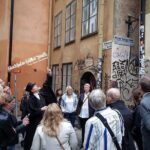
Where you meet and what to expect from the 3-hour pace
The tour starts at 10:00 am, with the meeting point listed near Munkbrogatan 8. In practice, you’re looking for the guide around the Gamla Stan metro area (under/near the station), in front of the Pressbyrån kiosk. That matters because the first talk happens right away, so being a few minutes late can cost you some of the opening context.
You’ll finish at the Viking Museum on Djurgårdsstrand 15, which is convenient for continuing on Djurgården by tram or ferry back toward the center later. The tour is built for moderate physical fitness, meaning comfortable walking is part of it—no long bus rides, and you’ll spend the day in “city legs” mode.
If you’re the type who likes to stop and read every plaque like it’s a book, you may feel a bit of pressure. The guide’s stops are short by design, so save deep reading for afterward on your own.
Stop 1: Riddarholmen—where Stockholm’s story starts to feel real
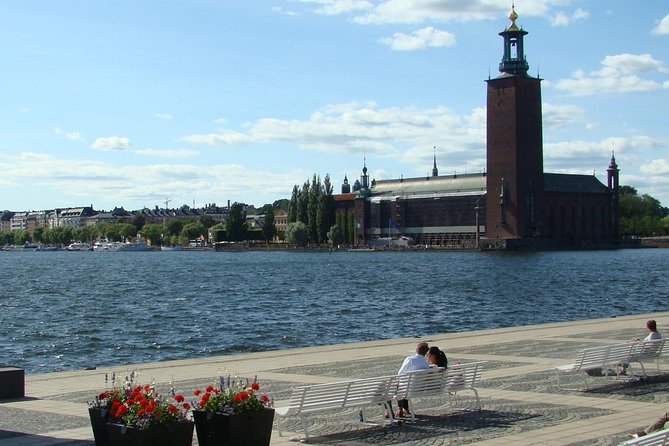
You begin in the Gamla Stan metro area and then shift your attention to Riddarholmen, the Knights Island. The early part of the story runs far back: ice age settings, the first settlements on the islands, and how Stockholm’s location mattered from the start.
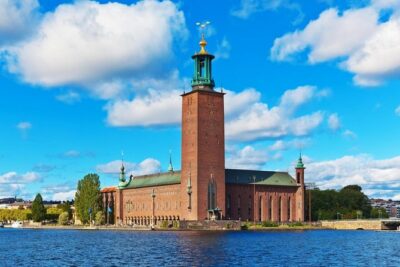
One detail I love here is the mix of history and viewpoint. The guide frames what you’re looking at—especially the view over lake Mälaren and toward Stockholm City Hall. It’s one of those “now I get it” moments: you realize why this city grew the way it did, because the water routes and the islands are doing the work long before any king shows up.
Stop 2: Riddarholmen Church and Birger Jarl—founder stories in stone
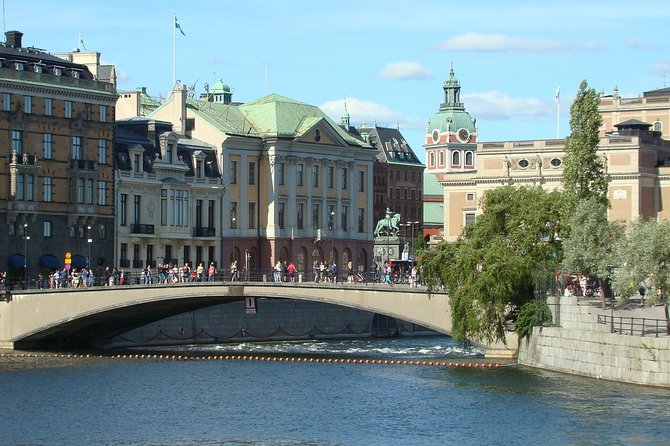
Outside Riddarholmen Church, you’ll meet the presumed founder of Stockholm: Birger Jarl, or at least a statue representing him. The guide points to the written milestone—1252, when the name Stockholm first appears in surviving written text.
This part works well because it’s not just a date drop. The story is tied to power and documentation: why that early reference matters, and how leaders used written records alongside land control.
If you’re the kind of person who likes origins, this stop helps you connect the “myth meets paperwork” nature of early city history.
Stop 3: Riddarhuset and Gustav Vasa—Sweden changes direction
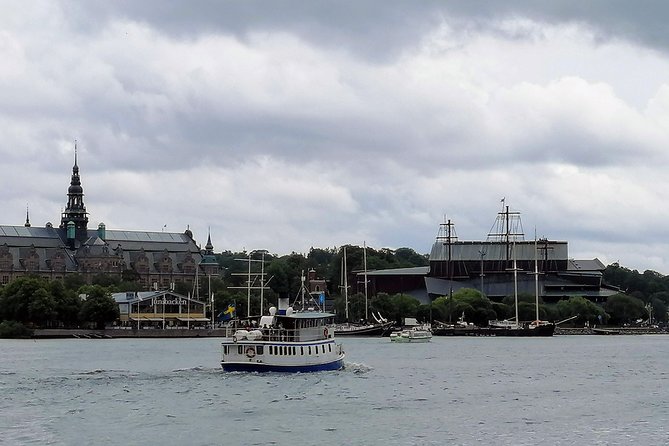
At Riddarhuset, the House of Nobility, the tour slows just enough to focus on a key Swedish figure: Gustav Vasa, called the father of Sweden. The guide brings you through major turning points starting in 1523—when Gustav Vasa marched into Stockholm—and the fact that Sweden becomes a sovereign state after a period of foreign control.
Then comes The Bloodbath of Stockholm, with the guide explaining how killings of noblemen (often framed as 80 to 100) tied into an uprising against Swedish control from the south. On top of that, you get the religious shift: Sweden moves from Catholicism to Lutheran Protestantism.
This is a strong stop because the changes feel linked. Political control, religion, and who got harmed aren’t treated as separate chapters.
More Viking days out to Sigtuna and Uppsala


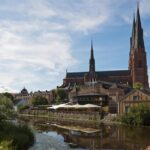

Stop 4: Vasabron and the Vasa ship—legacy shows up in details
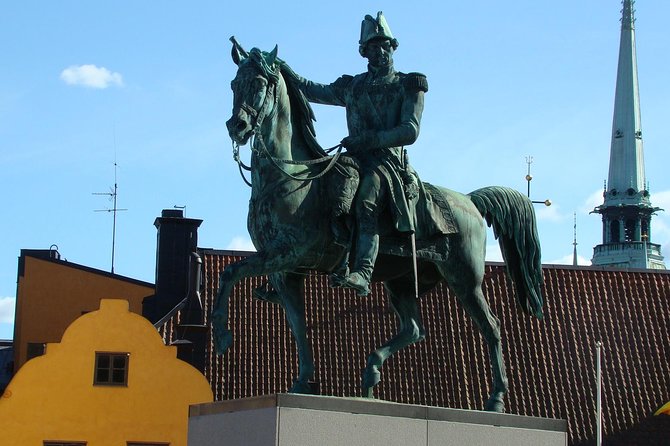
Moving toward Vasabron, the conversation shifts to Gustav Vasa’s heirs—especially the grandson, Gustav II Adolf, one of Sweden’s warrior kings. The guide connects his reign to the Baltic Sea becoming almost like an inland region surrounded by Swedish possessions.
Then you get the payoff: it’s during his time that the famous Vasa ship was built. Even if you don’t visit the Vasa Museum during this tour, this detail plants a flag in your mind so the later ship story feels less random.
A small practical note: this section is about momentum, so if you want a long photo moment, choose your spot and go for it. The guide will keep moving, but the views are worth taking quickly.
Stop 5: Riksdagshuset—parliament history that explains the country
At the Parliament Building area (Riksdagshuset), you get the political timeline in plain language. The guide explains that the predecessor of parliament was the Riksdag of the Estates, where nobility, clergy, burghers, and peasants met in separate groups before meeting the king.
You also hear how that system held the top authority alongside the king until 1866, when a two-chamber parliament arrived. Voting rights didn’t become equal for all citizens at that time, and the guide points to the first elections with general suffrage in 1921—after a long political struggle involving liberals and socialists.
Why this stop matters: when you know this, modern Swedish politics makes more sense. You aren’t just staring at a government building; you’re seeing a system evolve.
Stop 6: Royal Palace views—war, art, and what statues point toward
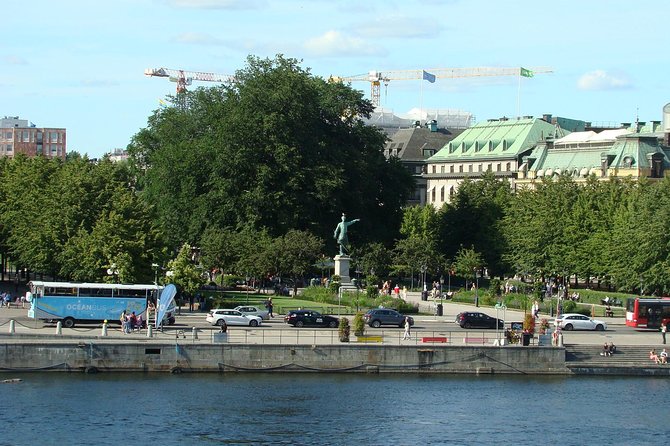
Near Lejonbacken on the north side of the Royal Palace, the guide brings in figures tied to the country’s shifting fortunes.
You’ll hear how Peter the Great ended Swedish dreams of Northern European greatness, and how Karl XII—the last of the warrior kings—still points east in statue form. The guide connects that symbolism to victories and defeats, including defeat by Peter the Great in Poltava in 1709.
Then the story pivots to the Enlightenment era. Gustav III, described as an enlightened despot with a real interest in theatre, is credited with contributions in the arts and science. This helps balance the “warrior king” vibe with a Sweden that also invests in culture.
If you like your history with personalities, this section delivers.
Stop 7: Jarnpojken—quick stop, big payoff
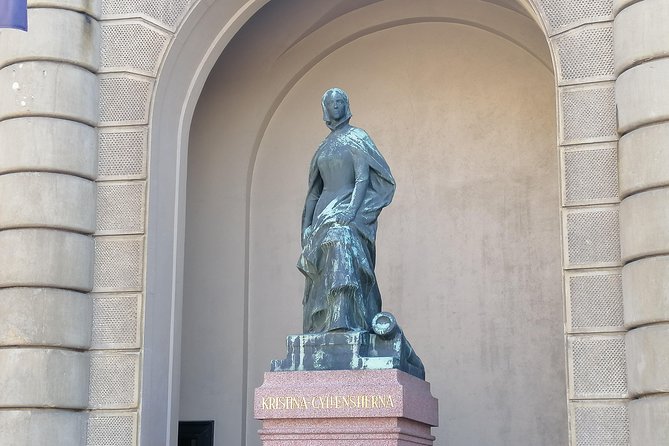
Right after, you’ll see Jarnpojken, described as the smallest and nicest statue in Sweden. This is short and simple, which is exactly why it’s useful. It breaks up the heavier political content and gives you another memorable landmark to anchor in your mind.
Sometimes the best part of a walking tour is knowing a few “named things” you can point to later.
Stop 8: Stortorget and the Nobel connection
At Stortorget, the tour ties the square to the Nobel Prize Museum. The guide explains how the Swedish Royal Academies designate winners across major fields in science and art.
It’s a neat contrast after the palace and parliament stops. You shift from kings and institutions controlling territory to institutions shaping ideas and global recognition.
If you want, you can also keep your own eye on the square’s atmosphere here after the guide moves on.
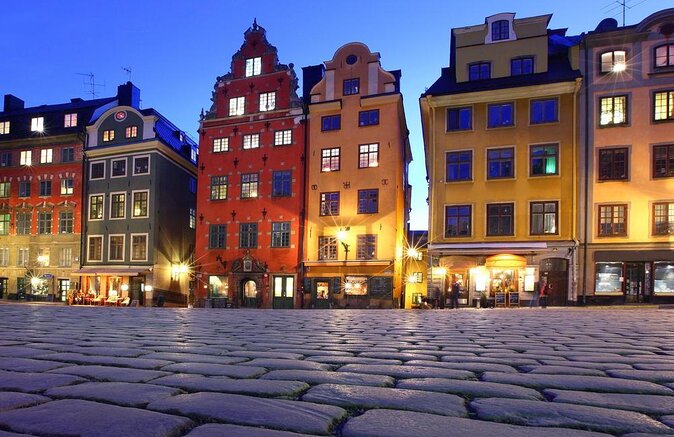
Stop 9: Stockholm Old Town’s 19th–21st century thread
As you continue through Old Town, the guide brings in the Bernadotte line, starting with Carl XIV Johan, imported from France in the early 1800s to help Sweden regain what was lost to Russia. Instead of war dominating everything, the story moves toward diplomacy, infrastructure, and education.
Then there’s a big milestone: in 2014, Sweden celebrated 200 years of peace. The guide links the industrial revolution, natural resources, inventions, and entrepreneurs to a foundation for the welfare state, and it closes the loop into the 20th and 21st centuries.
This part is where the tour feels like more than “old buildings.” You’re getting a storyline that ends closer to today.
Stop 10: Skeppsbron ferry to Djurgården—your included break on the water
From Skeppsbron 26, you take the Djurgårdsfärjan ferry to Djurgården, and this ride is included. Even if you’ve taken ferries in other cities, this one works because it changes your pace. You go from tight walking and quick stops to a calmer, scenic movement across the water.
It also helps you connect Djurgården to the city. It’s not a separate place you have to reach. It becomes part of the route.
If the weather is good, this ferry is worth leaning into—grab a view while you can, since your museum time is next.
Stop 11: The Viking Museum—what’s different about this one
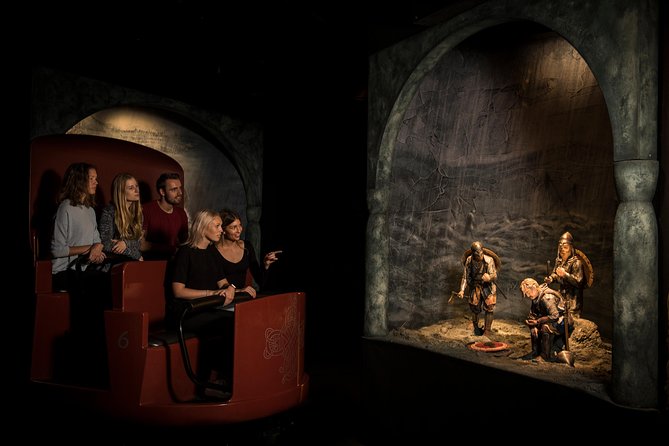
The tour ends at the Viking Museum, with admission included. The guide gives an introduction and points out attractions, and you’re welcome to stay after the guided portion ends.
What makes this museum different, based on how it’s described, is that it’s not a typical museum experience. It’s built as a cooperation between professionals in performing arts and Sweden’s most respected historical scientists. The result is a mix of thrilling experiences and historical facts rather than just display cases and labels.
That blend matters for real visitors. If you’ve seen lots of “Viking in a room” exhibits, this approach can feel more kinetic. You get story-driven context you can actually remember.
How to get the most from the Viking Museum time
Because the guided part is only part of the visit, I’d treat the museum in two passes.
First pass: follow the guide’s introduction and let the exhibits give you a spine to hang details on. Second pass: after the tour, pick the areas that grabbed you and slow down. If you arrive with only curiosity, you might leave with scattered facts. If you arrive with questions, you’ll leave with a clearer picture.
Also, since the museum time comes after a walking morning, you’ll likely appreciate short breaks. If you need a breather, you can take one without feeling like you’re “behind.” The tour ends there.
Staying on Djurgården after the tour: easy add-ons nearby
Finishing on Djurgården is practical. From the Viking Museum, you can continue to other attractions on the island, including the ABBA Museum (walk in, dance out), the Vasa Museum, Gröna Lund, and Skansen. None of these are included, but they’re easy to add if you have extra hours.
And when it’s time to go back, you can use the ferry or tram to get to the city center.
This is where planning pays off: if you book the tour earlier in the day, you buy yourself a smooth “history morning + entertainment afternoon” flow.
Value check: is $118.96 worth it for what you get?
At $118.96 per person, this isn’t a budget walk. The value is that your money buys more than a guide.
You get:
- A small-group format (max 10)
- Included Viking Museum entry (saving both hassle and ticket cost)
- An included ferry across to Djurgården
- A guided explanation that ties many stops together into a single storyline
For people who like to understand what they’re seeing, that combination adds up. If you were planning to visit the Viking Museum anyway, and you don’t want the friction of lining up or buying multiple tickets, it makes sense to let the tour handle the logistics.
If your priority is maximal museum time inside the Viking Museum itself, you might prefer a museum-focused ticket plus a self-guided Old Town stroll. But if you want context and a smart route, this package is a solid use of time.
Who should book this Stockholm Old Town + Viking Museum tour
This tour is a good fit if you:
- Want a focused introduction to Stockholm Old Town (Gamla Stan) and how Sweden evolved
- Like history told with clear people and turning points—kings, institutions, and cultural shifts
- Appreciate small groups where a guide like Bengt can answer questions in English
- Plan to spend at least some time at Djurgården after the guided portion
It may be less ideal if:
- You want a long, slow museum day with no walking
- You don’t enjoy short stops and prefer to linger on individual buildings for extended reading
Should you book? My practical take
Book it if you want your morning to feel guided but not scripted—short stops, good pacing, and museum access that’s already handled. The stand-out advantage is the way the guide turns Stockholm into a coherent story instead of a list of landmarks.
Skip it only if you’re mainly chasing deep museum immersion and you’re already comfortable building your own Old Town timeline on the fly.
FAQ
How long is the Stockholm Old Town and Viking Museum walking tour?
It runs for about 3 hours.
What time does the tour start, and is it in English?
The tour starts at 10:00 am, and it’s offered in English.
Where do I meet and where does the tour end?
You meet near Munkbrogatan 8 in Stockholm (in the Gamla Stan metro area, by the Pressbyrån kiosk). The tour ends at the Viking Museum at Djurgårdsstrand 15.
Is admission to the Viking Museum included?
Yes. Entry to the Viking Museum is included, and you can stay after the guided introduction finishes.
Is the group really small?
Yes. The tour has a maximum group size of 10 travelers.
What is the cancellation policy if my plans change?
You can cancel for free up to 24 hours before the experience’s start time for a full refund. If you cancel less than 24 hours before, the amount paid is not refunded.
More Stockholm Museums & Tickets





More Viking Day Trips to Sigtuna & Uppsala
More Gamla Stan Walks

Just Added: The Latest Stockholm Reviews










Gamla Stan Old Town Walks, compared.
 ★ 4.7Ghost Walk and Historical TourFrom $312,206 reviews
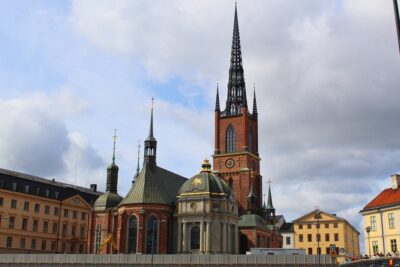 ★ 5.0Walking Tour of Stockholm Old TownFrom $241,175 reviews
 ★ 4.5The Original Stockholm Ghost Walk and Historical Tour – Gamla StanFrom $381,165 reviews
 ★ 4.7Old Town Walking Tour with Local GuideFrom $15719 reviews
 ★ 5.0Best of Stockholm Walking Tour-3 Hours, Small Group max 10 peopleFrom $49645 reviews
 ★ 4.5The Nordic Food Walk StockholmFrom $122642 reviews
 ★ 5.0Walking Tour of Stockholm’s Old Town, Gamla StanFrom $13451 reviews
 ★ 4.9Old Town Historical Walking TourFrom $52344 reviews
Browse the lists this tour appears in