
Reviewed · GAMLA STAN OLD TOWN WALKS
Stockholm Walking Tour with Audioguide on Your Smartphone
Stockholm on foot feels personal fast. This self-guided smartphone walking tour strings together the city’s big icons and small details with 25 historian narrated audio tracks you can play at your own pace. You start at Klara Mälarstrand, then work through City Hall, Riddarholmen, Gamla Stan, and the modern core.
Two things I like a lot. First, the route makes you notice stuff you’d normally glide past, like Iron Boy (Järnpojke) and the symbolism in the major buildings. Second, you get an offline map plus a guided route so you’re not stuck guessing in tight Old Town streets.
One thing to consider: it’s a lot of walking, and your phone has to do the heavy lifting—bring headphones and plan for battery use.
In This Review
- Key highlights worth your time
- What this Stockholm walking tour is really like
- Start at Klara Mälarstrand: the route’s main advantage
- City Hall: Stockholm’s most photogenic power center
- Riddarholmen island: medieval stories in a tight cluster
- Norstedt Publishers (Norstedt)
- Birger Jarl’s Tower
- Wrangel Palace (and what you can learn there)
- Monument to Birger Jarl
- Riddarholmen Church
- Gamla Stan: narrow streets, old squares, and tiny surprises
- Västerlånggatan Street
- Aifur Restaurant (dine if you want, otherwise just enjoy the vibe)
- Iron Boy (Järnpojke): the coin-left charm moment
- Stortorget: Old Town’s oldest square
- Nobel Prize Museum and Royal Palace: two ways Stockholm tells its story
- Nobel Prize Museum
- Royal Palace
- Swedish democracy and culture: Riksdag and the Royal Opera House
- Riksdag (parliament building)
- Royal Opera House
- Kungsträdgården, Hallwyl Museum, and Kreditbanken: local texture in the middle of the day
- Kungsträdgården Park
- Hallwyl Museum
- Kreditbanken and Norrmalmstorg robbery
- Sergels torg, Drottninggatan, and Hötorget: finish with modern Stockholm energy
- Sergel’s Square
- Drottninggatan
- Hötorget
- Practical tips that make or break the experience
- Who this Stockholm audio walk fits best
- Should you book this Stockholm walking tour with a smartphone audioguide?
- FAQ
- Is this tour self-guided or does it include a human guide?
- Do I need to bring headphones?
- What language is the audio guide in?
- Is the map available offline?
- Are entrance tickets included?
- How long is the walking route?
- Where does the tour start and end?
- How big is the group?
Key highlights worth your time
- City Hall inside access moments: Golden Hall mosaics and the Blue Hall linked to the Nobel banquet traditions
- Riddarholmen cluster: Birger Jarl’s Tower, Wrangel Palace, and Riddarholmen Church in one sweep
- Old Town pace with small finds: Västerlånggatan, Stortorget, and tiny landmarks like Iron Boy
- Smartphone, not a human guide: professional historian narration with illustrations to match what you’re seeing
- Real-world city variety: Gamla Stan landmarks plus modern Stockholm around Sergels torg and Hötorget
- You control timing: play, pause, and re-play tracks as you linger or speed up
What this Stockholm walking tour is really like
This is not a bus tour. It’s a “walk the bones of the city” kind of outing, with your phone as the guide. The pitch is simple: you download the app, activate your purchase, then follow the route on the map while the audio plays when you reach each stop.
What makes it feel good in practice is the pacing. The track list is designed around landmarks you can visually spot. You’re not hunting for esoteric plaques in alleyways. You’ll also get illustrations to help you confirm you’re at the right place—useful when Stockholm’s streets bend, split, and turn into a maze around Gamla Stan.
Value-wise, the price is low enough that you’re buying flexibility more than comfort. You’re paying for 2 hours-ish of guided narration (though you should plan extra time), plus the ability to repeat it for a full year in your chosen language. That’s a big deal if you want to come back and re-walk sections later.
The tradeoff is also clear: no human guide means no on-the-spot explanations, no custom routing, and no one to help if your phone app has a hiccup. So set yourself up right—download before you start, bring headphones, and keep an eye on battery.
More laps of Gamla Stan and the old town lanes

Start at Klara Mälarstrand: the route’s main advantage
You begin at Klara Mälarstrand, then loop through Stockholm’s most recognizable spots without needing tickets for basic “see it from here” moments. That starting area is handy because it puts you close to the city’s central energy. You’re in the right zone to keep walking rather than constantly checking transport schedules.
The tour ends back at the meeting point. That matters because it turns your walk into a full circuit you can finish without stress. You’re not negotiating with a one-way route where the last leg becomes an expensive ride.
The other key advantage: you can do this at night. One of the best practical uses of this route is a late-evening walk, when the city lights help the big buildings feel even more dramatic. The core streets are active enough to feel normal, not deserted.
Plan for time. Even though the duration says about 2 hours, you’ll likely spend more if you stop for photos, coffee, or a closer look inside major areas where available. A good rule: expect around 3–4 hours if you actually absorb what you’re seeing.
City Hall: Stockholm’s most photogenic power center
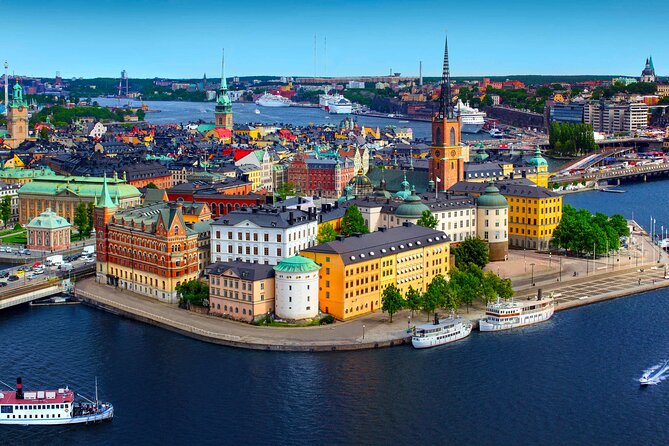
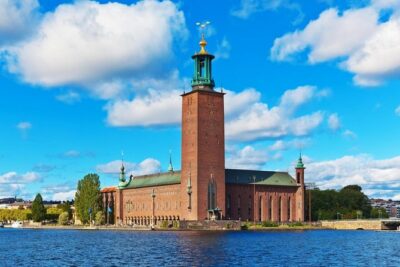
Your walk’s early highlight is Stockholm City Hall, finished in 1923. It’s the kind of building that makes even a quick stop feel like you’re in a movie set: brick façade, a tower you can’t miss, and panoramic city-and-archipelago views when you’re up high.
Two audio-backed details I’d call out. First, the Golden Hall is lined with 18 million mosaic pieces. That number changes how you look at the room. It’s not just decorative; it’s engineered spectacle. Second, the Blue Hall ties directly into the Nobel Prize tradition through its role in hosting the annual Nobel Prize Banquet.
What I like for real-world travelers is that City Hall is both landmark and lesson. It’s politics and art in the same frame. If you’re the type who thinks you’ll just snap a couple pictures and keep walking, this stop is where you may slow down.
Consideration: access and timing. The experience mentions guided exploration inside City Hall, but it also notes entrance fees aren’t included. So if you want to go in, check how long it takes and be realistic about your stamina for the rest of the route.
Riddarholmen island: medieval stories in a tight cluster

After City Hall, the route leans into a concentrated pocket of Stockholm: Riddarholmen. This is where you get the Middle Ages feel—stone, churches, towers, and waterfront views—without needing to change neighborhoods.
Norstedt Publishers (Norstedt)
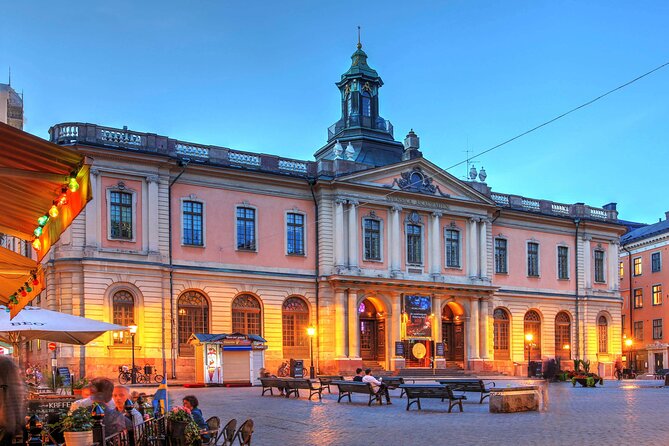
A satisfying stop for book lovers is Norstedts Förlag / Norstedt Publishers, established in 1823. This is Sweden’s oldest publishing house. The tour doesn’t just list that fact; it points you toward why it matters: the physical building reflects a long-running culture of authorship and production.
This is also a good “breather” stop. It’s about 10 minutes, and it gives your brain a different kind of context than royalty or politics.
Explore at your own pace on a self-guided Stockholm route






Birger Jarl’s Tower
Next is Birger Jarl’s Tower on Riddarholmen. It dates to the 16th century and is named for the city’s founder, Birger Jarl. The audio steers you toward the thick stone walls and defensive roots of the place.
Don’t skip the top views if you have the energy. The best payoff here is seeing how Stockholm’s waterfront logic shapes everything. The city spreads across islands like a system, not a single line on a map.
Wrangel Palace (and what you can learn there)
Wrangel Palace is another 10-minute moment that connects the medieval and the royal. Built in the 16th century and expanded later, it served as a royal residence in the 17th century. Today it houses the Svea Court of Appeal, so it’s not a “pure museum palace” in the classic sense.
The value here comes from the contrast. You’re looking at Baroque architecture tied to power, but the building is still active. That’s the kind of real city living most tour routes ignore.
Monument to Birger Jarl
Then you hit the Monument to Birger Jarl, erected in 1854 and created by sculptor Bengt Erland Fogelberg. The figure shows Birger Jarl in medieval attire holding a sword and shield. The waterfront backdrop makes it feel less like a random statue and more like a symbolic doorway into the city’s origin story.
Riddarholmen Church
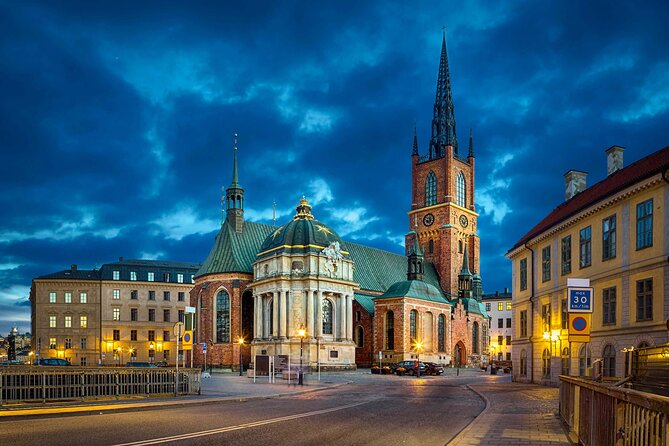
Finally, Riddarholmen Church is the emotional capstone. Dating back to the late 13th century, it’s closely linked to Swedish monarchs, including being described as a final resting place. The church is known for its intricate cast iron spire and Gothic character.
Even if you’re not a church person, the audio framing helps. It turns a stop you might rush into a quiet reset, because it puts you in the atmosphere of ceremony and continuity.
Practical note: this entire Riddarholmen sequence works best if you keep your phone volume comfortable. In stone churches, your surroundings get quieter, so you want audio loud enough to catch details.
Gamla Stan: narrow streets, old squares, and tiny surprises
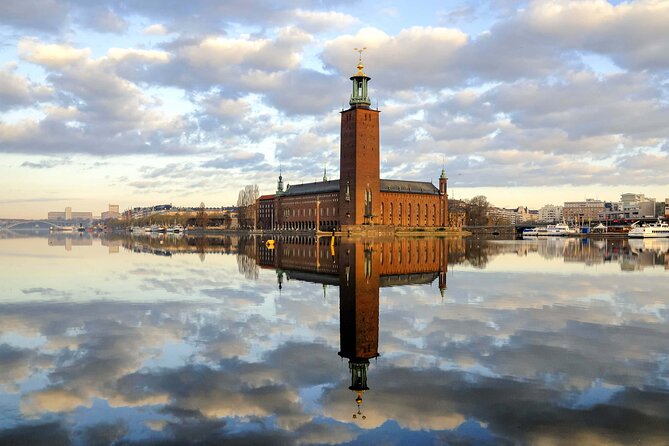
From Riddarholmen you shift into the heart of Gamla Stan, and the tour becomes more about atmosphere—street layout, public squares, and the kinds of small stops that make a self-guided walk feel personal.
Västerlånggatan Street
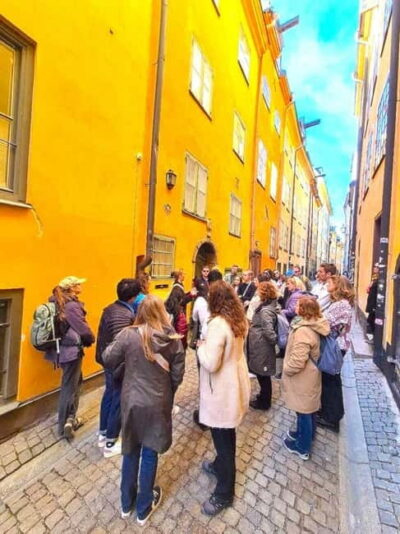
Västerlånggatan is the bustling medieval-feeling spine of Old Town. It’s narrow, cobblestoned, and lined with shops, cafes, and boutiques. The audio encourages you to look for hidden courtyards and landmark pockets as you move.
This stop is a great example of why a self-guided format works. You can pause when you find something interesting, then resume when you want to keep going.
Aifur Restaurant (dine if you want, otherwise just enjoy the vibe)
Aifur Restaurant is described as a Viking-themed dining stop named after a legendary longship. The experience includes period-cosume hosts, medieval music, and traditional Scandinavian dishes such as mead and roast meats.
Important: meals and drinks aren’t included. But even if you don’t eat, it’s worth understanding the concept because it’s part of how Gamla Stan keeps reinventing itself with themed storytelling.
Iron Boy (Järnpojke): the coin-left charm moment
One of the most charming offbeat stops is Iron Boy, a tiny 15-centimeter statue in the courtyard of the Finnish Church. Created by artist Liss Eriksson in 1967, it depicts a boy sitting and gazing at the moon.
What makes it memorable is the local practice. In winter, locals often dress him with tiny hats and scarves and leave coins for good luck. It’s the kind of detail that makes Stockholm feel human rather than monumental.
Stortorget: Old Town’s oldest square
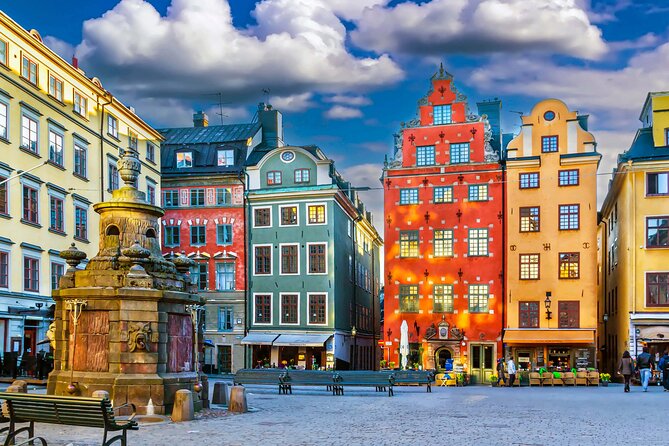
Then comes Stortorget, described as the city’s oldest public square. It’s surrounded by colorful historic buildings and has major ties like the Nobel Museum nearby, the annual Christmas Market, and the site of the Stockholm Bloodbath in 1520.
This is also a practical resting point. If your legs are protesting, Stortorget is where you can grab coffee and reset without breaking the flow.
Nobel Prize Museum and Royal Palace: two ways Stockholm tells its story
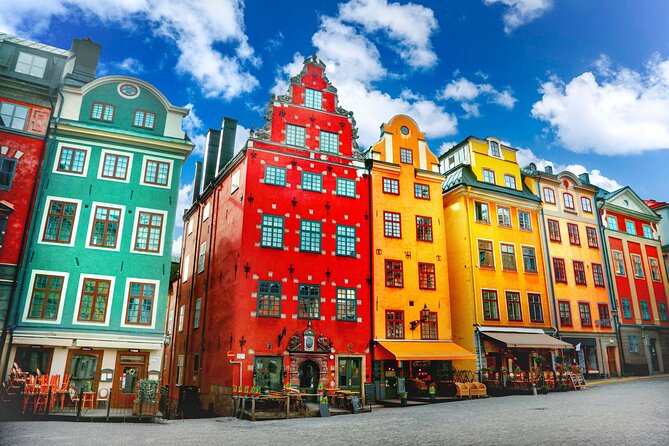
From Stortorget you move into two heavyweights of modern Swedish identity.
Nobel Prize Museum
The Nobel Prize Museum is built around Alfred Nobel’s vision and how Nobel laureates have shaped fields like peace, literature, and science. Expect interactive exhibits and personal stories tied to laureates and their work.
Even if you’ve seen Nobel-branded displays before, this museum is still a strong stop on a walking route because it adds global context. Stockholm can be all local legends and royal tombs—but Nobel makes it international.
Royal Palace
Next is the Royal Palace, described as one of Europe’s largest and most magnificent palaces, and the official residence of the Swedish monarch. The audio points you toward major areas like the State Apartments and Royal Chapel, plus the Treasury with crown jewels.
One practical highlight: the daily changing of the guard. It can be the difference between a quick pass and a memorable moment.
Entrance fees apply here too, so decide what you want. If you’d rather keep moving, focus on the exterior views and guard area timing. If you want interior rooms, plan more time and don’t try to sprint through the rest of the tour.
Swedish democracy and culture: Riksdag and the Royal Opera House
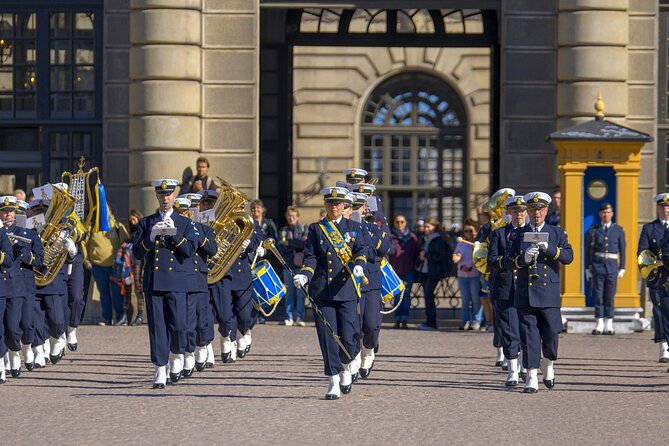
After the palace, the route shifts from monarchy visuals into governance and performance.
Riksdag (parliament building)
The Riksdag building on Helgeandsholmen was completed in 1905. The audio frames it with architectural styles—neoclassical and baroque revival—and then connects the building to real decision-making.
It also notes guided tours to explore chambers. Again, entrances aren’t included, so treat this as a choose-your-own-adventure. Even outside the guided areas, the audio explanation helps you read the building like a political machine, not just stonework.
Royal Opera House
Then there’s the Royal Opera House, created in 1773 by King Gustav III and reconstructed in 1898. The audio emphasizes its architecture and interiors.
This is where the walk gets more “arts capital.” If you like opera, ballet, or orchestral concerts, you’ll probably feel tempted to check schedules while you’re here. Even if you don’t, the building itself tells a story about how Stockholm has treated culture as serious civic life.
Kungsträdgården, Hallwyl Museum, and Kreditbanken: local texture in the middle of the day
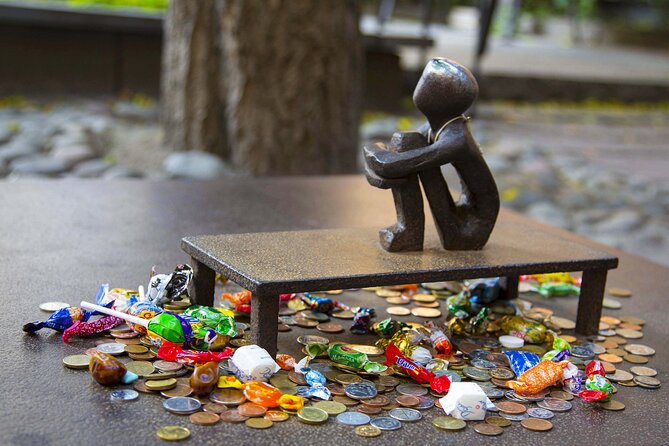
Now the tour keeps moving, but the vibe changes from landmark spectacle to city-life texture.
Kungsträdgården Park
Kungsträdgården Park (King’s Garden) is a welcome pause. Dating back to the 15th century, it’s described with cherry trees, fountains, and seasonal events like summer concerts and winter ice skating.
This stop is useful because it helps you breathe between major monuments. It’s also a good “wait five minutes, then go again” area if your phone battery is dipping.
Hallwyl Museum
The Hallwyl Museum is housed in a late 19th-century palace and focuses on Countess Wilhelmina von Hallwyl and her family. The audio highlights over 50 rooms with art, antique furnishings, and rare collectibles preserved in their original setting.
Even if you don’t enter, the museum stop helps you understand a side of Stockholm that isn’t only royal and official. It’s about private wealth, taste, and family storytelling during the early modern period.
Kreditbanken and Norrmalmstorg robbery
The stop at Kreditbanken connects architecture with a famous crime story: the 1973 Norrmalmstorg robbery, which helped give the world the term Stockholm Syndrome. The building becomes a lesson in how events can reshape language and psychology.
This is a more unusual stop in a walking tour lineup, and that’s part of its value. It keeps Stockholm from being only pretty. It’s also a real city with hard moments.
Sergels torg, Drottninggatan, and Hötorget: finish with modern Stockholm energy
The final stretch brings you into the modern center, where the city feels built for walking, shopping, and everyday public life.
Sergel’s Square
Sergel’s Square is described as the beating heart of modern Stockholm, named for sculptor Johan Tobias Sergel. The audio calls out a striking obelisk and an iconic patterned floor, with nearby cultural landmarks like Kulturhuset.
This is where you can people-watch without committing to another big ticket site. If you’ve been power-walking through palaces and churches, this stop resets your pace.
Drottninggatan
Then it’s Drottninggatan, a pedestrian street running from Old Town toward the modern city center. The audio nudges you to look for a statue of King Charles XII among the retail and dining.
This stretch is for strolling. Think “slow walk, quick stops, grab a snack if you want.”
Hötorget
Finally, Hötorget is a market square near the blue Concert Hall. The audio explains the weekdays open-air market for produce and flowers, and Sundays’ flea market for antiques and vintage finds.
If you time it right, this can end the day with local life instead of museum life. Even if you don’t shop, the square helps you feel what Stockholm does on an ordinary day.
Practical tips that make or break the experience
This tour succeeds when your phone and your expectations are ready.
Bring headphones. They’re not included, and you’ll miss too much if you rely on your phone speaker.
Download content before you go. The experience is designed for offline use, and if the circuit doesn’t load on-site, it’s usually because the audio content wasn’t available offline.
Bring a portable charger. Self-guided walking plus GPS plus audio can drain batteries quickly, especially if your phone is switching screens or fighting for signal.
Use the map correctly. The route works best when the map shows street names and you follow the highlighted path. If the map feels vague in Old Town, zoom in and make sure you’re in the right scale view.
And yes: wear shoes. The route mixes waterfront walks, tight cobblestones, and longer downtown legs.
Who this Stockholm audio walk fits best
This tour is a smart match if you want:
- a walk-first introduction to Stockholm’s main districts
- independent pacing (pause for photos, coffee, or interior stops)
- a route that hits both history-heavy spots and modern public squares
It’s less ideal if you want:
- a human guide who answers questions
- a low-walking-day plan
- minimal phone use
If you like structure but don’t want to be stuck on a fixed schedule, this hits a sweet spot.
Should you book this Stockholm walking tour with a smartphone audioguide?
I’d book it if you want a low-cost way to cover a big chunk of central Stockholm and you’re comfortable using your phone as your guide. The 25 historian recordings, the offline map, and the mix of City Hall, Riddarholmen, Gamla Stan, and modern squares makes it feel like real orientation, not just sightseeing.
Skip it if you hate tech setup or you know your phone battery runs hot fast. In that case, a human-led tour can feel less stressful.
If you’re in the middle, here’s my straight advice: come prepared (download first, headphones ready, charger packed). Then this becomes a fun, flexible walk where the city teaches you, one stop at a time.
FAQ
Is this tour self-guided or does it include a human guide?
It’s self-guided. You use a mobile app to play the audio and follow the route on the map. There is no human guide included.
Do I need to bring headphones?
Yes. Headphones and a smartphone are not included, so you’ll need to bring your own headphones to listen.
What language is the audio guide in?
The tour is offered in English. You’ll have access to the tour for 1 year in your preferred language as part of the included materials.
Is the map available offline?
You get an offline map with the route for GPS navigation, and the audioguide is designed to work offline if you’ve downloaded the content.
Are entrance tickets included?
No. Entrance fee/tickets are not included. Some stops may be viewable from outside, while others may require tickets if you want to go inside.
How long is the walking route?
The duration is listed as about 2 hours. In practice, you may want to plan more time if you stop often for photos or to see inside places.
Where does the tour start and end?
It starts at Klara Mälarstrand and ends back at the meeting point.
How big is the group?
The tour/activity has a maximum of 20 travelers.
More Tours in Stockholm


More Tour Reviews in Stockholm



More Gamla Stan Walks

Just Added: The Latest Stockholm Reviews











Gamla Stan Old Town Walks, compared.
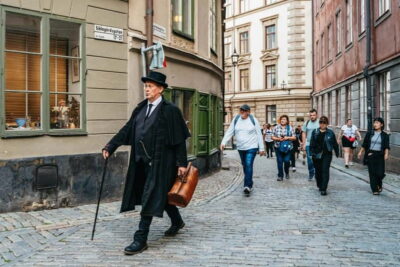 ★ 4.7Ghost Walk and Historical TourFrom $312,206 reviews
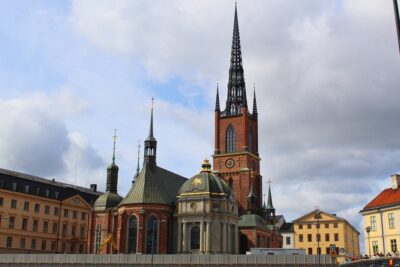 ★ 5.0Walking Tour of Stockholm Old TownFrom $241,175 reviews
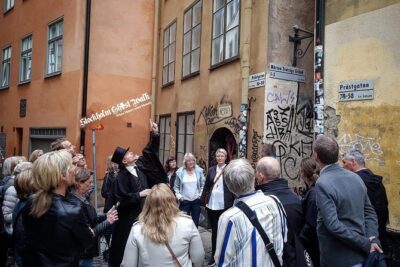 ★ 4.5The Original Stockholm Ghost Walk and Historical Tour – Gamla StanFrom $381,165 reviews
 ★ 4.7Old Town Walking Tour with Local GuideFrom $15719 reviews
 ★ 5.0Best of Stockholm Walking Tour-3 Hours, Small Group max 10 peopleFrom $49645 reviews
 ★ 4.5The Nordic Food Walk StockholmFrom $122642 reviews
 ★ 5.0Walking Tour of Stockholm’s Old Town, Gamla StanFrom $13451 reviews
 ★ 4.9Old Town Historical Walking TourFrom $52344 reviews
Browse the lists this tour appears in